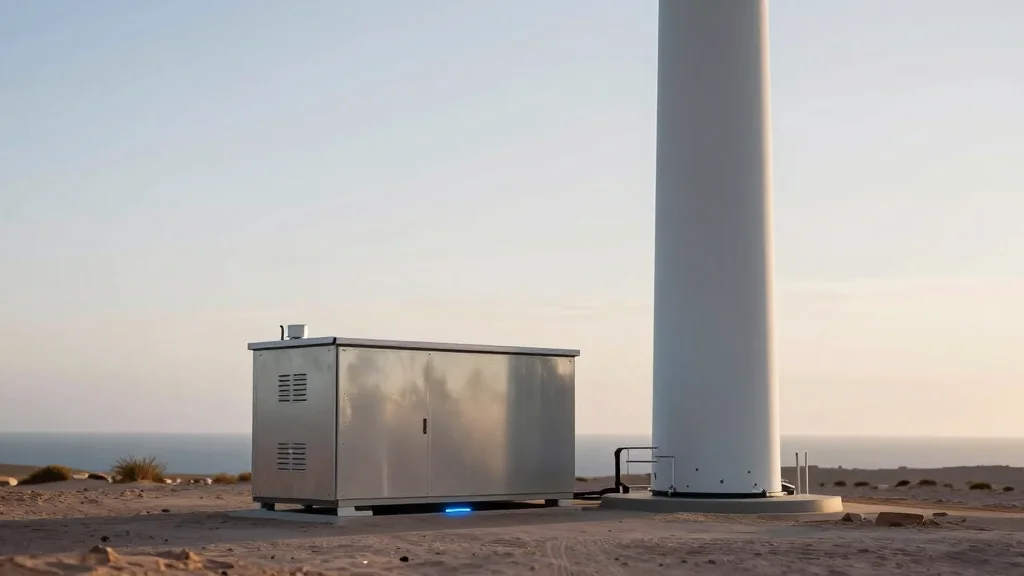
Engie Chile Launches $69 Million 57 MW Battery Tied to Kallpa Wind Farm

Companies Mentioned
Why It Matters
The Kallpa battery marks a concrete step toward fully integrated renewable assets that can both generate and store power on site. By coupling storage directly to a wind farm, Engie reduces transmission losses, improves dispatchability, and offers a scalable solution for markets facing steep growth in intermittent generation. For Chile, a country aiming to decarbonise its electricity mix, such hybrid projects can lower the need for expensive grid upgrades and fossil‑fuel backup, supporting the nation’s 2030 clean‑energy targets. Beyond Chile, the successful deployment of a wind‑direct‑connected BESS provides a reference model for other regions where wind resources dominate but grid flexibility is limited. The project demonstrates that sizable storage can be economically justified—$69 million for 285 MWh—when integrated at the generation point, potentially reshaping investment strategies for utilities and independent power producers worldwide.
Key Takeaways
- •Engie Chile commissioned a 57 MW/285 MWh battery system at Kallpa wind farm, costing $69 million.
- •The battery consists of 70 containers and is linked to the wind farm’s substation for direct charge‑discharge cycles.
- •Kallpa wind farm has 57 turbines, 344 MW capacity, and produces about 923 GWh annually.
- •Engie’s Chilean storage portfolio targets 2.5 GW of combined renewable and storage capacity by 2027.
- •Hybrid integration aims to smooth intermittency, reduce reliance on peaker plants, and support Chile’s clean‑energy goals.
Pulse Analysis
Engie's Kallpa hybrid project arrives at a moment when Chile's grid is under pressure from a surge in variable renewable output. Historically, the country has relied on a mix of hydro and thermal plants to balance supply, but the rapid addition of wind and solar has exposed gaps in short‑term flexibility. By co‑locating storage with generation, Engie sidesteps the latency and cost of transmitting power to remote battery farms, a model that could become the default for new wind developments.
From a market perspective, the $69 million price tag translates to roughly $242 k per MWh of storage capacity, a figure that is competitive with recent global battery projects. If the Kallpa BESS can demonstrate reliable performance and revenue from ancillary services, it may encourage other developers to adopt similar configurations, accelerating the economics of hybrid renewables. Moreover, Engie's broader rollout—spanning over a dozen BESS sites and hybrid solar‑battery plants—signals a strategic bet that integrated assets will dominate future capacity additions, especially in regions with high renewable penetration and limited grid reinforcement budgets.
The next critical test will be regulatory. Chile’s recent reforms to incentivise storage, including capacity payments and market‑based remuneration for flexibility, will determine whether the financial returns from Kallpa meet investor expectations. Successful outcomes could prompt policymakers to refine incentive structures, fostering a virtuous cycle of hybrid project approvals. Conversely, if revenue streams fall short, developers may revert to traditional, stand‑alone storage models. Engie's experience will therefore shape both industry investment patterns and the evolution of Chile’s energy policy.
Engie Chile launches $69 million 57 MW battery tied to Kallpa wind farm
Comments
Want to join the conversation?
Loading comments...