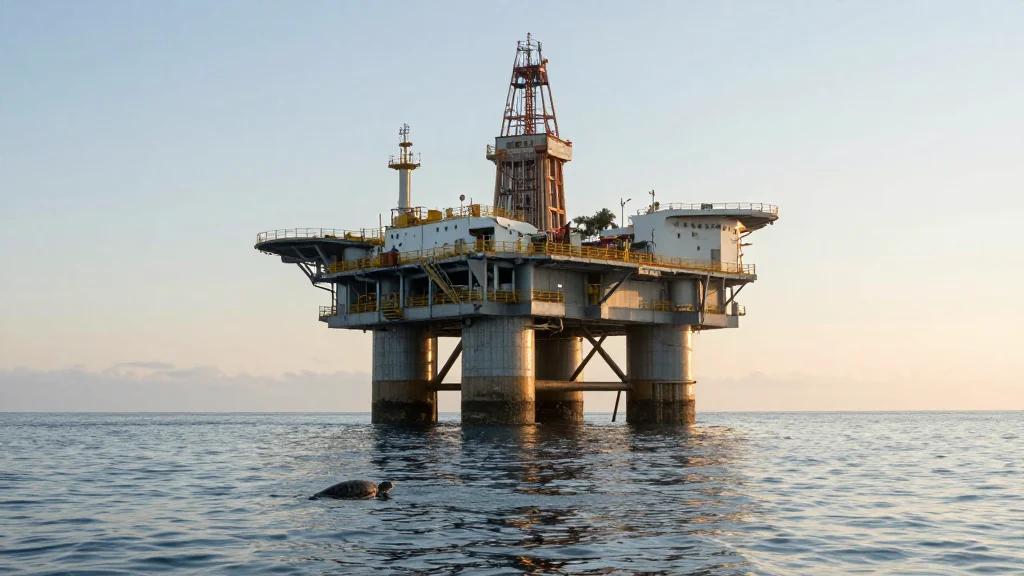
Environmental Groups Sue Over BP's $5 Billion Ultra‑Deepwater Gulf Drilling Plan

Companies Mentioned
Why It Matters
The lawsuit spotlights the tension between the U.S. drive for energy independence and the lingering legacy of the Deepwater Horizon disaster. A court decision that curtails the Kaskida project could slow the addition of up to 80,000 barrels per day to domestic supply, affecting price stability and the nation’s strategic oil reserves. Conversely, a ruling that upholds the approval may embolden further ultra‑deepwater ventures, raising the stakes for marine ecosystems and coastal economies that depend on tourism and fishing. Beyond the immediate project, the case could reshape regulatory oversight for offshore drilling. If the court demands more rigorous safety data, it may force the industry to adopt higher standards for well control and spill containment, potentially increasing costs but also reducing the likelihood of another catastrophic spill. The outcome will reverberate through policy debates on the balance between fossil‑fuel development and climate‑related environmental protection.
Key Takeaways
- •Five environmental groups sued the Interior Department to block BP's $5 bn Kaskida ultra‑deepwater project.
- •Kaskida aims to drill 6,000 ft below sea level and an additional six miles into the seabed, targeting 80,000 barrels per day.
- •Plaintiffs allege BP lacks data to prove safe drilling at extreme depths and cannot contain a potential 4.5 million‑barrel spill.
- •Interior Secretary Doug Burgum and spokesperson Charlotte Taylor argue the project boosts jobs, national security and unlocks 275 million barrels of oil.
- •A court ruling could set new precedents for offshore drilling safety standards and impact U.S. crude supply forecasts.
Pulse Analysis
The Kaskida dispute arrives at a crossroads where U.S. energy policy is being tested against heightened environmental scrutiny. Historically, the Deepwater Horizon spill reshaped offshore regulation, prompting stricter oversight and the creation of the Bureau of Safety and Environmental Enforcement. The current administration’s consolidation of permitting agencies into the Marine Minerals Administration signals a shift toward streamlined approvals, but the lawsuit may force a recalibration of that approach.
If the courts demand a more exhaustive safety dossier, BP and other operators could face higher upfront costs for advanced well‑control technologies and spill‑response capabilities. While this may erode short‑term profit margins, it could also drive industry innovation, leading to safer drilling practices that become the new norm. On the other hand, a decision that upholds the approval could accelerate the rollout of ultra‑deepwater assets, reinforcing the United States’ position as the world’s leading oil producer but also reigniting public opposition to offshore drilling.
Strategically, the case underscores the growing influence of litigation as a tool for environmental advocacy. As climate policy tightens and investors increasingly factor ESG risks into capital allocation, legal challenges like this one could become a regular feature of the energy sector’s landscape, shaping project economics and timelines more than traditional regulatory reviews alone.
Environmental Groups Sue Over BP's $5 Billion Ultra‑Deepwater Gulf Drilling Plan
Comments
Want to join the conversation?
Loading comments...