Why It Matters
The installation demonstrates viable, typhoon‑resistant wind solutions for island grids, accelerating the Philippines’ renewable‑energy targets and opening Southeast Asia to larger turbine deployments.
Key Takeaways
- •Envision's 8 MW turbine is its largest international delivery.
- •Rotor spans 182 m, hub height 105 m, blades 90 m.
- •Anti‑typhoon design targets island and coastal wind farms.
- •First direct barge shipment from China to overseas site.
- •Project contributes to Philippines' Green Energy Auction Round 2.
Pulse Analysis
The Philippines has accelerated its clean‑energy transition through the Green Energy Auction Program, now in its second round. By earmarking 64 MW for the Alabat Wind Power Project, the government aims to diversify its generation mix and reduce reliance on coal. Alabat Island, with its steady trade‑wind corridors, offers an ideal site for large‑scale turbines, and the auction framework guarantees competitive pricing and long‑term power purchase agreements. The project's inclusion as one of the first wind assets under the programme signals a policy shift toward offshore‑compatible, high‑capacity wind solutions.
The centerpiece of the development is Envision Energy’s 8 MW turbine, the company’s largest unit shipped abroad. Its 182‑metre rotor, 105‑metre hub height and 90‑metre blades capture more energy per sweep than conventional models, while a reinforced, segmented tower eases installation on the island’s rugged terrain. Crucially, the turbine incorporates anti‑typhoon technology—reinforced blades, pitch‑control algorithms, and a robust nacelle—to survive gusts exceeding 200 km/h common in the archipelago. Delivering the machine by direct barge from China eliminates the need for on‑site crane assembly, cutting logistics costs and lead times.
Envision’s successful installation positions the firm as a leading turbine supplier in Southeast Asia, a region poised for rapid wind‑farm expansion as governments tighten emissions targets. The anti‑typhoon design addresses a historic barrier for offshore and coastal projects in the Pacific, potentially unlocking billions of dollars of untapped capacity. Moreover, the barge‑delivery model demonstrates a scalable logistics solution that could lower entry costs for emerging markets lacking heavy‑lift infrastructure. As the Alabat project moves toward full commissioning, investors will watch closely for the ripple effect on regional renewable‑energy financing and supply‑chain dynamics.
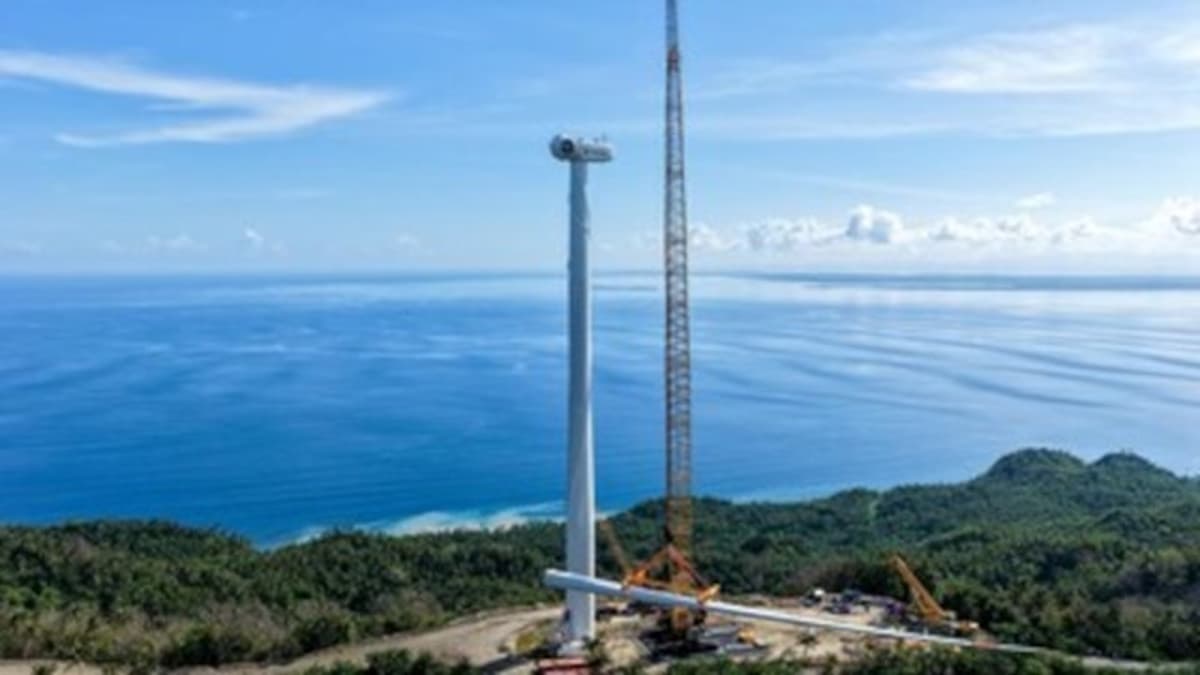
Envision installs 8MW turbine in Philippines
0
Comments
Want to join the conversation?
Loading comments...