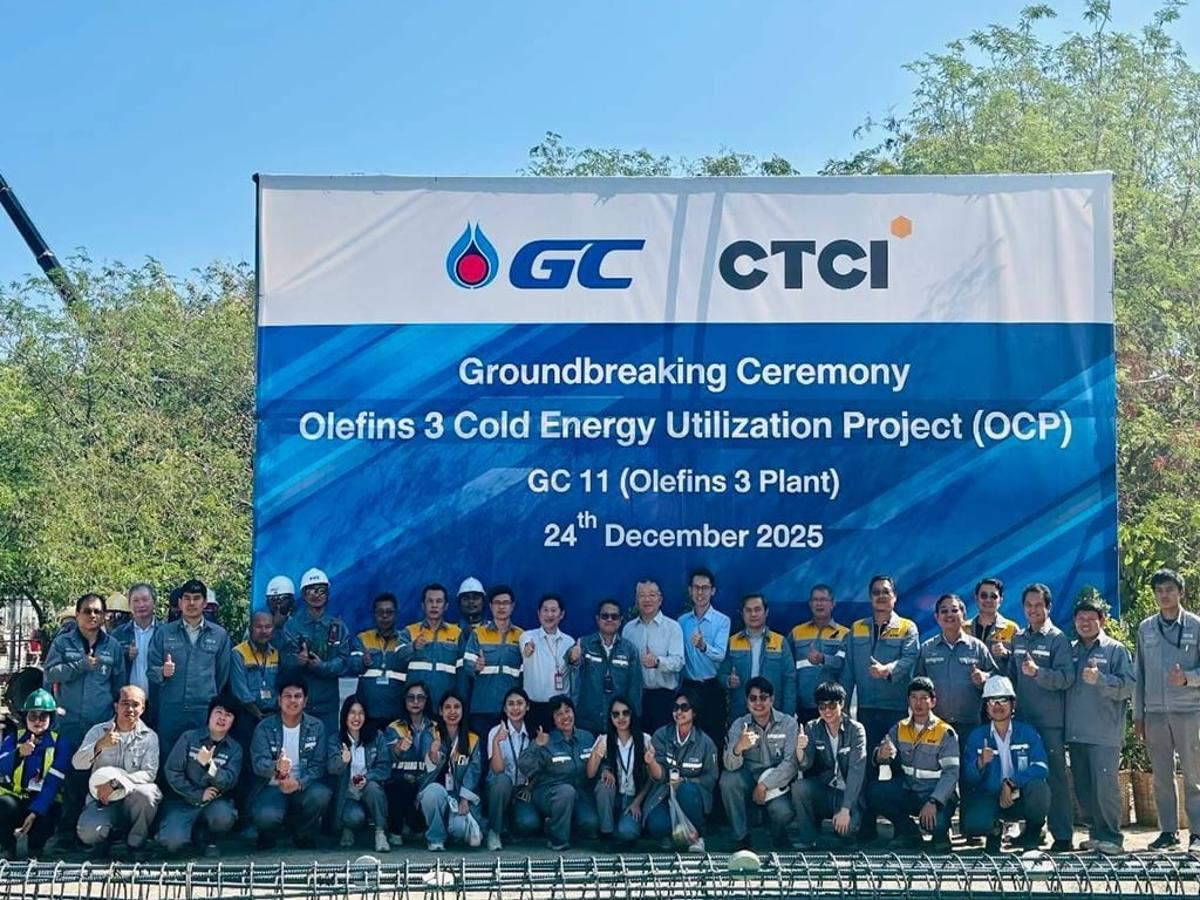
EPC Contractor Hand-Picked for Southeast Asian LNG Cold Energy Utilization Project
Why It Matters
The project demonstrates a scalable pathway to decarbonise energy‑intensive petrochemical processes, offering both cost savings and measurable emissions reductions for the region’s industrial sector.
Key Takeaways
- •CTCI Thailand wins THB 1.8 bn ($55 m) EPC contract.
- •Project recycles LNG cold energy to cool olefins, cutting electricity use.
- •Annual CO₂ emissions drop by 60,000 tons.
- •Closed-loop mixed refrigerant system links PE LNG terminal and PTTGC plant.
- •Completion targeted for 2028, boosting Thailand’s low‑carbon transition.
Pulse Analysis
Across the globe, LNG terminals are being re‑imagined as sources of cold energy rather than mere fuel supplies. In Southeast Asia, where electricity costs remain high and carbon‑intensity is a regulatory focus, the ability to capture and redirect the sub‑zero temperatures generated during regasification offers a compelling efficiency boost. Thailand’s OCP project taps into this trend, positioning the country as an early adopter of integrated cold‑energy solutions that can be replicated in other petrochemical hubs.
Technically, the OCP employs a mixed‑refrigerant loop that transports chilled fluid from the PE LNG terminal to the PTTGC olefins complex. Heat exchangers, surge drums, and variable‑speed‑drive pumps form the backbone of the system, allowing precise temperature control while minimizing parasitic power draw. By substituting electricity with reclaimed cold energy, the plant anticipates a 60,000‑ton annual CO₂ reduction—equivalent to removing roughly 12,000 passenger cars from the road. The THB 1.8 billion EPC contract also underscores the financial viability of such retrofits, with projected operational savings offsetting upfront capital outlays within a few years.
For the broader market, the OCP signals a shift toward ESG‑centric engineering contracts in the region. CTCI’s role as the EPC lead showcases its growing expertise in low‑carbon infrastructure, potentially opening doors to similar projects across ASEAN’s expanding LNG network. As governments tighten emissions standards, developers that can deliver integrated energy‑recovery solutions will gain a competitive edge, accelerating the adoption of cold‑energy utilization as a mainstream decarbonisation tool.
EPC contractor hand-picked for Southeast Asian LNG cold energy utilization project
Comments
Want to join the conversation?
Loading comments...