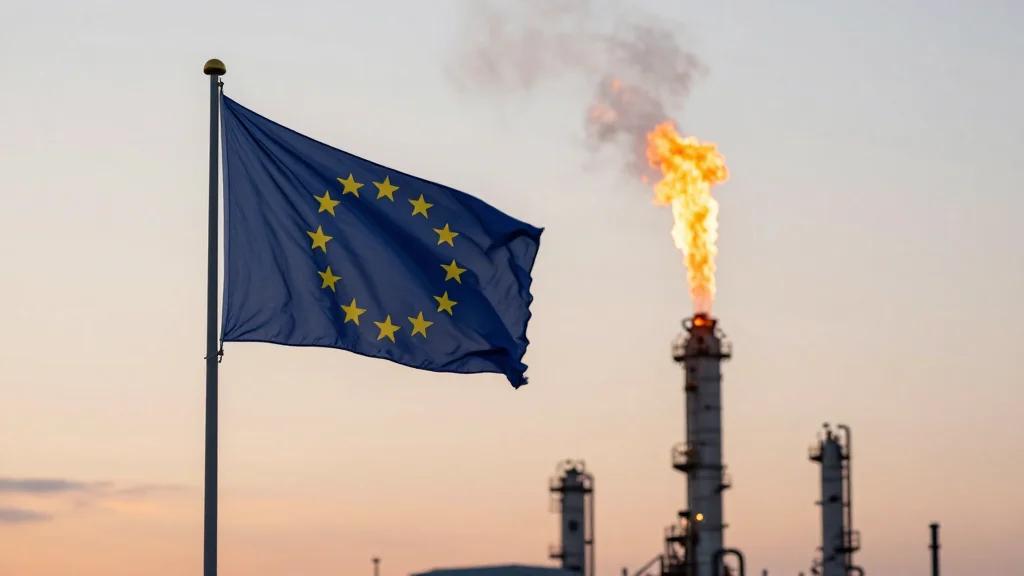
EU Publishes Energy Crisis Plans
Why It Matters
By addressing supply vulnerabilities and financing clean‑energy projects, the EU seeks to curb costly import dependence and protect consumers, while setting the stage for a more resilient, low‑carbon market.
Key Takeaways
- •EU spent extra €24 bn ($26 bn) on energy imports since conflict
- •New Fuel Observatory to monitor fuels launches May 2026
- •Renewable electricity target raised to 100 GW annually
- •ETS overhaul backed by €100 bn ($108 bn) Industrial Decarbonisation Bank
- •Member states may impose windfall taxes on energy profits
Pulse Analysis
The EU’s latest energy crisis response reflects a strategic shift from reactive subsidies to systemic resilience. With the war in the Middle East tightening global oil and gas supplies, European nations have collectively absorbed roughly $26 bn in additional import costs. This fiscal strain underscores the urgency of diversifying supply chains and reducing reliance on external fossil fuels. By mandating coordinated storage fills and emergency release protocols, the Commission aims to create a buffer that can absorb short‑term shocks without destabilising markets.
Central to the plan is the establishment of an EU Fuel Observatory, slated for launch in May 2026, which will provide real‑time data on production, imports, exports, and strategic reserves of transport fuels. Coupled with a proposed 100 GW annual increase in renewable electricity capacity, the initiative seeks to align energy security with the EU’s Green Deal objectives. The forthcoming revision of the emissions‑trading system, supported by a $108 bn Industrial Decarbonisation Bank, will channel funds toward clean‑energy projects, sustainable aviation fuel, and maritime decarbonisation, reinforcing the bloc’s climate commitments while bolstering industrial competitiveness.
Politically, the package walks a tightrope. While it leaves windfall‑profit taxation to individual member states, the Commission’s openness to best‑practice sharing signals a potential move toward harmonised fiscal measures. Critics argue that without an EU‑wide levy, the burden of high energy prices will continue to fall unevenly on consumers. Nonetheless, the comprehensive approach—combining market oversight, renewable scaling, and targeted financing—positions the EU to mitigate immediate supply risks and lay the groundwork for a low‑carbon future.
EU publishes energy crisis plans
Comments
Want to join the conversation?
Loading comments...