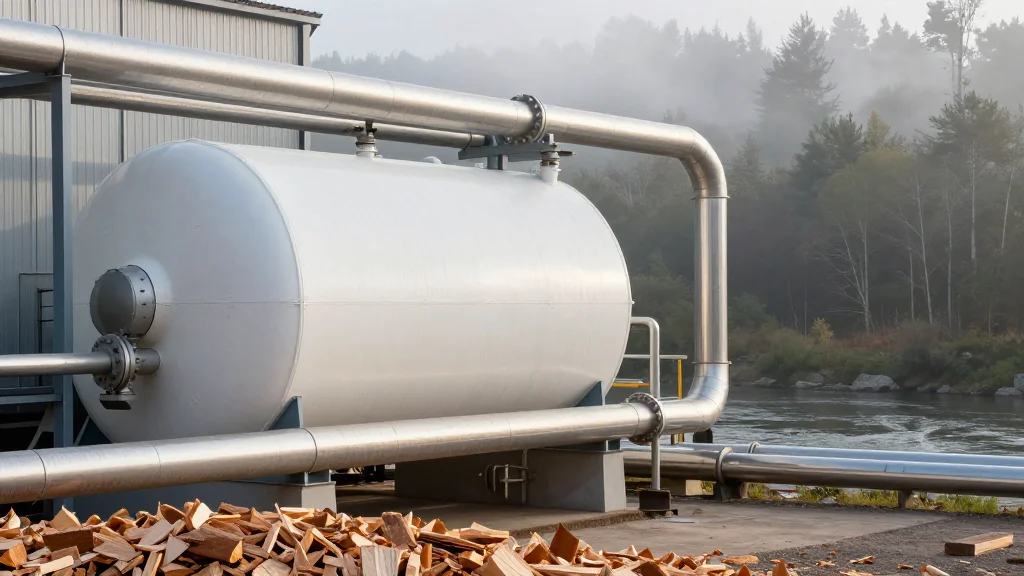
EU Pulp Mills Face Multi-Billion Carbon Shift as Carbon Capture and Storage (CCS) Emerges
Why It Matters
The policy reversal threatens the financial viability of the pulp industry’s green leaders while opening a multi‑billion‑dollar CCS market, reshaping European pulp economics and investment priorities.
Key Takeaways
- •EU pulp mills earned €4.5bn (~$4.9bn) in ETS surplus
- •2026 rule excludes plants >95% biogenic emissions from ETS
- •Carbon capture offers new revenue for market pulp mills
- •Microsoft signed 12‑year BECCS credit deal with a pulp mill
- •Integrated mills face CCS retrofits challenges due to steam use
Pulse Analysis
The European Union’s emissions trading system (ETS) has long rewarded pulp producers that shifted from coal to biomass, allowing them to sell excess allowances for billions of euros. Between 2008 and 2024, the sector accumulated roughly €4.5 billion (about $4.9 billion) in net surplus, with the top ten mills pocketing €6 billion (~$6.5 billion). However, the 2026 directive that exempts installations whose biogenic emissions exceed 95% of total output effectively strips these pioneers of their primary revenue source. For mills that have already achieved near‑zero fossil emissions, the policy feels like a penalty for success, prompting industry groups to challenge the rule.
In response, carbon capture and storage (CCS) is emerging as a strategic alternative. Market‑oriented pulp mills, which generate large volumes of biogenic CO₂ from biomass combustion and operate self‑contained steam systems, are best positioned to retrofit CCS technology. Proximity to storage sites—such as saline aquifers or depleted reservoirs—and to industrial CO₂ off‑takers like food‑and‑beverage producers dramatically improves project economics. The sector’s first high‑profile deal came in April 2025, when Microsoft signed a 12‑year agreement for BECCS credits derived from a pulp‑mill recovery boiler, signaling corporate appetite for permanent removal solutions.
The shift has broader implications for European industrial decarbonisation. While integrated mills that divert steam to paper drying face technical and cost barriers, the potential CCS revenue stream could offset rising ETS prices and create a new profit centre. Analysts estimate that, under favorable transport distances and a tightening carbon price, CCS retrofits may lower overall production costs for eligible facilities. As the EU tightens its climate framework, the pulp industry’s ability to pivot from allowance sales to carbon removal will likely determine its competitive edge and influence future policy design.
EU pulp mills face multi-billion carbon shift as carbon capture and storage (CCS) emerges
Comments
Want to join the conversation?
Loading comments...