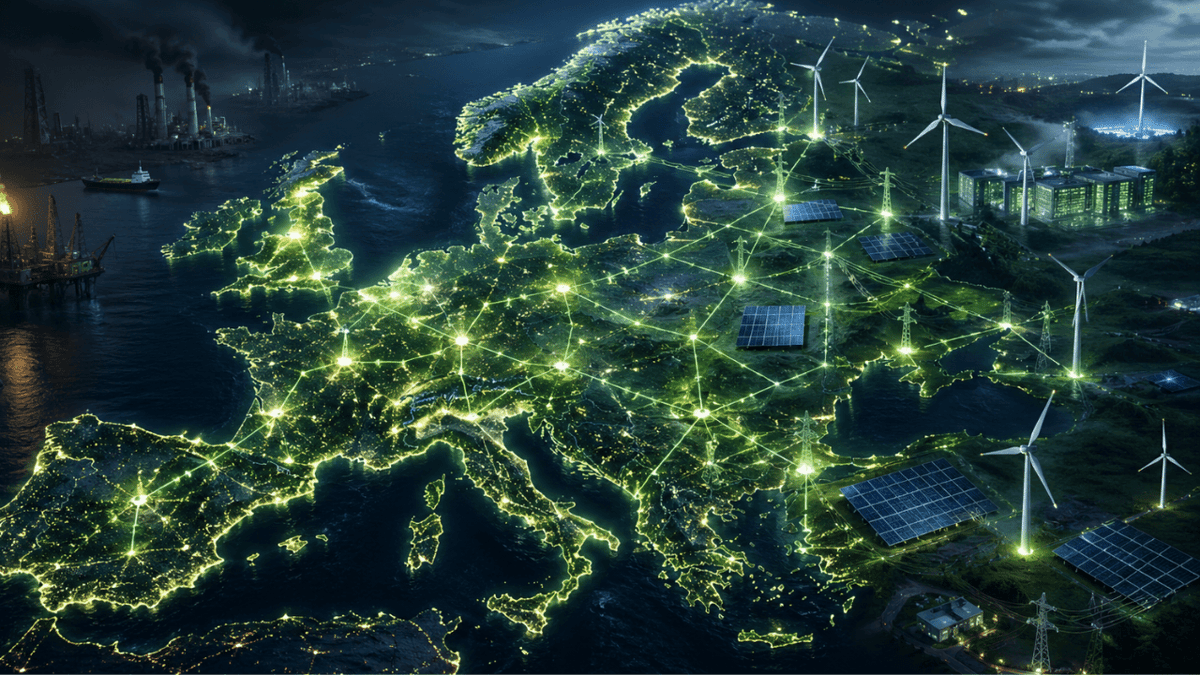
Europe Urged to Become First “Electro-Continent” With 50% Electrification Target by 2040
Why It Matters
Achieving the 50% target would cut Europe’s reliance on costly fossil imports, lower industrial energy bills and safeguard competitiveness in fast‑growing sectors such as AI and data‑center services.
Key Takeaways
- •Coalition urges EU to set 50% clean electricity target by 2040.
- •Europe spent over €1 trillion on energy crisis premiums since 2021.
- •Current electricity share ~25%; tech can electrify up to 90% of economy.
- •Regulatory and permitting delays, not technology, are main deployment hurdles.
- •High power costs risk EU industrial competitiveness, especially for AI.
Pulse Analysis
Europe’s energy security has been repeatedly tested by geopolitical shocks—from Russia’s gas cut‑off to recent Red Sea disruptions and the Strait of Hormuz closure. Those events forced the bloc to shell out roughly €14 billion (about $15 million) in extra fossil‑fuel imports in a single month and accumulated more than €1 trillion in crisis premiums between 2021 and 2025. Converting those costs into U.S. dollars underscores the scale of the problem and fuels the urgency behind the 50% clean‑electricity ambition, which would halve the continent’s exposure to volatile external supplies.
Technically, the goal is within reach. Wind, solar, battery storage and emerging hydrogen solutions already exist at commercial scale, and studies suggest up to 90% of European economic activity could be powered by electricity if the right infrastructure is built. Yet the primary obstacle is political: permitting timelines vary from one to ten years, and high‑profile projects—such as Sweden’s cancelled offshore wind farms—have been stalled over security concerns. Harmonising regulations, accelerating grid upgrades and fostering cross‑border energy markets are essential steps to translate technological readiness into tangible capacity.
Beyond energy security, the electro‑continent vision has profound competitive implications. Industrial electricity prices in the EU are roughly twice those in the United States and 50% higher than in China, eroding the region’s attractiveness for AI‑intensive data centres and other high‑energy industries. A decisive policy framework could unlock private capital, spur a new wave of cleantech startups, and position Europe as a leader in renewable‑driven manufacturing. Aligning public incentives with market forces will be key to turning the electro‑union from a slogan into a growth engine for the continent’s economy.
Europe urged to become first “electro-continent” with 50% electrification target by 2040
Comments
Want to join the conversation?
Loading comments...