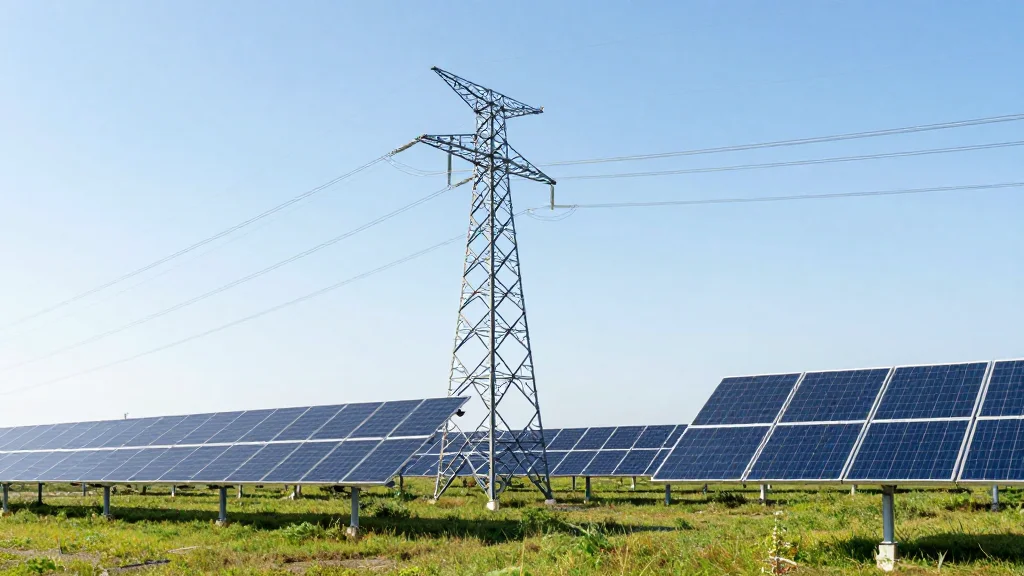
Europe’s Negative Electricity Price Hours Double in Q1 Amid Renewables Surpluses, Market Imbalances
Why It Matters
Rising negative‑price events erode revenue for renewable generators and signal urgent need for greater flexibility, storage and more accurate forecasting in European power markets.
Key Takeaways
- •EU‑27 saw 1,223 negative‑price hours in Q1 2026, double 2025
- •Spain accounted for 347 hours, 16% of Q1 trading time
- •Portugal logged 294 negative hours, up from eight in 2023
- •Germany’s April negative prices averaged –$39/MWh, deepest –$452/MWh
- •Forecast‑actual gaps hit 1,838 GWh, indicating curtailment or error
Pulse Analysis
The first quarter of 2026 has become a benchmark for negative‑price volatility in Europe’s integrated electricity market. With 1,223 hours clearing below zero, the EU‑27 experienced a level of oversupply unseen since 2022. The Iberian Peninsula is the primary driver: Spain’s 347 negative hours represent roughly 16 % of all Q1 trading intervals, while Portugal’s 294 hours mark a dramatic rise from just eight hours in 2023. These figures reflect the rapid expansion of solar and wind capacity, coupled with limited intra‑day storage and demand‑response resources, creating a structural imbalance that pushes prices into the negative.
Germany’s April snapshot illustrates how forecast errors and curtailment amplify the problem. During 123 negative‑price hours, the average clearing price was about –$39 per megawatt‑hour, with a record low of –$452/MWh. Nearly half of the country’s solar output (46.7 %) and 15.9 % of wind generation were sold at negative prices, underscoring the mismatch between generation forecasts and actual delivery. The absolute forecast‑actual gap of 1,838 GWh—equivalent to roughly 9.5 % of total wind and solar output—suggests that both meteorological uncertainty and real‑time curtailment are at play. When prices turned negative, actual generation fell short of forecasts in 80 % of solar hours and 83 % of wind hours, highlighting the asymmetric nature of the shortfall.
For market participants, the escalating frequency and depth of negative prices demand proactive risk‑mitigation strategies. Energy storage, especially battery‑as‑service platforms, can absorb excess generation and provide arbitrage opportunities, while advanced forecasting tools can narrow the gap between expected and realized output. Policymakers may need to revisit market rules to incentivize flexible demand and to better compensate generators for curtailment. Ricardo’s Electricity Market Outlook, powered by the PRIMES‑IEM model, offers granular hourly forecasts of price trajectories, negative‑price depth, and curtailment exposure, enabling investors and operators to price contracts and design assets with a clearer view of future market dynamics.
Europe’s negative electricity price hours double in Q1 amid renewables surpluses, market imbalances
Comments
Want to join the conversation?
Loading comments...