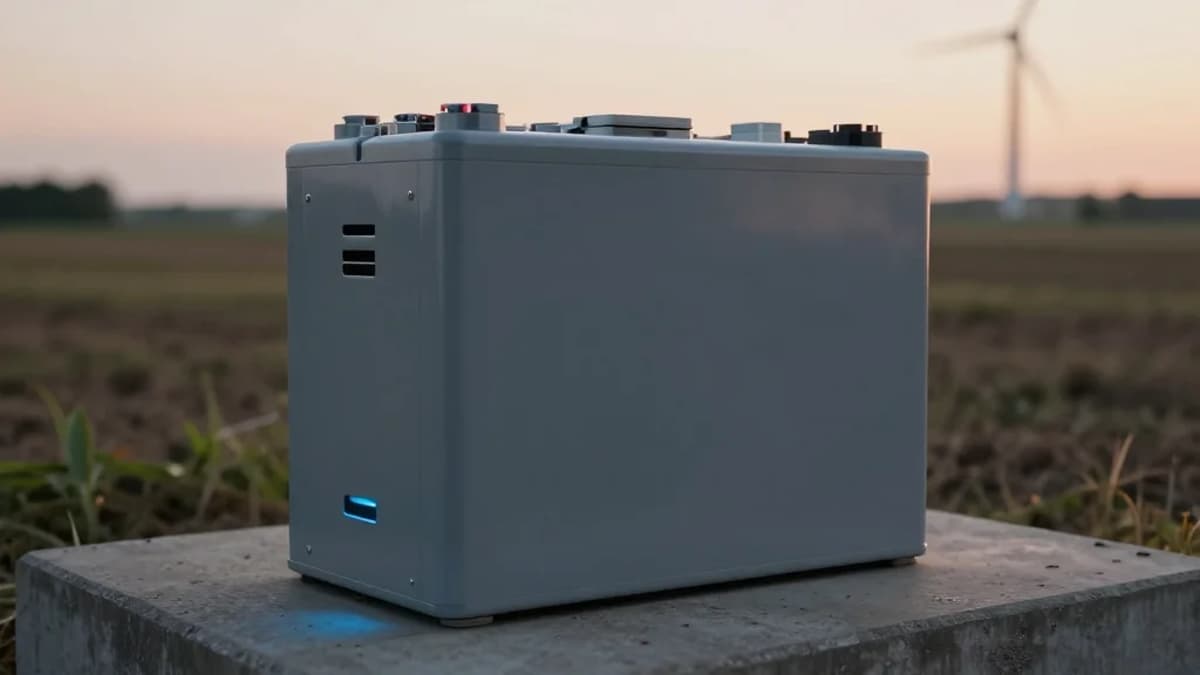
EVE Energy Drives Technological Leap in Large-Scale Storage: EVE Energy Launches World’s First Storage System with 628Ah Large Battery Cells – 10 GWh Agreement Signed
•February 19, 2026
0
Why It Matters
EVE’s breakthrough could cut storage system complexity and cost, speeding renewable integration. The 10 GWh partnership signals rapid scaling of high‑capacity batteries across China’s grid.
Key Takeaways
- •628 Ah cells power 400 MWh storage system
- •200 MW/400 MWh project validates grid‑scale performance
- •10 GWh partnership accelerates large‑battery deployment
- •Larger cells aim to cut system cost and complexity
- •Safety enhancements improve LCOS for stationary storage
Pulse Analysis
The large‑scale energy storage market has long been constrained by modest cell capacities, typically 200‑300 Ah lithium‑iron‑phosphate units. While these cells have enabled early utility‑scale projects, their size drives complex wiring, higher balance‑of‑plant costs, and limited energy density per module. Industry analysts note that moving to substantially larger cells can streamline system design, reduce the number of series connections, and improve overall reliability, positioning storage as a more competitive partner to intermittent renewables.
EVE Energy’s 628 Ah ultra‑large cells address these challenges directly. By more than doubling traditional cell capacity, the new format cuts the number of cells required for a given megawatt‑hour output, simplifying thermal management and reducing the weight of balance‑of‑plant components. Integrated safety features—such as high‑strength separators and robust stacking processes—enhance thermal stability, while the minimalist architecture lowers the levelized cost of storage (LCOS). Early performance data from the 200 MW/400 MWh Lingshou project suggest higher round‑trip efficiency and longer cycle life, translating into tangible economic benefits for grid operators.
The 10 GWh strategic agreement between EVE and Beijing Guowang Technology amplifies the commercial impact of this technology. By securing a sizable supply pipeline, the partnership accelerates deployment across China’s rapidly expanding grid, fostering economies of scale that could drive global price reductions. Moreover, the collaboration signals confidence in large‑cell solutions, encouraging other manufacturers and utilities to explore similar architectures. As energy storage becomes integral to balancing renewable generation, EVE’s innovation may set a new industry benchmark, influencing standards and prompting broader adoption of high‑capacity battery systems worldwide.
EVE Energy Drives Technological Leap in Large-Scale Storage: EVE Energy Launches World’s First Storage System with 628Ah Large Battery Cells – 10 GWh Agreement Signed
0
Comments
Want to join the conversation?
Loading comments...