Energy News and Headlines
  • All Technology
  • AI
  • Autonomy
  • B2B Growth
  • Big Data
  • BioTech
  • ClimateTech
  • Consumer Tech
  • Crypto
  • Cybersecurity
  • DevOps
  • Digital Marketing
  • Ecommerce
  • EdTech
  • Enterprise
  • FinTech
  • GovTech
  • Hardware
  • HealthTech
  • HRTech
  • LegalTech
  • Nanotech
  • PropTech
  • Quantum
  • Robotics
  • SaaS
  • SpaceTech
AllNewsDealsSocialBlogsVideosPodcastsDigests

Energy Pulse

EMAIL DIGESTS

Daily

Every morning

Weekly

Sunday recap

NewsDealsSocialBlogsVideosPodcasts
EnergyNewsEVE Energy to Deploy 628Ah Battery Cells in Solar-Plus-Storage System at Kuala Lumpur International Airport
EVE Energy to Deploy 628Ah Battery Cells in Solar-Plus-Storage System at Kuala Lumpur International Airport
Energy

EVE Energy to Deploy 628Ah Battery Cells in Solar-Plus-Storage System at Kuala Lumpur International Airport

•February 9, 2026
0
Energy Storage News
Energy Storage News•Feb 9, 2026

Why It Matters

The project showcases the commercial viability of ultra‑large LFP cells for critical infrastructure, accelerating cost‑effective renewable integration in a region poised for massive storage growth.

Key Takeaways

  • •36 MWh solar‑plus‑storage system at KLIA approved.
  • •Uses EVE’s 628 Ah LFP cells, first mass‑produced >600 Ah.
  • •Larger cells cut installation cost and system complexity.
  • •Integrated AC/DC design boosts round‑trip efficiency.
  • •Project expands EVE’s footprint into Southeast Asian market.

Pulse Analysis

The battery market is witnessing a decisive shift toward large‑format lithium‑iron‑phosphate (LFP) cells, as manufacturers chase higher energy density while preserving the chemistry’s renowned safety profile. EVE Energy’s 628 Ah cell, the first mass‑produced unit exceeding 600 Ah, exemplifies this trend by delivering more watt‑hours per module and reducing the number of cells required for utility‑scale projects. Compared with the industry’s typical 300 Ah baseline, the new format slashes balance‑of‑plant costs, simplifies thermal management, and accelerates deployment timelines for grid‑connected storage. The higher cell capacity also improves pack‑level energy density, enabling smaller footprints for the same storage rating.

Integrating those cells into an AC/DC‑optimized solar‑plus‑storage plant at Kuala Lumpur International Airport creates a resilient power hub that can offset peak demand, provide instant backup, and absorb excess photovoltaic generation. The 36 MWh system couples high‑efficiency PV arrays with a streamlined power‑electronics architecture, eliminating separate inverters and reducing conversion losses. For an airport, where uninterrupted electricity is mission‑critical, the LFP chemistry’s thermal stability and long cycle life translate into lower maintenance overhead and compliance with stringent aviation safety standards.

The KLIA contract signals EVE Energy’s broader push into Southeast Asia, a region where governments are fast‑tracking battery‑storage incentives to meet renewable‑energy targets. By delivering a turnkey, large‑format solution, EVE positions itself against rivals that still rely on smaller cells or nickel‑based chemistries, potentially capturing a larger share of the projected 1.6 GWh Malaysian BESS programme. If the project meets its performance milestones, it could become a reference case for other airports and critical‑infrastructure operators seeking cost‑effective, high‑safety storage, accelerating the adoption curve for 600 Ah‑plus LFP modules worldwide.

EVE Energy to deploy 628Ah battery cells in solar-plus-storage system at Kuala Lumpur International Airport

By George Heynes · February 9, 2026

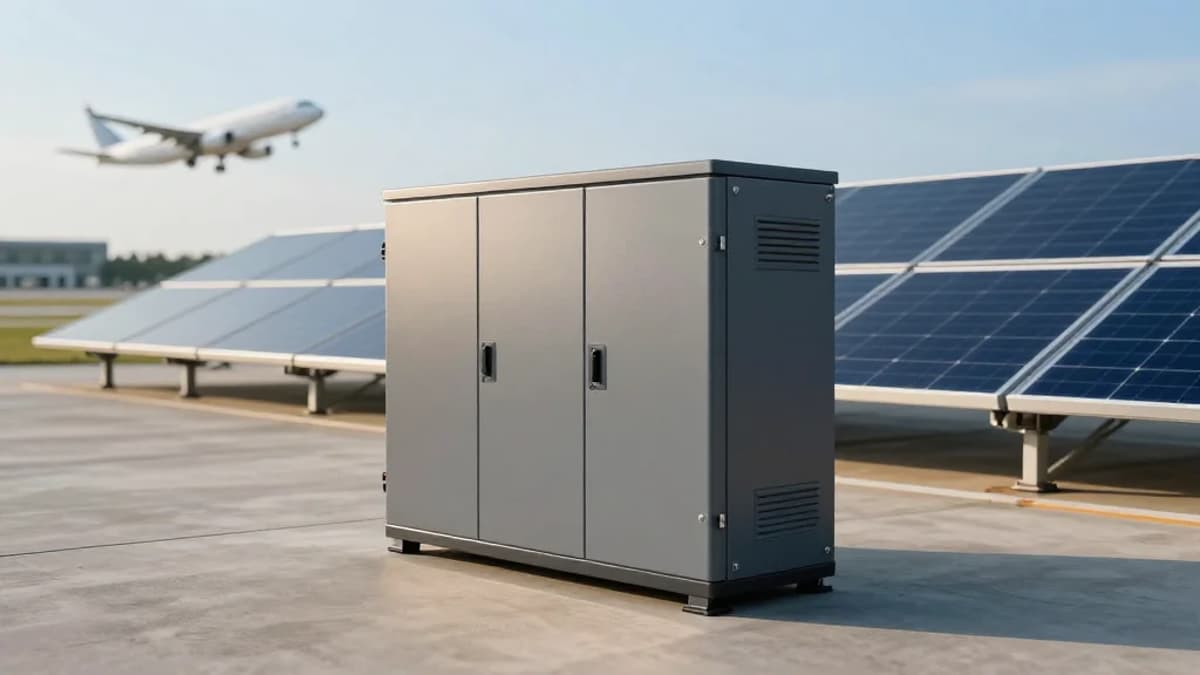
EVE Energy’s 628 Ah cells offer higher energy density compared to smaller‑format alternatives. (Image: EVE Energy)

Chinese battery manufacturer EVE Energy has secured a contract with the Malaysian government to deploy an AC/DC integrated 36 MWh solar‑plus‑storage system at Kuala Lumpur International Airport (KLIA). The project will utilise the company’s 628 Ah lithium‑iron‑phosphate (LFP) battery cells.

This marks EVE Energy’s expansion into Malaysia’s growing energy‑storage market, leveraging the company’s large‑format battery‑cell technology that has gained traction in utility‑scale applications globally.

EVE Energy’s 628 Ah cells offer higher energy density than smaller‑format alternatives, reducing system complexity and installation costs for large‑scale deployments. While many manufacturers have moved toward cells that go well beyond the industry’s ~300 Ah benchmark—larger cells being a major driver of cost reduction—EVE claimed to be the first to mass‑produce 600 + Ah cells in late 2024.

LFP chemistry cells have become the global industry standard for stationary battery energy storage systems (BESS), providing enhanced safety and cycle‑life performance at a lower cost than nickel‑manganese‑cobalt (NMC) despite their lower energy density at cell level. EVE Energy said LFP’s safety profile, in particular, makes it suitable for critical‑infrastructure applications such as airport operations.

The KLIA deployment combines solar PV generation with battery energy storage in an integrated AC/DC configuration, designed to provide a reliable power supply for airport operations while reducing grid dependency. The system’s technical specifications position it as a critical‑infrastructure project supporting Malaysia’s aviation sector, energy resilience, and sustainability objectives.

EVE Energy has experienced growth in energy‑storage shipments in recent years, with the company’s battery systems gaining adoption across multiple markets. As previously reported by Energy‑Storage.news, the manufacturer’s energy‑storage shipments have surged, showcasing increased demand for large‑format lithium‑iron‑phosphate cells in utility‑scale applications.

Malaysia’s energy‑storage sector has developed rapidly, with the government implementing policies to support the deployment of battery storage systems across various applications. The country’s Energy Commission recently shortlisted bidders in a landmark 1.6 GWh BESS programme, indicating substantial planned capacity additions across the Malaysian grid.

The KLIA project follows other significant energy‑storage developments in Malaysia, including the country’s first large‑scale battery storage system inaugurated in Sabah, Borneo.

Meanwhile, the AC/DC integrated configuration optimises energy‑conversion efficiency and reduces power‑electronics requirements. This design approach has gained adoption in solar‑plus‑storage applications where maximising round‑trip efficiency and minimising system costs are priorities.

Airport energy‑storage systems serve multiple functions, including peak‑demand management, backup‑power provision, and renewable‑energy integration.

The project represents EVE Energy’s continued international expansion beyond its primary Chinese market, with the company targeting utility‑scale and commercial applications across Southeast Asia.

The KLIA solar‑plus‑storage system deployment timeline and operational‑commencement details remain subject to project‑development schedules and regulatory approvals.

Read Original Article
0

Comments

Want to join the conversation?

Loading comments...