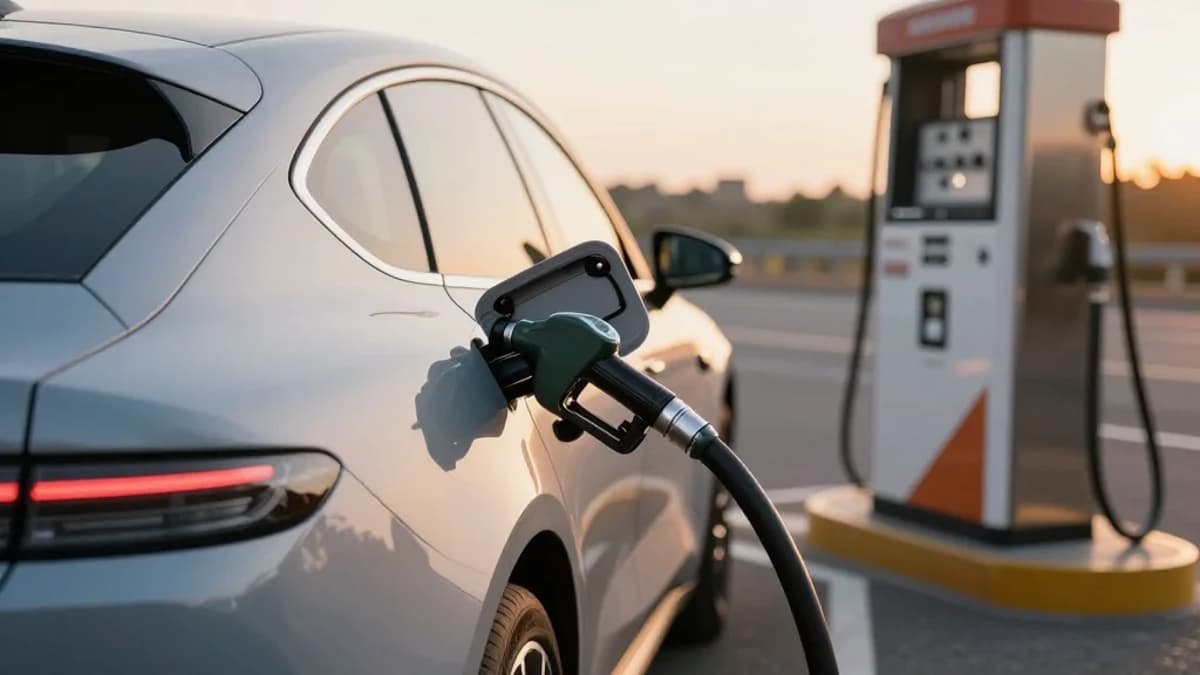
EVs Likely to Lose Zero-Emission Tag Under CAFE III
•February 24, 2026
0
Why It Matters
The shift forces automakers to improve EV energy efficiency and curtails reliance on EV credits to mask ICE emissions, tightening overall fleet carbon performance in a coal‑dominant power market.
Key Takeaways
- •EVs to be assessed on electricity consumption, not zero emissions
- •Super credits remain, but energy conversion reduces EV advantage
- •Rule aims to improve overall fleet fuel efficiency
- •India's coal‑heavy grid may offset EV environmental gains
- •EV market share projected to reach 15% by 2030
Pulse Analysis
The revised CAFE‑III framework marks a pivotal departure from treating electric vehicles as inherently carbon‑free. By translating kilowatt‑hours per 100 km into a petrol‑equivalent figure, regulators embed the energy source’s carbon intensity into compliance metrics. This methodology mirrors practices in the European Union and the United States, where fuel‑efficiency standards increasingly factor upstream electricity generation. For India, where coal supplies the bulk of electricity, the conversion underscores that an EV’s true emissions depend on the grid mix, not just tailpipe output.
Automakers will feel the pressure on two fronts. First, the super‑credit system—three points for EVs versus one for ICE models—remains, but the added energy‑consumption accounting erodes the net advantage of adding low‑selling EVs solely for credit harvesting. Second, manufacturers must now prioritize genuine improvements in EV range and efficiency to avoid penalties tied to higher fleet energy footprints. This could accelerate investment in battery technology, lightweight materials, and regenerative braking, while also nudging ICE producers to tighten combustion efficiency to stay competitive under the stricter CAFE calculations.
The policy shift arrives amid India’s broader energy transition challenges. Coal‑fired plants generated over 1,000 billion units of electricity this fiscal year, dwarfing renewable output. Consequently, the environmental benefit of EV adoption hinges on decarbonising the grid. Aligning vehicle‑level standards with grid‑level reforms could amplify emissions reductions, positioning India alongside global markets that tie vehicle efficiency to lifecycle carbon footprints. As EV penetration climbs toward 15 % by 2030, the interplay between CAFE‑III rules and power‑sector reforms will be critical for achieving the nation’s climate targets.
EVs likely to lose zero-emission tag under CAFE III
0
Comments
Want to join the conversation?
Loading comments...