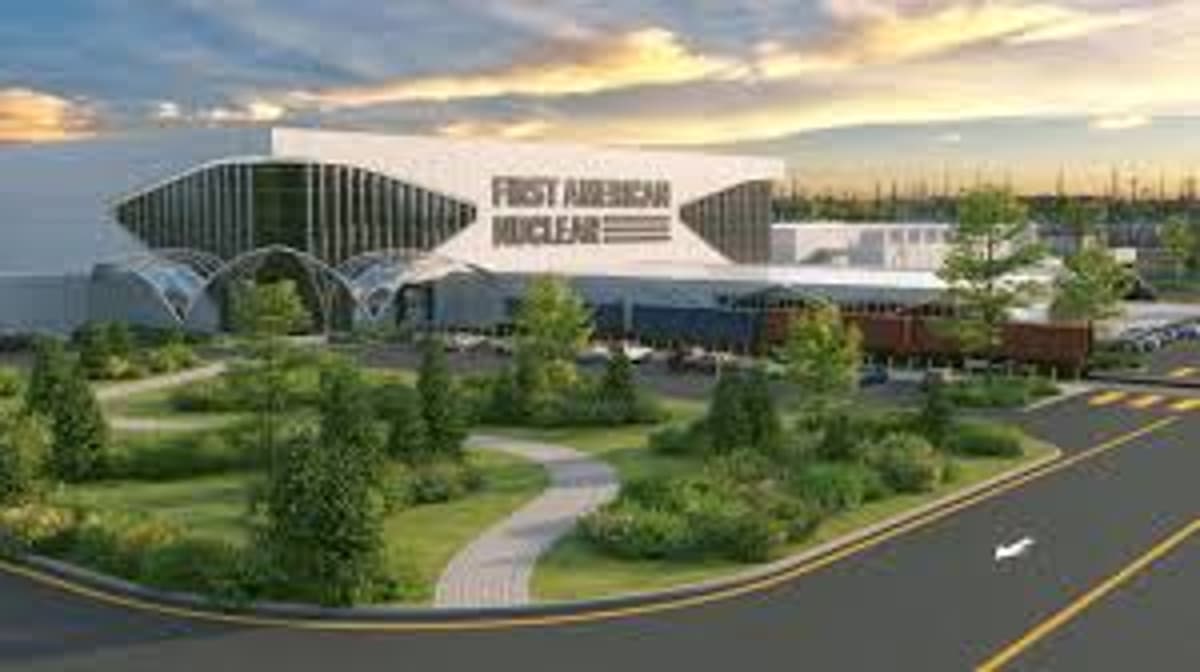
FANCO EAGL-1 SMR Regulatory Engagement Advances Construction Pathway in US Nuclear Project
Why It Matters
The filing accelerates the path to commercial nuclear capacity in the U.S., offering a utility‑scale, low‑carbon power source that could diversify the energy mix and reduce reliance on fossil fuels. Its modular, factory‑built approach promises faster, cheaper construction than traditional reactors, addressing a key barrier to nuclear expansion.
Key Takeaways
- •First American Nuclear filed pre‑application plan with NRC for EAGL‑1 SMR.
- •EAGL‑1 delivers ~240 MW per unit, targeting 1.5 million homes per cluster.
- •Lead‑bismuth coolant and HALEU fuel enable fast‑spectrum, passive safety design.
- •Factory‑built modules and commercial balance‑of‑plant reduce construction time.
- •“Bridge power” gas system supplies electricity while nuclear licensing proceeds.
Pulse Analysis
The regulatory milestone signals a shift in how the U.S. nuclear sector approaches licensing. By entering the NRC’s pre‑application phase, First American Nuclear joins a growing cohort of SMR developers leveraging the agency’s streamlined review pathways. The engagement plan outlines a phased submission schedule covering safety, fuel qualification, and thermal‑hydraulics, echoing the Department of Energy’s GAIN initiative to de‑risk advanced reactors. This early dialogue reduces uncertainty for investors and utilities, positioning the project for a smoother transition from design to construction.
Technically, EAGL‑1 distinguishes itself with a liquid‑metal fast reactor architecture that uses lead‑bismuth alloy as coolant and high‑assay low‑enriched uranium (HALEU) fuel. The non‑pressurized core and passive decay‑heat removal system embody a “walk‑away safe” philosophy, eliminating the need for operator intervention during shutdown scenarios. Modular fabrication means the nuclear steam supply system is assembled and tested off‑site, then shipped as a sealed unit, while the balance‑of‑plant relies on commercial off‑the‑shelf turbines and generators. This combination of advanced physics and conventional engineering aims to meet existing NRC criteria without requiring new regulatory frameworks.
From a market perspective, the 240 MW per unit output places EAGL‑1 in the utility‑scale segment, a departure from many SMR projects that target niche or remote applications. Clustered deployment of four to six reactors could generate enough electricity for 1.5 million households, offering a competitive alternative to natural‑gas peaker plants. The “bridge power” concept—initially supplying electricity via a gas‑fired system while licensing proceeds—mitigates revenue gaps and eases grid integration. If successful, the EAGL‑1 model could accelerate the broader adoption of SMRs across the United States, supporting decarbonization goals and reshaping the country’s energy landscape.
FANCO EAGL-1 SMR Regulatory Engagement Advances Construction Pathway in US Nuclear Project
Comments
Want to join the conversation?
Loading comments...