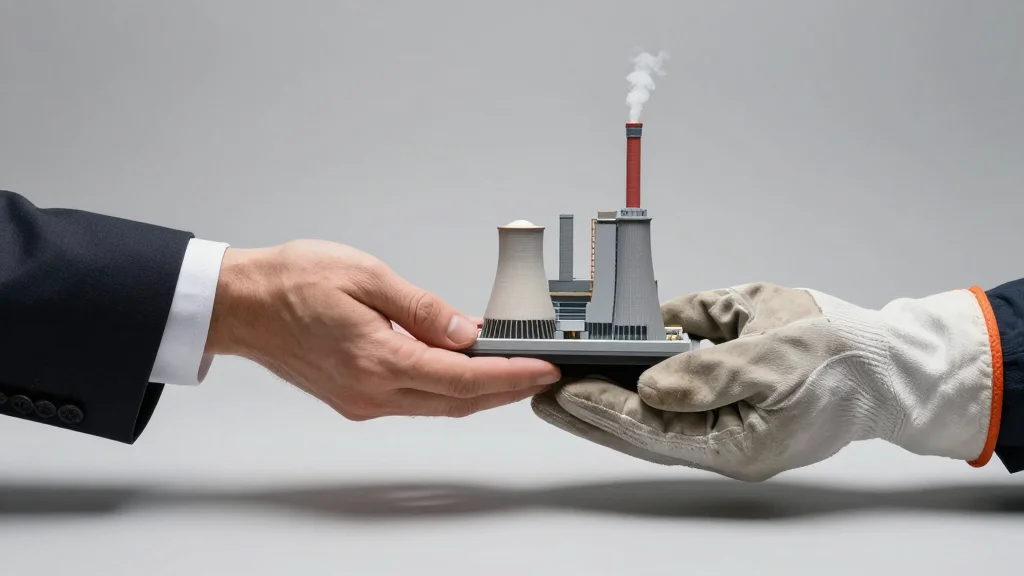
Federal Government Prepares Withdrawal From Uniper – Orderly Reprivatization Following 2022 Crisis Rescue
Companies Mentioned
Why It Matters
Reducing state ownership restores market discipline in Germany’s power sector and fulfills EU state‑aid rules, while the timing and structure of the sale will influence investor sentiment and energy security across Europe.
Key Takeaways
- •Germany will keep 25%+1 share, selling rest by 2028.
- •Uniper received $8.8 bn state capital in 2022 to avoid collapse.
- •Reprivatization may involve IPO in Jan 2027 or block sales.
- •EU state‑aid rules force exit, ensuring market competition.
- •Long‑term investors targeted to keep Uniper’s integrated operations.
Pulse Analysis
The 2022 energy shock, triggered by the abrupt loss of Russian gas, forced Berlin to intervene in Uniper, a linchpin of Germany’s gas and electricity supply chain. The federal government injected €8 billion (roughly $8.8 billion) through a capital increase and set up a €25 billion (about $27.5 billion) authorized‑capital facility to guard against further market turbulence. This unprecedented rescue stabilized the grid, but also placed the state under strict European Commission oversight, mandating a return to private ownership within six years.
The reprivatization roadmap now centers on three possible routes: a direct block‑sale to strategic investors, a full‑scale initial public offering scheduled for January 2027, or a blended approach that staggers share releases. By retaining a 25%‑plus‑one‑share minority, the government preserves a veto block, ensuring continuity of critical infrastructure while still complying with EU state‑aid conditions. Market analysts expect the IPO to attract infrastructure funds and utility conglomerates seeking stable cash flows, whereas block‑sale talks may draw energy‑focused private equity firms eager for a foothold in Europe’s transition to greener power.
Beyond Uniper, the exit marks a broader test of Europe’s state‑aid framework and its impact on energy security policy. A successful, market‑friendly divestiture could reinforce confidence that temporary state interventions need not crowd out private capital in the long run. Conversely, a protracted or discounted sale might signal lingering doubts about the profitability of legacy gas assets amid the continent’s shift toward renewables. Investors will watch closely as the German government balances fiscal prudence, regulatory compliance, and the strategic imperative of keeping Europe’s power system resilient.
Federal Government Prepares Withdrawal from Uniper – Orderly Reprivatization Following 2022 Crisis Rescue
Comments
Want to join the conversation?
Loading comments...