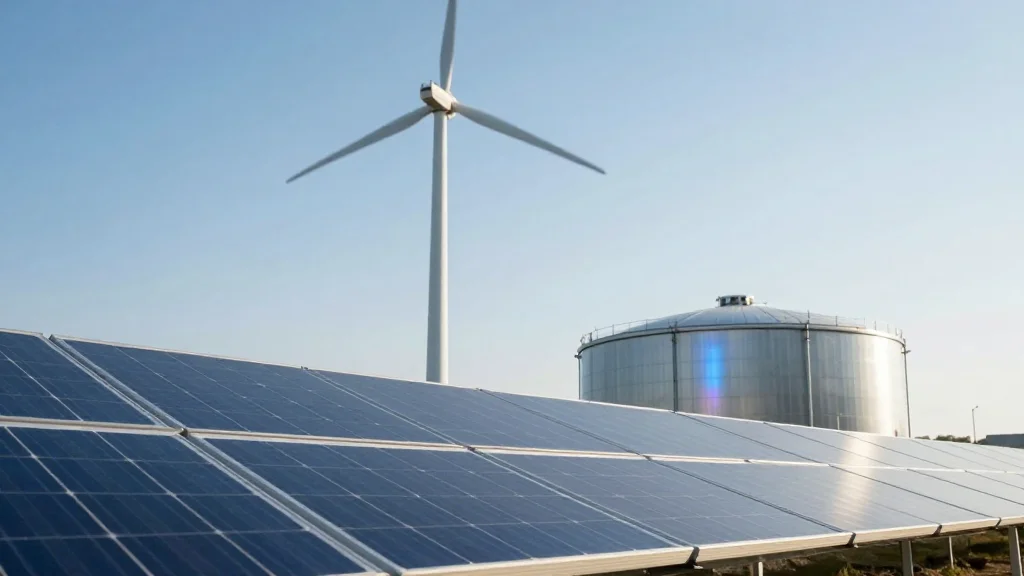
FERC Says U.S. Summer Capacity Rises 75 GW, Boosting Grid Reliability

Why It Matters
The 75 GW capacity increase reshapes the U.S. electricity supply landscape, signaling that renewable and storage technologies are now large enough to offset the retirement of older plants. This shift improves grid reliability ahead of the summer peak, reduces the likelihood of rolling blackouts, and could translate into lower consumer electricity bills in markets with high renewable penetration. At the same time, the report highlights lingering vulnerabilities—particularly in the Pacific Northwest, New England and western Texas—where extreme weather could still outstrip supply. The potential loss of 4.5 GW of hydro capacity due to low Colorado River water levels underscores the interconnectedness of water and energy policy, prompting calls for coordinated federal action to safeguard both resources.
Key Takeaways
- •U.S. summer generating capacity up ~75 GW YoY, the largest increase in over a decade.
- •Additions include ~26 GW in Texas, 13 GW in the WECC region, and 11 GW in MISO.
- •Plant retirements expected to slow to about 8 GW, a >50% reduction in retirement rate.
- •Low Colorado River water could cut ~4.5 GW of hydro output by August, affecting the West.
- •Three regions—Pacific Northwest, New England, western Texas—face heightened short‑fall risk.
Pulse Analysis
FERC’s capacity report marks a watershed moment for the U.S. power sector, confirming that the renewable build‑out is no longer a future promise but a present reality capable of reshaping reliability calculations. The 75 GW surge, largely from solar, wind and battery storage, reflects the cumulative impact of federal tax credits, state clean‑energy mandates and falling technology costs. Historically, capacity additions have lagged behind retirements, forcing utilities to rely on expensive peaker plants or import power. This time, the net addition creates a surplus that can be leveraged to lower wholesale prices and defer new transmission projects, at least in the short term.
However, the report also warns that capacity alone does not guarantee reliability. The identified at‑risk zones illustrate that geographic mismatches between generation and load, coupled with climate‑driven stressors like heatwaves and drought, can still produce localized deficits. The hydro shortfall risk in the Colorado River Basin is a stark reminder that water policy is now an energy policy issue. Stakeholders will need to prioritize flexible resources—batteries, demand response, and interregional transmission—to smooth out these gaps.
Looking forward, the 2027 outlook will be a litmus test for how quickly the industry can translate capacity gains into firm, dispatchable power. If transmission upgrades keep pace and water management strategies mitigate hydro losses, the U.S. could see a sustained period of lower price volatility and higher renewable penetration. Conversely, failure to address regional bottlenecks could erode the reliability gains FERC has highlighted, prompting renewed calls for federal intervention in both the energy and water sectors.
FERC Says U.S. Summer Capacity Rises 75 GW, Boosting Grid Reliability
Comments
Want to join the conversation?
Loading comments...