Find The Lego: How Indonesia Can Turn Diesel Generator Retirement Into A Scalable Program
Why It Matters
The shift cuts imported‑fuel costs, reduces up to 2 million tonnes of CO₂, and strengthens Indonesia’s energy security in a geopolitically volatile region. It also demonstrates a rare public‑infrastructure project with a clear, sub‑decade financial return.
Key Takeaways
- •Indonesia’s diesel fleet produces ~2.3 TWh, burning 0.7 billion litres yearly.
- •Diesel generation costs $700‑$820 million annually, driving high electricity prices.
- •Solar‑plus‑storage replacement costs $2.5‑$3.4 billion, with 3‑6 year payback.
- •Standardized “Lego” kits and regional hubs can cut deployment time and costs.
- •Institutional shift to centralized design and O&M is critical for scaling.
Pulse Analysis
Indonesia’s archipelagic geography has long forced utilities to rely on diesel generators for remote power, creating a costly, carbon‑intensive backbone. Public data show the diesel fleet delivers roughly 2.2‑2.5 TWh annually, burning 0.6‑0.8 billion litres of fuel and emitting up to 2 million tonnes of CO₂ each year. With operating expenses of $700‑$820 million, the system is a major drag on the national budget and makes electricity prices vulnerable to global oil shocks, especially after recent disruptions in the Strait of Hormuz.
Economic analyses suggest that a solar‑plus‑battery solution—about $500‑$650 per kW for utility‑scale PV and $125‑$175 per kWh for four‑hour LFP storage—could replace the diesel fleet with 2.9 GW of solar and 8.6 GWh of storage. At a capital outlay of $2.5‑$3.4 billion, the project promises a 3‑5‑year simple payback under optimistic assumptions and 4‑6 years when logistics and program overhead are included. These returns are exceptional for public infrastructure, but they require upfront financing, standardized procurement, and a shift from operating‑expense thinking to asset‑level capital planning.
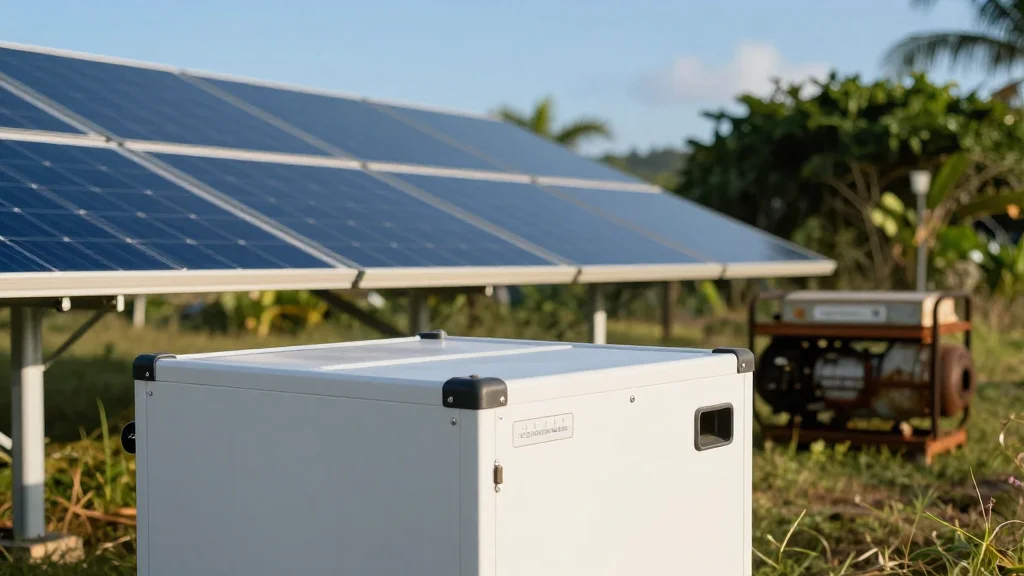
The real hurdle is institutional. Indonesia must adopt a modular "Lego" approach, pre‑assembling containerized kits at regional hubs, applying a limited set of archetypes, and enforcing strict change‑order controls. A dedicated national delivery office with a centralized design authority, live asset database, and unified telemetry platform can ensure repeatability, lower O&M costs, and faster commissioning. Aligning industrial policy to source affordable Chinese modules while nurturing local assembly will keep costs low without sacrificing rollout speed, turning the de‑dieselization effort into a scalable, low‑carbon energy model for the nation.
Find The Lego: How Indonesia Can Turn Diesel Generator Retirement Into A Scalable Program
Comments
Want to join the conversation?
Loading comments...