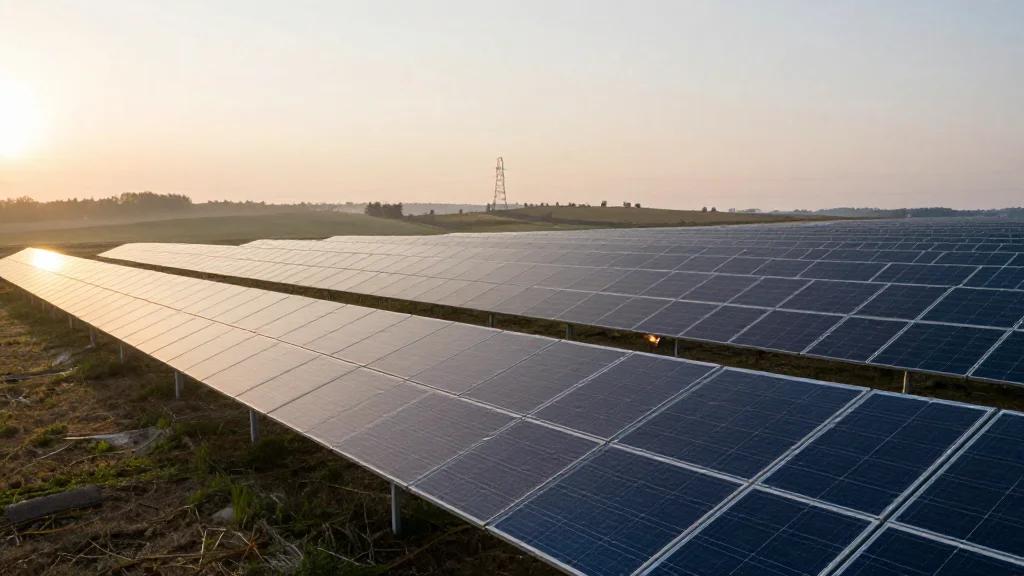
First PV Plant Operating in Poland’s Balancing Market
Why It Matters
Enabling solar farms to provide balancing services transforms them from passive price takers into active grid participants, enhancing revenue stability and supporting Poland’s rapid renewable expansion. This milestone signals a broader shift toward flexible, market‑based incentives for intermittent generation across Europe.
Key Takeaways
- •Zwartowo 204 MW plant entered Poland’s balancing market, first solar participant.
- •Qualification required 14 months, meeting gas‑coal plant standards.
- •Balancing market could add up to 10% short‑term revenue.
- •Participation reduces curtailment and stabilises cash flows for solar farms.
- •Poland’s solar capacity reached 24.8 GW after 3.6 GW addition.
Pulse Analysis
Poland’s electricity system has struggled with excess solar generation, leading to curtailments and negative prices during peak daylight hours. The balancing market, traditionally dominated by dispatchable generators, offers a mechanism for flexible resources to absorb surplus power and provide ancillary services. By allowing intermittent assets to bid into this market, the grid operator can smooth supply‑demand mismatches, reducing the need for costly fossil‑fuel back‑up and improving overall system efficiency.
The Zwartowo project illustrates both the opportunities and hurdles of this new paradigm. Goldbeck Solar invested heavily in compliance work, navigating stringent technical criteria that assume steady‑state output typical of coal or gas plants. After a 14‑month qualification period, the plant secured the ability to offer up‑regulation and down‑regulation services, translating into an estimated 10% short‑term revenue boost and a 4% long‑term uplift. These figures stem from internal modelling that accounts for avoided curtailment losses and the premium paid for rapid response capabilities. The added revenue stream not only improves project economics but also strengthens cash‑flow resilience amid volatile wholesale prices.
Beyond Zwartowo, the successful entry of a large solar farm into Poland’s balancing market sets a precedent for other renewable developers across the region. As the European Union pushes for higher renewable shares, flexible market mechanisms become essential for integrating variable generation without compromising reliability. Solar operators can now position themselves as active participants in grid stability, attracting investors seeking diversified income sources. The development may accelerate policy reforms, encouraging regulators to tailor balancing requirements to the characteristics of renewable assets, ultimately fostering a more resilient and decarbonized energy landscape.
First PV plant operating in Poland’s balancing market
Comments
Want to join the conversation?
Loading comments...