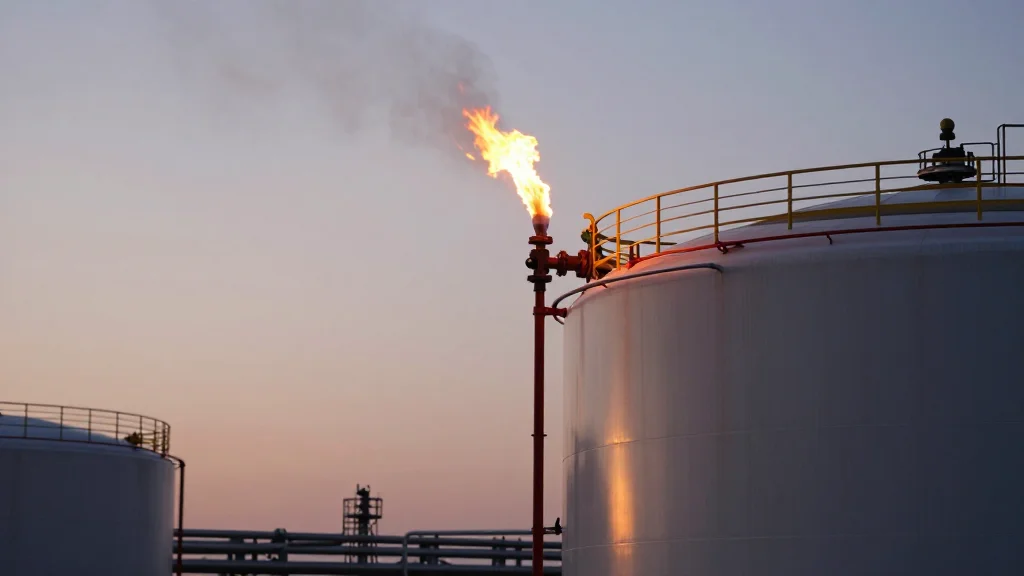
Flaring Scrutiny Intensifies at LNG Canada During Export Ramp-Up
Why It Matters
Regulatory scrutiny threatens to push back LNG Canada’s export schedule, raising costs and affecting North America’s emerging LNG supply amid heightened geopolitical risk. Investors and downstream buyers must reassess project risk and market dynamics.
Key Takeaways
- •BCER ordered LNG Canada to investigate flaring violations at export terminal
- •Corrective actions must be submitted by October 2026 to avoid penalties
- •January flaring incidents triggered black‑smoke permit violations under provincial law
- •Export ramp‑up delays could affect LNG Canada’s 2028 commercial start‑up
- •Geopolitical tension in Middle East adds market uncertainty for natural gas buyers
Pulse Analysis
LNG Canada, a joint‑venture led by Shell, Petronas and other partners, is poised to become one of the world’s largest liquefied natural‑gas exporters once its Kitimat facility reaches full capacity of roughly 14 million tonnes per year. The project, slated for commercial operation in 2028, has been championed as a cornerstone of Canada’s strategy to diversify energy exports and capture premium Asian market pricing. However, the backdrop of the ongoing U.S.–Israeli war in Iran has tightened global gas markets, prompting buyers to scrutinize supply reliability and environmental performance more closely.
The British Columbia Energy Regulator’s recent order underscores growing regulatory vigilance over methane‑rich flaring, a practice that not only breaches provincial black‑smoke permits but also draws criticism from climate advocates. After a series of flaring events in January, BCER demanded a comprehensive investigation and a corrective action plan by October 2026. The regulator’s mandate includes tighter monitoring, potential fines, and the requirement that LNG Canada implement best‑practice emissions controls, such as vapor recovery systems and real‑time flare monitoring, to mitigate future violations.
For investors and downstream gas purchasers, the enforcement action introduces a new layer of project risk. Delays in meeting corrective measures could postpone the ramp‑up, eroding anticipated revenue streams and potentially shifting contract negotiations with Asian off‑take partners. Moreover, heightened environmental scrutiny may compel LNG Canada to allocate additional capital toward emissions‑reduction technologies, influencing overall project economics. In a market already jittery from geopolitical tensions, the outcome of BCER’s order will be a bellwether for how North American LNG projects balance rapid commercialization with stringent environmental compliance.
Flaring Scrutiny Intensifies at LNG Canada During Export Ramp-Up
Comments
Want to join the conversation?
Loading comments...