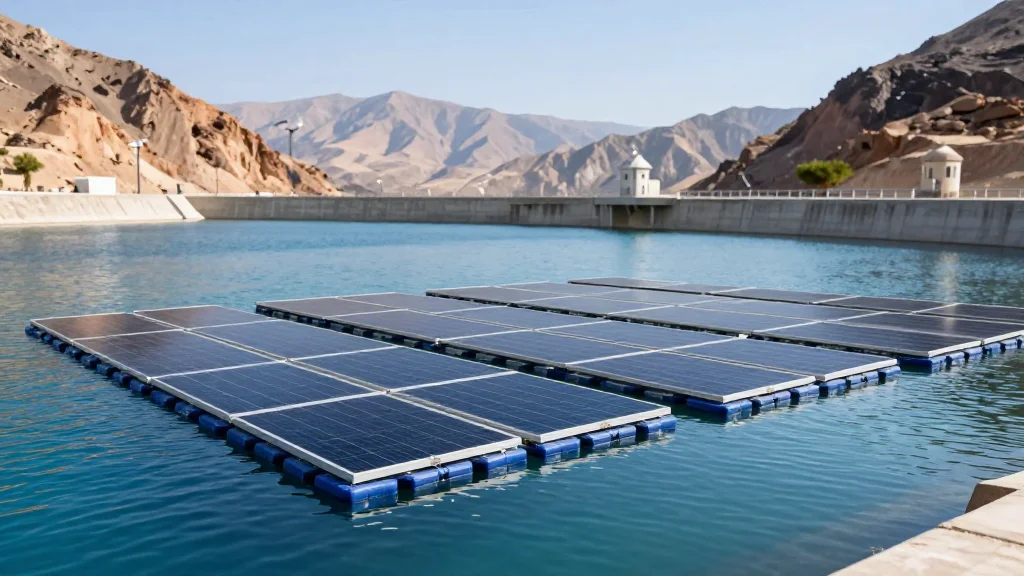
Floating Solar Offers Morocco’s Dams Antidote to Evaporation Loss
Why It Matters
Floating solar offers Morocco a rare win‑win: preserving scarce water while accelerating its renewable‑energy goals, yet regulatory gaps risk leaving the opportunity untapped.
Key Takeaways
- •Dams lose ~909 M m³ water annually, equivalent to 433 km² surface.
- •Floating PV covering 1% of dam area could meet sizable electricity share.
- •40% coverage could theoretically supply Morocco’s entire 2023 demand (42 TWh).
- •No dedicated FPV regulatory framework blocks large‑scale deployment.
- •Pilot Oued Rmel shows 30% evaporation cut and 13 MW output.
Pulse Analysis
Water scarcity is becoming a strategic driver for renewable projects worldwide, and Morocco exemplifies this trend. With droughts intensifying, the country’s reservoirs evaporate roughly 909 million cubic metres annually—a loss comparable to a small nation’s annual water consumption. Floating solar panels, positioned directly on dam surfaces, create a shade that reduces surface heating and curtails evaporation, while simultaneously harvesting solar energy. This dual benefit aligns with global FPV deployments that aim to address climate‑induced water stress and clean‑energy needs in a single infrastructure.
Economic modeling suggests that modest FPV adoption could have outsized effects. Covering just 1% of the 433 km² dam footprint would generate enough power to offset a meaningful slice of Morocco’s grid demand, and a 40% footprint could theoretically meet the entire 42 TWh of electricity consumed in 2023. Early pilots—13 MW at Oued Rmel and 360 kW at Sidi Slimane—have already shown a 30% drop in evaporation and reliable output, but investors remain cautious. The absence of a clear procurement framework, coupled with limited long‑term performance data, inflates perceived risk and hampers financing, underscoring the need for standardized guidelines and transparent O&M cost structures.
Strategically, floating solar could become a cornerstone of Morocco’s ambition to source 52% of installed capacity from renewables by 2030. Integrating FPV with existing pumped‑hydro storage would mitigate intermittency, offering grid‑scale flexibility that complements the nation’s expanding utility‑scale solar portfolio. Policymakers must therefore prioritize regulatory scaffolding, incentivize data collection from pilots, and explore public‑private partnership models. Doing so would unlock a scalable solution that safeguards water resources while accelerating the country’s clean‑energy transition.
Floating solar offers Morocco’s dams antidote to evaporation loss
Comments
Want to join the conversation?
Loading comments...