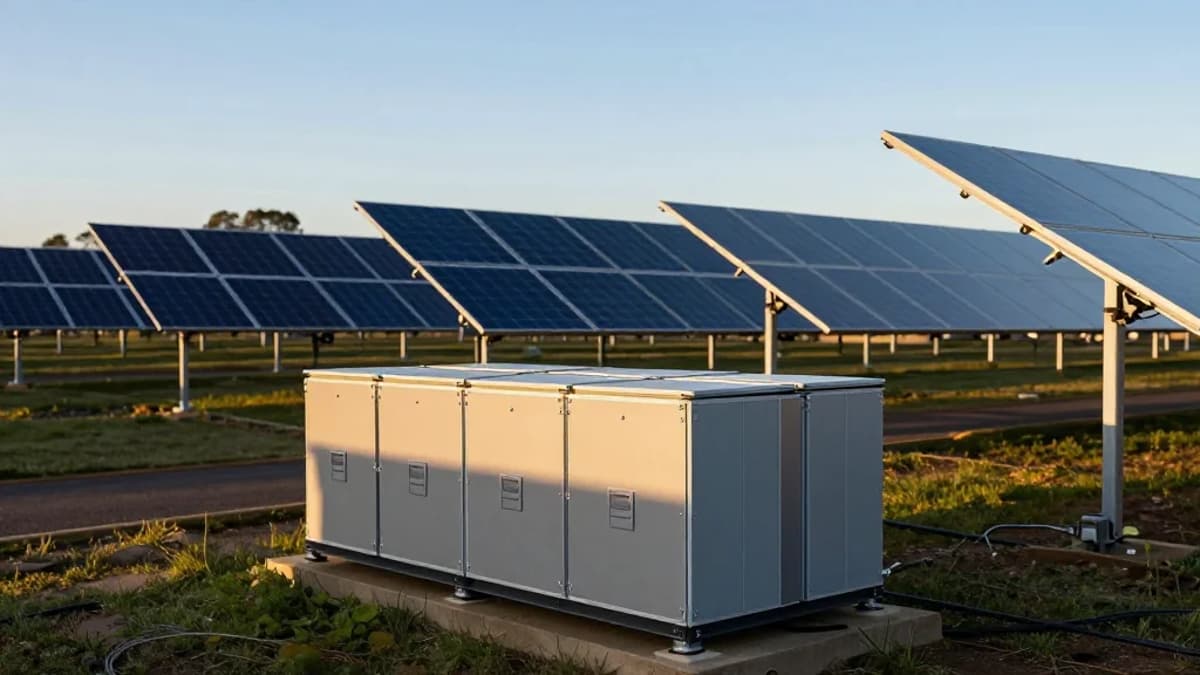
Flow Power Goes Bigger on Firmed Solar, with Purchase of Shovel Ready PV and Battery Project
•March 2, 2026
0
Companies Mentioned

Why It Matters
The deal expands firmed solar capacity in a key Australian renewable hub, strengthening grid reliability and accelerating Flow Power’s transition to an asset‑owner model.
Key Takeaways
- •Flow acquires 55 MW solar, 60 MW battery in NSW
- •Project already has SSD status and development approvals
- •Construction slated to begin later this year
- •Adds firmed renewable capacity to Flow’s portfolio
- •Supports NSW Central West Orana Renewable Energy Zone
Pulse Analysis
Flow Power’s acquisition of the Dunedoo Energy Project underscores a broader industry trend toward hybrid solar‑battery developments that can deliver firmed power on demand. By securing a 55 MW solar farm paired with a 60 MW battery storage system, Flow not only diversifies its revenue streams but also mitigates intermittency challenges that have historically limited renewable integration. The project’s shovel‑ready status—complete with State Significant Development approval—means the company can move swiftly from acquisition to construction, positioning it to capture early market share in Australia’s fast‑growing firmed‑renewable segment.
The Dunedoo site sits within the NSW Central West Orana Renewable Energy Zone, a strategically designated corridor aimed at consolidating generation, transmission, and storage assets to streamline grid connections. Linking the hybrid facility to Essential Energy’s sub‑station via a new 66 kV line will enhance regional transmission capacity and support the zone’s goal of delivering reliable, low‑cost electricity to both industrial users and local communities. Flow’s commitment to ongoing stakeholder engagement—despite minimal public opposition—reflects a growing emphasis on community‑focused development models that can smooth regulatory pathways and foster local support.
For the Australian energy market, Flow’s move signals a maturation of gentailer business models that are evolving from pure off‑taker arrangements to full‑scale project ownership. This vertical integration enables better control over pricing, asset performance, and long‑term sustainability goals. As more firms emulate this approach, the nation can expect accelerated deployment of firmed renewable capacity, greater grid stability, and a more competitive landscape for power purchase agreements, ultimately driving down costs for end‑users and advancing national decarbonisation targets.
Flow Power goes bigger on firmed solar, with purchase of shovel ready PV and battery project
0
Comments
Want to join the conversation?
Loading comments...