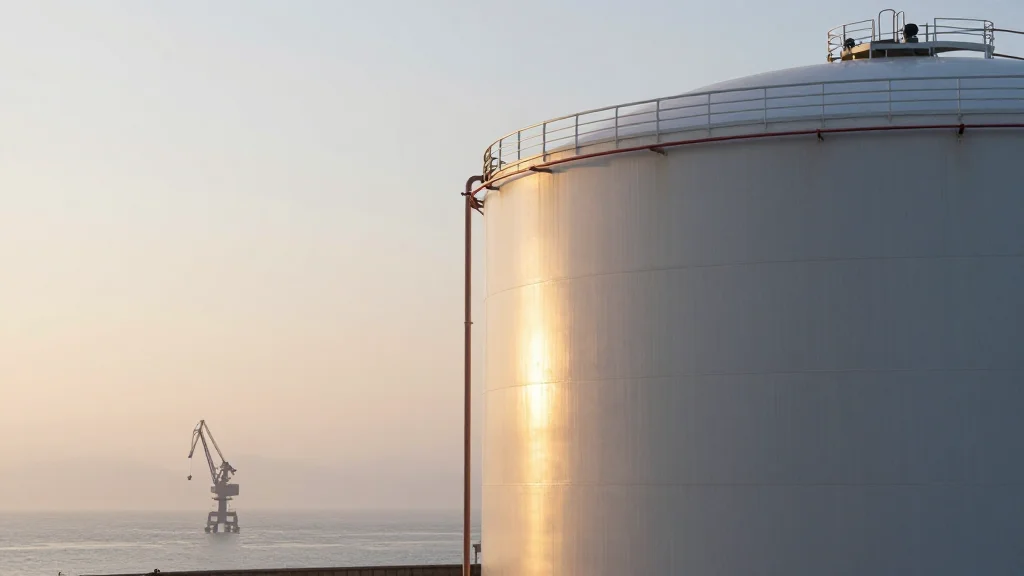
Fluor and LNG Canada Move Ahead With Expansion of Facility
Companies Mentioned
Why It Matters
Doubling LNG Canada’s capacity strengthens Canada’s position as a low‑carbon gas supplier and supports global energy‑transition demand, while delivering significant economic benefits to the region.
Key Takeaways
- •Fluor/JGC received LNTP for LNG Canada Phase 2 expansion.
- •Phase 2 could double output to ~28 million tonnes annually.
- •Project leverages ice‑free harbor and low‑cost Canadian gas.
- •Final investment decision expected after early planning activities.
- •LNG Canada JV includes Shell, PETRONAS, PetroChina, Mitsubishi, KOGAS.
Pulse Analysis
The joint venture between Fluor Canada and JGC Constructors BC has just secured a limited notice to proceed (LNTP) for Phase 2 of the LNG Canada export terminal in Kitimat. The partnership previously delivered Phase 1, completing two liquefaction trains, storage tanks, a rail yard, water‑treatment plant, flare stacks and a marine berth by 2025. Receiving the LNTP allows the consortium to begin detailed engineering, procurement planning and early site work, setting the stage for a final investment decision later this year. The LNTP also triggers mobilization of local subcontractors, accelerating regional employment.
Canada’s west‑coast location gives the Kitimat complex a strategic ice‑free harbor and direct access to abundant, low‑cost natural gas from the province’s shale basins. With an initial capacity of roughly 14 million tonnes per year, the facility already positions the country as a major supplier of lower‑carbon LNG to Europe and Asia. Doubling that output in Phase 2 would reinforce Canada’s role in the global energy transition, offering buyers a cleaner alternative to coal‑derived fuels while capitalising on rising demand for flexible, lower‑emission gas. The project's design incorporates advanced emissions controls, further reducing its carbon footprint.
The Phase 2 expansion is backed by a consortium of energy majors: Shell (40 %), PETRONAS (25 %), PetroChina (15 %), Mitsubishi (15 %) and KOGAS (5 %). Their combined financial strength and long‑term contracts provide a solid foundation for the projected $10‑$12 billion investment, though the final decision hinges on market pricing and regulatory approvals. If approved, the project would extend the terminal’s 40‑year licence and create thousands of construction jobs, while delivering a significant boost to Canada’s export revenues and its carbon‑reduction objectives. Stakeholders anticipate that the expanded capacity will attract new long‑term off‑take agreements from Asian utilities.
Fluor and LNG Canada Move Ahead With Expansion of Facility
Comments
Want to join the conversation?
Loading comments...