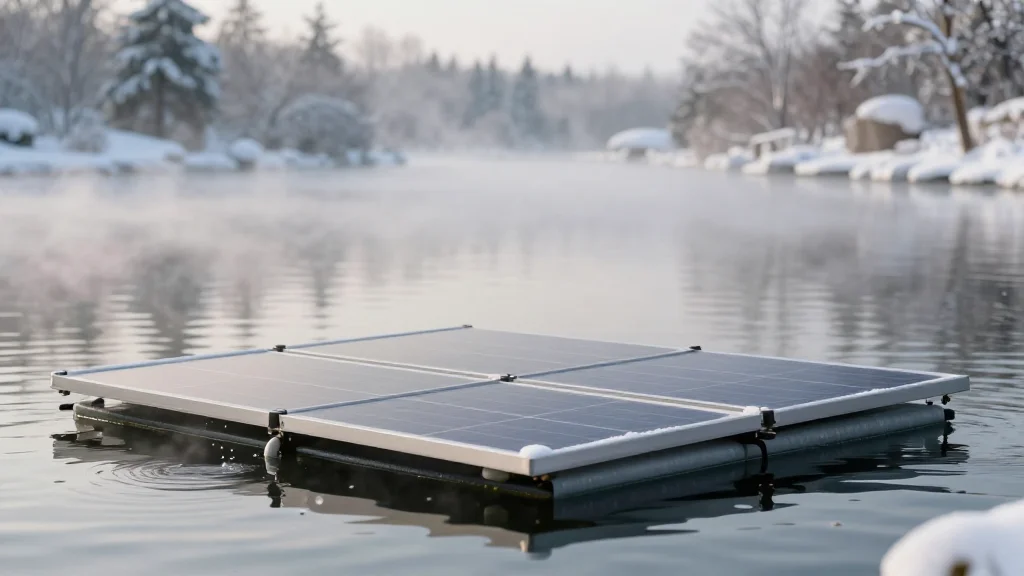
Foam-Based Floating PV System for Cold Climates
Why It Matters
Accurate thermal modeling and low‑energy ice mitigation make FPV viable in freezing regions, unlocking renewable growth and water‑saving benefits for northern markets.
Key Takeaways
- •Foam-backed FPV yielded 7.7 MWh/year, 2.7% more energy.
- •Air-bubbler kept pond ice‑free using ≤0.02%‑14.5% of output.
- •System delivered $41k net present value with 4.2‑year payback.
- •Evaporation cut up to 927 m³/year when half pond covered.
- •Winter module temps differed from standard PV temperature models.
Pulse Analysis
Floating photovoltaic installations have long been championed for their dual benefits of energy generation and water‑body cooling, yet their adoption in cold regions has been hampered by ice formation and inaccurate temperature predictions. The Western University team tackled these hurdles by bonding monocrystalline modules directly to polyethylene foam, eliminating bulky pontoons and positioning panels just a centimetre above the water. This design altered the thermal envelope, prompting the researchers to compare real‑time module temperatures against five leading PV temperature models, uncovering systematic deviations during winter months and highlighting the need for climate‑specific modeling.
Performance data from the year‑long trial revealed a modest but meaningful 2.7% boost in annual energy output, translating to 7.7 MWh for the 7 kW system. The integrated air‑bubbler system prevented ice buildup with an energy cost ranging from a mere 0.02% to 14.5% of total generation, effectively preserving efficiency without compromising the net yield. Moreover, covering half of the pond with foam‑based FPV reduced evaporation by up to 927 m³ per year, offering a tangible water‑conservation advantage for agricultural or municipal reservoirs. Financially, the project achieved a positive NPV of roughly $41,000 and a discounted payback period of 4.2 years when electricity prices were set at CAD 0.55/kWh (≈$0.41/kWh), demonstrating commercial viability for off‑grid or high‑tariff scenarios.
The implications extend beyond a single pilot. By proving that foam‑based FPV can thrive in sub‑zero climates while delivering ancillary benefits—lower water loss, reduced ice‑related maintenance, and compatible storage via a 10 kWh Li‑FePO₄ battery and electrolyzer—the technology paves the way for broader deployment across northern latitudes. Future research can scale the concept to larger water bodies, integrate advanced control algorithms for bubble generation, and explore synergistic uses such as hydro‑agricultural cooling. As policymakers and utilities seek resilient, low‑carbon energy sources, cold‑climate FPV emerges as a compelling addition to the renewable mix.
Foam-based floating PV system for cold climates
Comments
Want to join the conversation?
Loading comments...