Forget Air-Con, Singapore Looks Underground for a Cooler Future
Companies Mentioned
Why It Matters
District cooling offers a scalable, energy‑efficient solution for Singapore’s heat‑intensive environment, reducing grid strain and emissions while underpinning the city‑state’s climate‑adaptation strategy. Its growth signals lucrative infrastructure opportunities across Southeast Asia’s rapidly urbanising markets.
Key Takeaways
- •Singapore's district cooling cuts electricity by up to 50% versus AC units
- •Punggol network serves 8,000 public‑housing units via 5 km pipe system
- •Global market could reach $60 billion by 2034, Singapore demand may double
- •Capital costs run into hundreds of millions, requiring public‑private financing
- •Water scarcity and data‑center demand pose operational risks for cooling networks
Pulse Analysis
District cooling, a century‑old concept that circulates chilled water through underground pipes, is gaining renewed relevance in tropical megacities. Singapore’s relentless temperature rise—twice the global average—has made traditional air‑conditioners both costly and carbon‑intensive. By centralising refrigeration plants and distributing 7 °C water to buildings, the system slashes electricity consumption by 30‑50% and eliminates the need for individual compressor units, directly addressing the island’s import‑dependent energy mix and its ambitious S$100 billion climate‑resilience budget.
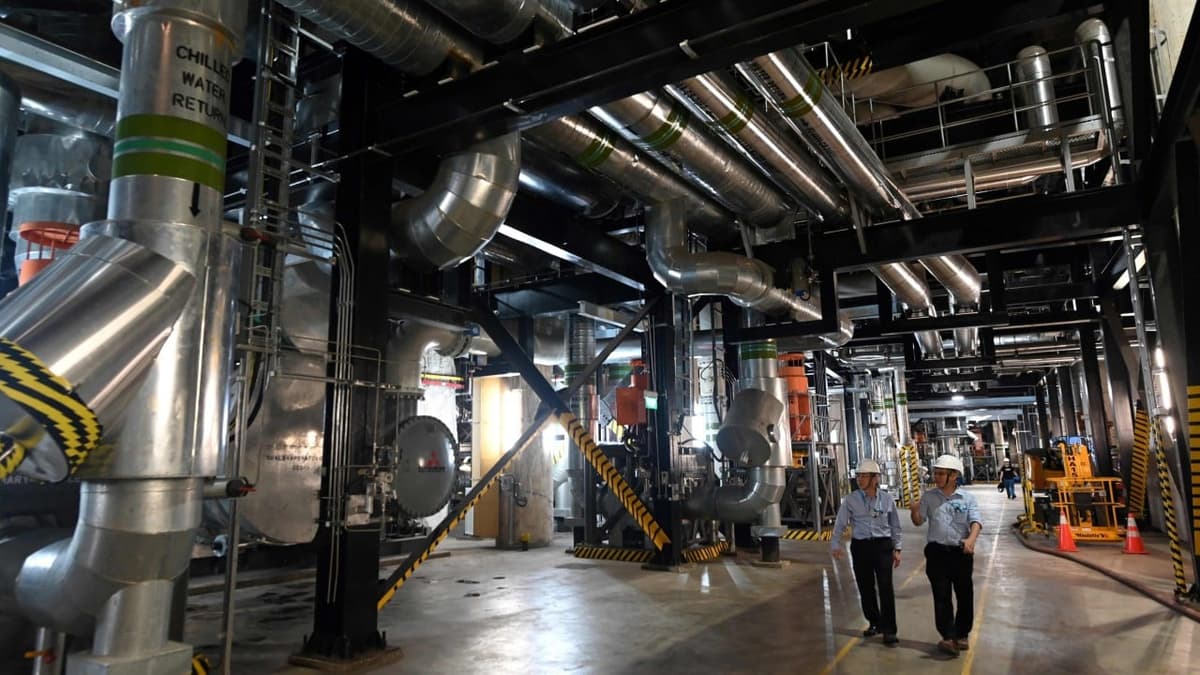
The rollout is already tangible. In Punggol, a 5 km network supplies chilled water to roughly 8,000 public‑housing flats, while the Marina Bay loop, operational since 2006, continues to expand. Major players such as Engie, which runs two Punggol plants, and Keppel EaaS are investing hundreds of millions of dollars to lay pipework and build chillers. Technical advantages include real‑time monitoring of pump performance and temperature, ensuring high efficiency under Singapore’s stringent standards. Yet challenges persist: the upfront capital outlay, competition for water from data‑centre expansion, and early‑stage teething issues like leaks and uneven cooling demand careful risk management.
Regionally, the sector is poised for rapid growth. Analysts forecast a $60 billion global market by 2034, with Southeast Asia poised to double its current capacity as urbanisation and rising incomes drive cooling demand. Singapore’s proactive policy framework—linking district cooling to its broader energy‑security and sea‑level‑rise mitigation plans—offers a template for neighbouring markets such as Malaysia and the Philippines. For investors and infrastructure firms, the convergence of climate urgency, technological maturity, and government backing creates a compelling case to scale district‑cooling solutions across the hot, humid economies of the region.
Forget air-con, Singapore looks underground for a cooler future
Comments
Want to join the conversation?
Loading comments...