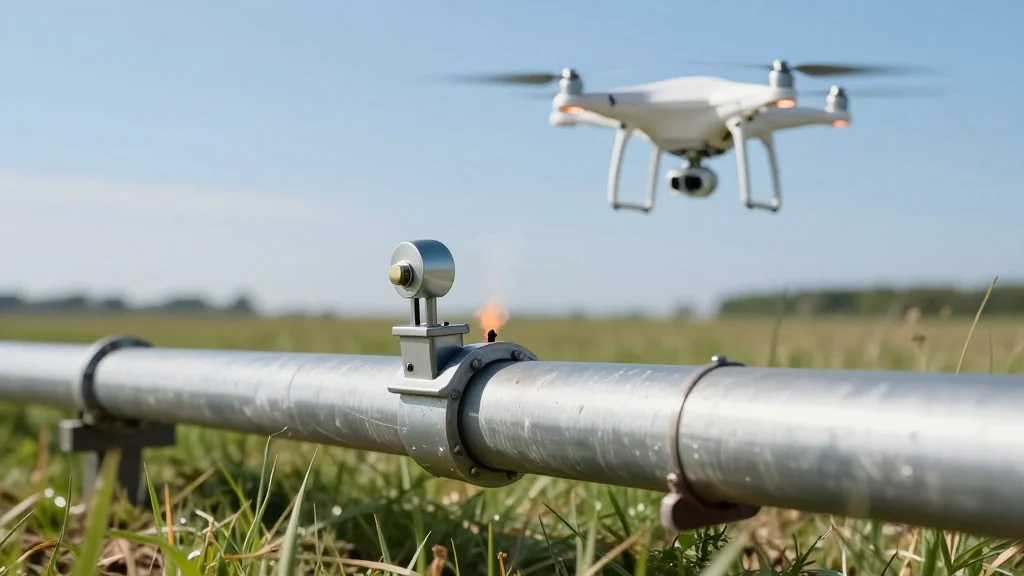
Forsite and Flyscan Team Up on Integrated Leak Detection for Pipelines

Companies Mentioned
Why It Matters
The Forsite‑Flyscan partnership tackles two persistent challenges in the energy sector: rapid leak detection and line‑strike prevention. Faster leak alerts can dramatically reduce product loss, environmental cleanup costs, and community health impacts, while proactive threat detection helps avoid costly pipeline ruptures caused by third‑party excavation. By integrating hardware sensing with aerial data analytics, the alliance offers a more holistic safety net than fragmented solutions, potentially reshaping industry standards for pipeline monitoring. Beyond safety, the collaboration could influence capital allocation across the energy infrastructure market. Operators that adopt the unified platform may qualify for lower insurance premiums and regulatory incentives, creating a financial incentive to modernize legacy monitoring practices. The partnership also signals a broader trend toward convergence of remote‑sensing hardware and geospatial intelligence services, encouraging further consolidation and joint‑venture activity in the sector.
Key Takeaways
- •Forsite announces strategic partnership and minority investment in Flyscan Systems.
- •Combined offering merges Flyscan’s liquid‑hydrocarbon sensors with Forsite’s aerial patrol and data platform.
- •Solution provides real‑time leak alerts, threat detection, vegetation and geohazard management.
- •Target to cover 30% of U.S. interstate pipelines within three years, with pilots in Gulf Coast and Midwest.
- •Joint field demonstration planned for Q4 2026 on a Texas natural‑gas transmission line.
Pulse Analysis
The Forsite‑Flyscan deal reflects a maturing market where data‑driven safety solutions are becoming a prerequisite for pipeline operators. Historically, leak detection relied on periodic manual inspections and fixed‑point sensors, which left large gaps in coverage and delayed response times. By marrying continuous aerial surveillance with on‑board sensing, the partnership creates a near‑continuous monitoring loop that can flag anomalies within minutes. This shift mirrors the broader digital‑infrastructure trend seen in utilities, where real‑time analytics are used to pre‑empt failures rather than react after the fact.
From a competitive standpoint, the alliance positions both firms ahead of pure‑play software vendors that lack proprietary hardware and hardware manufacturers that cannot offer the operational expertise of an aerial patrol service. The minority equity component also aligns incentives, ensuring Flyscan can scale production without sacrificing the integrated service quality that Forsite promises its clients. If the joint pilots demonstrate measurable reductions in spill volumes and line‑strike incidents, the model could become a de‑facto standard, prompting larger incumbents like Kinder Morgan or Enbridge to either adopt the technology or develop in‑house equivalents.
Looking forward, the partnership’s success will hinge on regulatory acceptance and the ability to prove cost‑effectiveness at scale. Regulators are increasingly mandating tighter leak‑reporting thresholds, and insurers are rewarding demonstrable risk mitigation. Should Forsite and Flyscan deliver on their promises, the industry could see a cascade of similar collaborations, accelerating the digital transformation of energy infrastructure and potentially reshaping the risk calculus for investors in fossil‑fuel pipelines.
Forsite and Flyscan Team Up on Integrated Leak Detection for Pipelines
Comments
Want to join the conversation?
Loading comments...