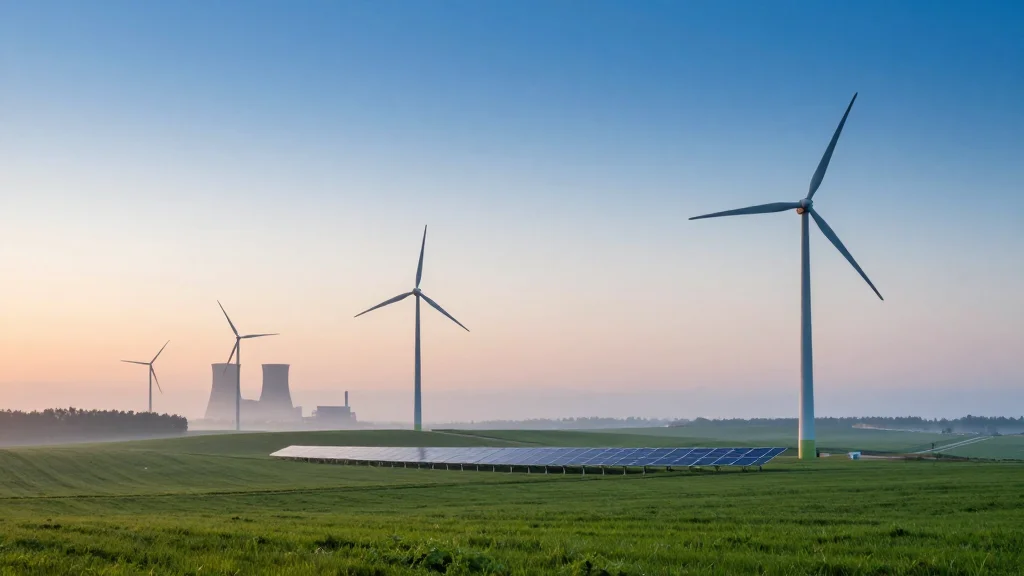
France Announces 2050 Fossil‑Fuel Phase‑Out Roadmap, Coal by 2030, Oil by 2045

Why It Matters
France’s roadmap sets a concrete, legally anchored timetable that could become a reference point for other industrialized nations still debating abstract climate targets. By tying phase‑out dates to specific fuels, the plan forces utilities, investors and policymakers to align capital allocation with a clear decarbonisation horizon, reducing regulatory uncertainty. The initiative also underscores the strategic role of nuclear power in a low‑carbon transition, highlighting a model where existing low‑carbon baseload is paired with rapid renewable expansion. If successful, the French experience may inform EU policy design, accelerate cross‑border electricity market integration, and stimulate a new wave of green financing aimed at meeting strict fuel‑phase‑out deadlines.
Key Takeaways
- •Coal use to be eliminated by 2030, oil by 2045, gas for energy by 2050.
- •Roadmap consolidates existing climate policies, including a 5% annual emissions cut from 2024‑2028.
- •France generates roughly 70% of electricity from nuclear power, limiting current fossil‑fuel share.
- •Announcement made at the Santa Marta conference with ~60 nations present.
- •Plan includes commitments to electrify heating and transport and finance transitions abroad.
Pulse Analysis
France’s decision to codify a full fossil‑fuel phase‑out is as much a political signal as a policy instrument. By anchoring deadlines, Paris reduces the strategic ambiguity that has long hampered long‑term investment in renewables and grid modernization. The move also leverages France’s nuclear advantage, allowing the country to argue that a fossil‑free future is technically feasible without compromising baseload reliability—a narrative that could sway skeptical EU members.
However, the roadmap’s effectiveness will depend on the depth of accompanying measures. The announced 5% annual emissions reduction target is modest relative to the scale of transformation required, and past shortfalls suggest implementation gaps. The real test will be the rollout of renewable capacity, storage, and demand‑side technologies at a pace that matches the fuel‑phase‑out schedule. If France can deliver on these fronts, it may catalyze a cascade of similar commitments across Europe, reshaping the continent’s energy markets and accelerating the shift toward a carbon‑neutral economy.
Conversely, if the deadlines prove aspirational rather than operational, the roadmap could become a symbolic gesture, eroding credibility and prompting other nations to question the viability of strict fuel phase‑outs. Stakeholders will be watching the upcoming quarterly progress reports and the 2027 Santa Marta follow‑up closely, as they will reveal whether France’s plan is a blueprint for the future or a well‑intentioned but unattainable ambition.
France Announces 2050 Fossil‑Fuel Phase‑Out Roadmap, Coal by 2030, Oil by 2045
Comments
Want to join the conversation?
Loading comments...