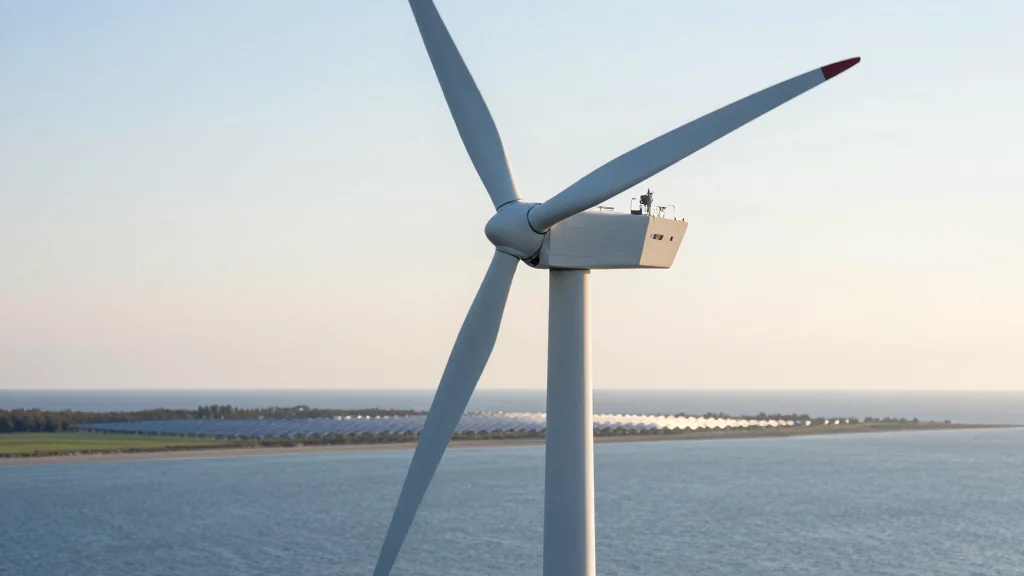
France Launches Tenders for 12,000 MW of Renewable Energy – 10,000 MW Offshore Wind Power
Why It Matters
The massive offshore‑wind tender reshapes Europe’s clean‑energy supply chain and creates a sizable market for domestic manufacturers, while the delayed nuclear rollout shifts investment focus toward renewables and grid flexibility.
Key Takeaways
- •France launches tenders for 12 GW renewable capacity, 10 GW offshore wind
- •Solar and onshore wind tenders add 1.2 GW and 0.8 GW respectively
- •France aims to boost energy independence and European industrial value
- •New nuclear EPR2 plants delayed until 2038, with state subsidies
- •Renewable output grew 6.8% wind, 30.7% solar in 2025
Pulse Analysis
France’s latest renewable tender marks a decisive step toward meeting the EU’s 2030 climate targets. By allocating roughly 10 GW to offshore wind across seven development zones, the program taps into the country’s extensive Atlantic coastline, where wind speeds rank among the highest in Europe. The scale of the tender not only promises a surge in clean‑energy output but also signals to global investors that France is serious about expanding its offshore wind pipeline, positioning the nation as a potential leader in the sector.
Beyond the energy mix, the tender reflects a broader industrial policy aimed at reducing reliance on imported components, particularly from China. The French government’s emphasis on “resilience criteria” and the “Made in Europe” principle is expected to spur domestic manufacturing of turbines, foundations, and grid‑integration technologies. European supply‑chain players stand to benefit from preferential treatment, while the policy could catalyze job creation and technology transfer across the continent, reinforcing Europe’s strategic autonomy in clean‑energy infrastructure.
The renewable push also reshapes France’s nuclear roadmap. With six EPR2 reactors now slated for operation no earlier than 2038, the state‑backed subsidy framework—low‑interest loans and long‑term CfDs—will likely divert capital toward wind and solar projects that can deliver quicker returns. Grid operators must adapt to higher variable generation, prompting investments in storage, demand‑response, and flexible nuclear dispatch. For EDF and other utilities, the evolving mix presents both risk and opportunity, as they balance legacy nuclear assets with the accelerating rollout of offshore wind and solar capacity.
France Launches Tenders for 12,000 MW of Renewable Energy – 10,000 MW Offshore Wind Power
Comments
Want to join the conversation?
Loading comments...