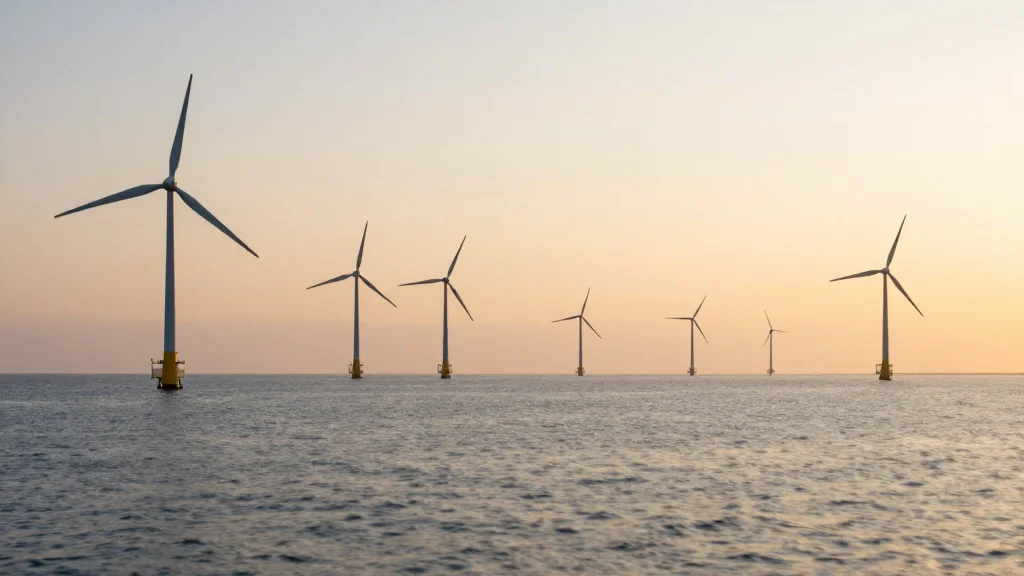
France Seeks 10 GW Offshore Wind Capacity
Why It Matters
The 10 GW target propels France toward the EU’s 2030 renewable electricity goal and signals a major shift in European energy supply chains toward clean power. It also unlocks substantial private capital, job creation, and technological innovation in floating wind solutions.
Key Takeaways
- •France launches 10 GW offshore wind tender
- •Tender covers both fixed‑bottom and floating turbines
- •Goal: meet EU 2030 renewable electricity target
- •Expected investment exceeds €20 billion (~$22 billion)
- •Project could create 30,000 construction jobs
Pulse Analysis
France’s latest offshore wind tender marks a decisive step in the nation’s energy transition, aligning with the European Union’s ambition to generate at least 40% of electricity from renewables by 2030. By earmarking 10 GW—enough to power roughly 12 million homes—the French government is leveraging its extensive continental shelf and deep‑water zones, which are ideal for both traditional fixed‑bottom farms and emerging floating platforms. The tender’s design encourages a mix of domestic and international developers, fostering competition that could drive down costs and accelerate technology maturation.
The financial implications are equally significant. Analysts estimate that the projects will attract over €20 billion (about $22 billion) in private investment, a figure that dwarfs recent offshore wind deals in the region. This capital influx is expected to stimulate a robust supply chain, from turbine manufacturers to port infrastructure, and generate roughly 30,000 jobs during the construction phase. Moreover, the inclusion of floating turbines opens new horizons for offshore wind in deeper waters, positioning France as a pioneer in a technology that could be exported to other markets with similar seabed constraints.
Despite the optimism, the rollout faces hurdles such as grid integration, permitting timelines, and financing structures. France will need to upgrade its transmission network to accommodate the intermittent output of large offshore farms and ensure that power can be efficiently delivered to inland demand centers. Additionally, securing long‑term power purchase agreements will be crucial to de‑risk investments. If these challenges are managed effectively, the tender could cut French carbon emissions by an estimated 15 million tonnes annually, reinforcing the country’s climate commitments and setting a benchmark for offshore wind development worldwide.
France Seeks 10 GW Offshore Wind Capacity
Comments
Want to join the conversation?
Loading comments...