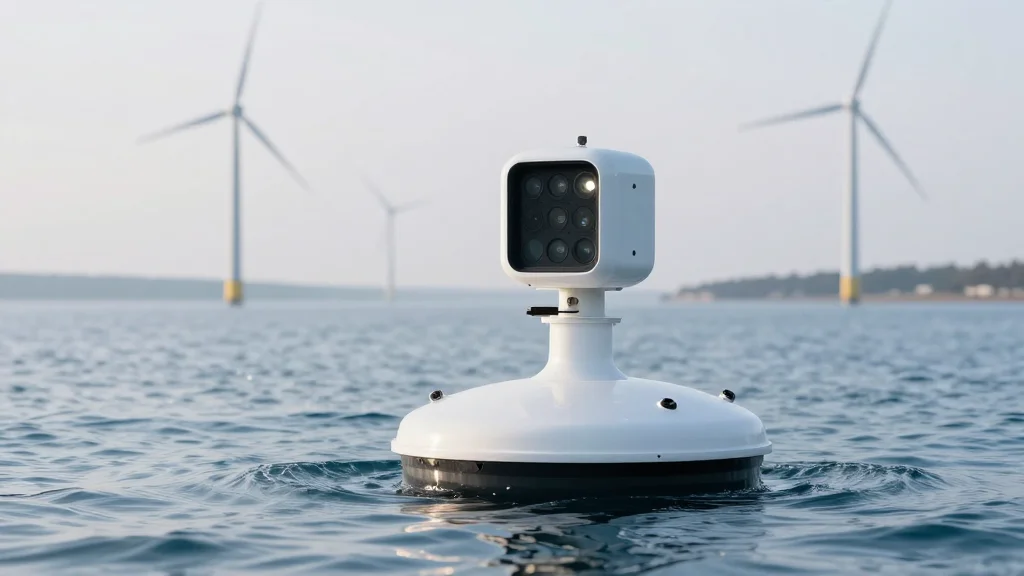
Fraunhofer IWES Completes Liivi Survey for Enefit
Why It Matters
Accurate turbulence‑intensity data reduces resource uncertainty, accelerating Enefit’s offshore capacity build‑out and strengthening regional energy security in the Baltic power market.
Key Takeaways
- •Fraunhofer IWES finished a 14‑month Liivi Bay measurement campaign.
- •Used Stage 3+ floating lidar buoy with high‑frequency turbulence sensors.
- •First commercial project to apply deterministic motion‑compensation for turbulence intensity.
- •Data supports Enefit’s offshore wind farm design and Baltic energy security.
- •On‑shore lidar and modelling ensured continuous dataset despite sea‑ice removal.
Pulse Analysis
The Liivi Bay survey showcases how floating lidar technology is reshaping offshore wind resource assessment. By mounting a Stage 3+ lidar buoy on a motion‑compensated platform, Fraunhofer IWES captured high‑resolution wind, wave and current data, including turbulence intensity—a metric traditionally difficult to measure offshore. The institute’s deterministic motion‑compensation algorithm corrects for buoy movement in real time, delivering data quality comparable to fixed‑platform installations while retaining the flexibility of a mobile system.
For Enefit, the comprehensive dataset provides a solid foundation for turbine layout optimization, energy yield predictions and compliance with Baltic regulatory frameworks. Turbulence intensity directly influences blade loading and fatigue life, so precise measurements translate into lower operational risk and more accurate financial models. In a region where offshore wind is a cornerstone of energy‑transition strategies, the Liivi Bay insights help de‑risk investment, attract financing and support Estonia’s goal of increasing renewable generation to meet EU climate targets.
The campaign also signals a broader industry shift toward integrated measurement approaches. By pairing floating lidar with on‑shore lidar, horizontal‑transfer modelling and seasonal buoy retrieval, Fraunhofer ensured uninterrupted data streams despite harsh sea‑ice conditions. Collaboration with the Estonian State Fleet and Luode Consulting underscores the growing role of public‑private partnerships in de‑risking offshore projects. As more developers seek high‑frequency turbulence data to fine‑tune turbine designs, the proven success of Fraunhofer’s method is likely to become a benchmark for future offshore wind measurement campaigns worldwide.
Fraunhofer IWES completes Liivi survey for Enefit
Comments
Want to join the conversation?
Loading comments...