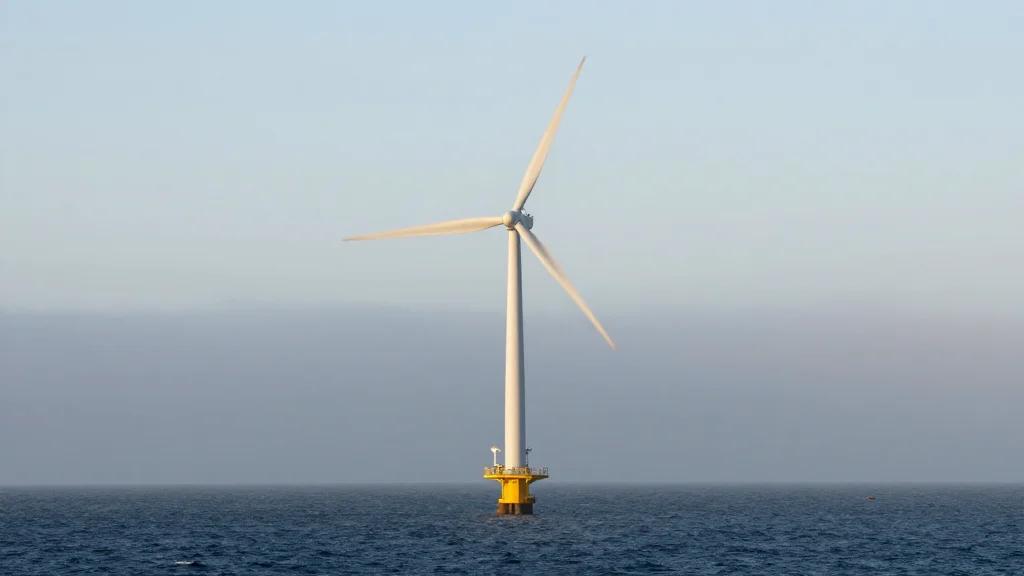
Fred. Olsen Seawind to Take Full Control of Muir Mhòr Wind Project
Why It Matters
Full control enables Fred. Olsen to streamline development and potentially bring one of the world’s first commercial‑scale floating wind farms online sooner, strengthening Europe’s renewable capacity. It also signals Vattenfall’s strategic reallocation toward higher‑value offshore assets.
Key Takeaways
- •Fred. Olsen Seawind buys Vattenfall’s 50% stake in Muir Mhòr
- •Project is 1 GW floating offshore wind, 63 km off Aberdeenshire
- •Full ownership aims to accelerate consent and early 2030s generation
- •Vattenfall redirects focus to Nordlicht projects in Germany and Netherlands
- •Muir Mhòr could become one of the first commercial-scale floating wind farms
Pulse Analysis
Floating offshore wind is emerging as a pivotal technology for deep‑water renewable generation, and the Muir Mhòr project exemplifies that shift. Located 63 km off the Aberdeenshire coast, the 1‑gigawatt array will use floating turbine platforms that can be deployed in waters too deep for traditional fixed‑bottom foundations. This capability expands the geographic footprint of offshore wind, unlocking vast new resource zones around the UK and Europe while driving innovation in mooring systems, subsea cables, and installation vessels.
Fred. Olsen Seawind’s acquisition of Vattenfall’s half‑interest reflects a broader industry trend of consolidating project ownership to accelerate delivery. With full control, Fred. Olsen can align financing, engineering, and procurement decisions under a single strategic vision, reducing coordination friction and potentially lowering capital costs. Meanwhile, Vattenfall’s retreat underscores its focus on larger, higher‑margin offshore clusters such as Germany’s Nordlicht I and II, where economies of scale and mature supply chains promise stronger returns. This reallocation of capital highlights how developers are prioritizing projects that match their risk appetite and regional expertise.
For the UK, the Muir Mhòr development supports the government’s ambition to reach 50 GW of offshore wind by 2030, including a growing share of floating assets. Securing early allocation in the upcoming consent round could grant the project priority access to transmission capacity, a critical bottleneck for offshore projects. The move also bolsters the domestic supply chain, creating demand for Scottish engineering firms, turbine manufacturers, and specialized installation crews. As the project advances toward construction in the early 2030s, it will serve as a benchmark for future floating wind farms, influencing policy, financing structures, and the overall trajectory of the global renewable energy transition.
Fred. Olsen Seawind to take full control of Muir Mhòr wind project
Comments
Want to join the conversation?
Loading comments...