From Captured GHG Emissions to Green Tomatoes
Companies Mentioned
Why It Matters
The project proves that CCS can be retrofitted on small, short‑haul ships, creating a tangible emissions‑reduction pathway and a new carbon‑utilisation revenue stream for both maritime operators and adjacent agriculture.
Key Takeaways
- •Value Maritime's compact CCS fits on 4,900 dwt LNG vessel
- •System reduces footprint by up to one‑third versus traditional absorbers
- •Captured CO₂ stored in 20‑ft containers, offloaded at ports
- •Tomato farm uses ship‑derived CO₂, cutting external carbon purchases
Pulse Analysis
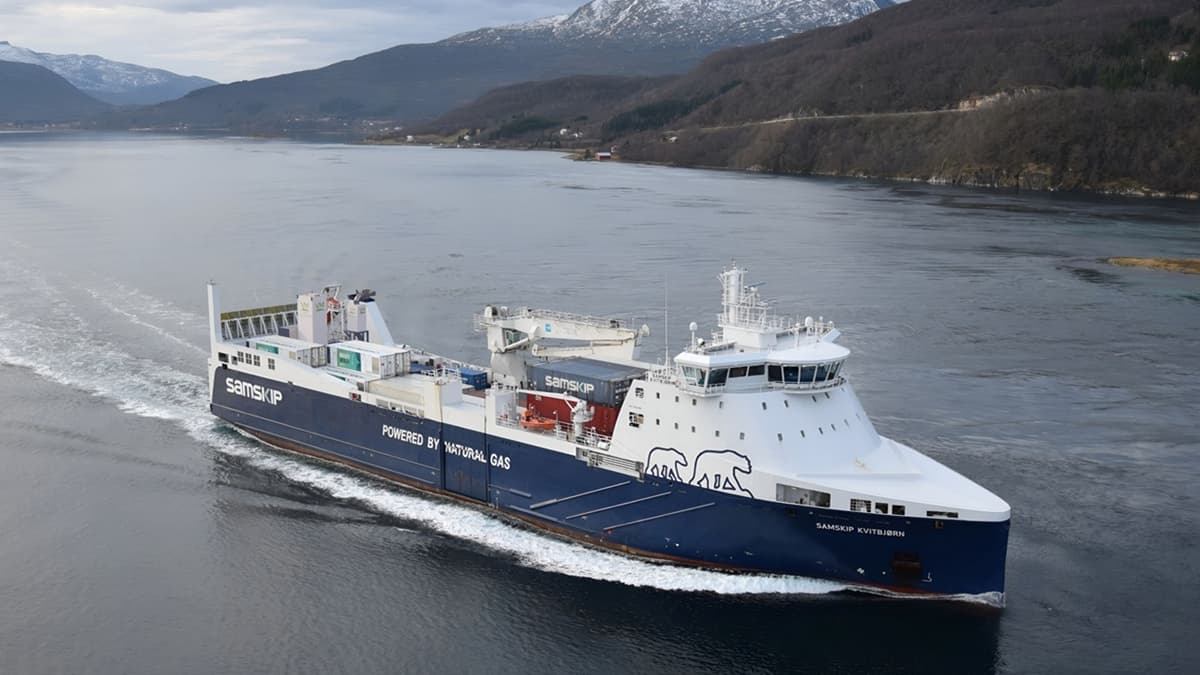
The shipping industry faces mounting pressure to curb greenhouse‑gas emissions as the International Maritime Organization tightens carbon limits and investors demand greener operations. Carbon capture and storage, once confined to on‑shore power plants, is now being adapted for sea‑to‑land applications. Value Maritime’s Maritime Efficient & Easy Carbon Capture (ME2CC) consortium has taken a decisive step by installing a compact CCS unit on the 4,900‑dwt ro‑ro vessel Samskip Kvitbjorn, demonstrating that even small, short‑haul ships can become active carbon sinks rather than sources.
The ME2CC system distinguishes itself through a patented absorption process that trims the unit’s height and footprint by roughly one‑third compared to legacy designs, while preserving a low pressure drop. Its modular architecture allows the captured amine‑carbon solution to be packed into standard 20‑ft ISO containers holding about seven tonnes of CO₂, which can be swapped at each port call. Larger vessels may employ fixed tanks, with off‑loading options ranging from truck‑based trucks to dedicated barges, enabling flexible integration across vessel sizes.
Beyond compliance, the technology creates a new revenue stream by feeding captured CO₂ to nearby greenhouse farms. In Rotterdam, the CO₂ is stripped from the amine solution and piped directly to a tomato greenhouse, slashing the farm’s reliance on purchased industrial CO₂ and lowering its carbon footprint. This symbiosis illustrates a scalable model where maritime operators monetize emissions reductions while supporting local agriculture. As the system scales to capture up to 75 % of emissions on 3–20 MW engines, investors can expect broader adoption across short‑sea routes and, eventually, larger ocean‑going vessels.
From captured GHG emissions to green tomatoes
Comments
Want to join the conversation?
Loading comments...