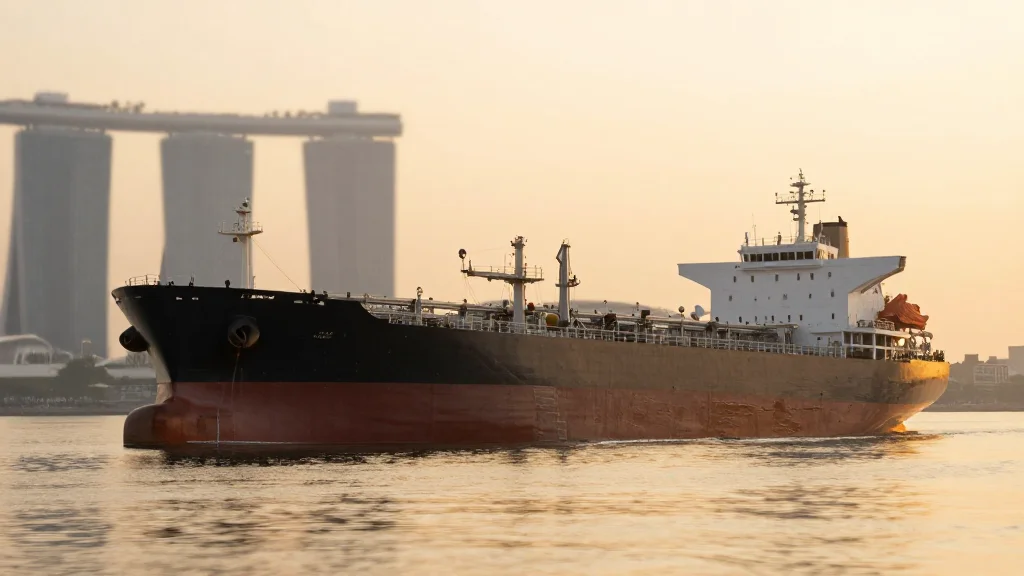
From Oil to Coffee Beans: Traders in Singapore Find Ways to Deal with Middle East Disruptions
Why It Matters
The episode underscores how geopolitical shocks can quickly swing commodity trading profits while highlighting Singapore’s strategic role in mitigating supply‑chain risk and financing volatility for global traders.
Key Takeaways
- •Vitol posted ~$2 bn Q1 profit despite early billions‑dollar losses
- •Singapore’s trading hub offers tax concessions, legal stability, and financing advantages
- •Middle‑East cuts push Asian refineries to source oil from US, West Africa
- •Bunker fuel prices in Singapore surged to $1,000/tonne, raising financing needs
- •Traders combine physical cargoes with futures, options, and swaps to hedge volatility
Pulse Analysis
The February outbreak of the Iran‑related conflict sent shockwaves through global energy markets, instantly turning the Gulf from a reliable source into a high‑risk zone. Vitol, which moves roughly eight million barrels of crude daily, saw its physical positions battered while its paper trades generated a windfall, culminating in an estimated US$2 billion profit for the first quarter. This duality illustrates the razor‑thin line commodity houses walk between physical logistics and financial speculation, a balance amplified by the need to replace cargoes stranded in the Gulf and to honor pre‑conflict contracts at fixed prices.
Singapore’s concentration of roughly 350 commodity traders—accounting for about one‑fifth of worldwide energy and metal flows—proved decisive. The city‑state’s stable legal framework, low‑corruption reputation, and targeted incentives such as the Global Trader Programme’s concessionary tax rate enable firms to secure swift financing, arbitrate disputes efficiently, and tap a deep talent pool. These advantages translate into faster decision‑making during crises, allowing traders to re‑route supplies, hedge exposure, and maintain credit lines even as volatility inflates margin requirements.
The supply shock also reshaped the Asian oil landscape. With the Strait of Hormuz compromised, Asian refiners are turning to the United States and West Africa, extending voyages from 20 to 50 days and inflating shipping costs. The ripple effect hit downstream markets: bunker fuel prices in Singapore jumped from US$400 to US$1,000 per tonne, straining cash flows for marine fuel providers. In response, banks like DBS are bolstering liquidity buffers and offering tailored hedging solutions, underscoring the intertwined nature of commodity trading, finance, and geopolitics in today’s volatile environment.
From oil to coffee beans: Traders in Singapore find ways to deal with Middle East disruptions
Comments
Want to join the conversation?
Loading comments...