From Paper to Power: How Much of the Philippines' Offshore Wind Pipeline Is Bankable with China in the Mix?
Companies Mentioned
Why It Matters
The outcome will shape the Philippines’ clean‑energy transition, dictate foreign investment flows, and determine whether offshore wind can deliver economic benefits without undermining fishing communities.
Key Takeaways
- •Philippines' offshore wind pipeline totals 68 GW across 90 service contracts
- •Upcoming Green Energy Auction will offer 3,300 MW of fixed‑bottom capacity
- •Chinese firms pledge $13‑14 bn, with 20‑30% potentially for offshore wind
- •Offshore wind tariffs estimated at $0.18/kWh (~P11/kWh), triple on‑shore rates
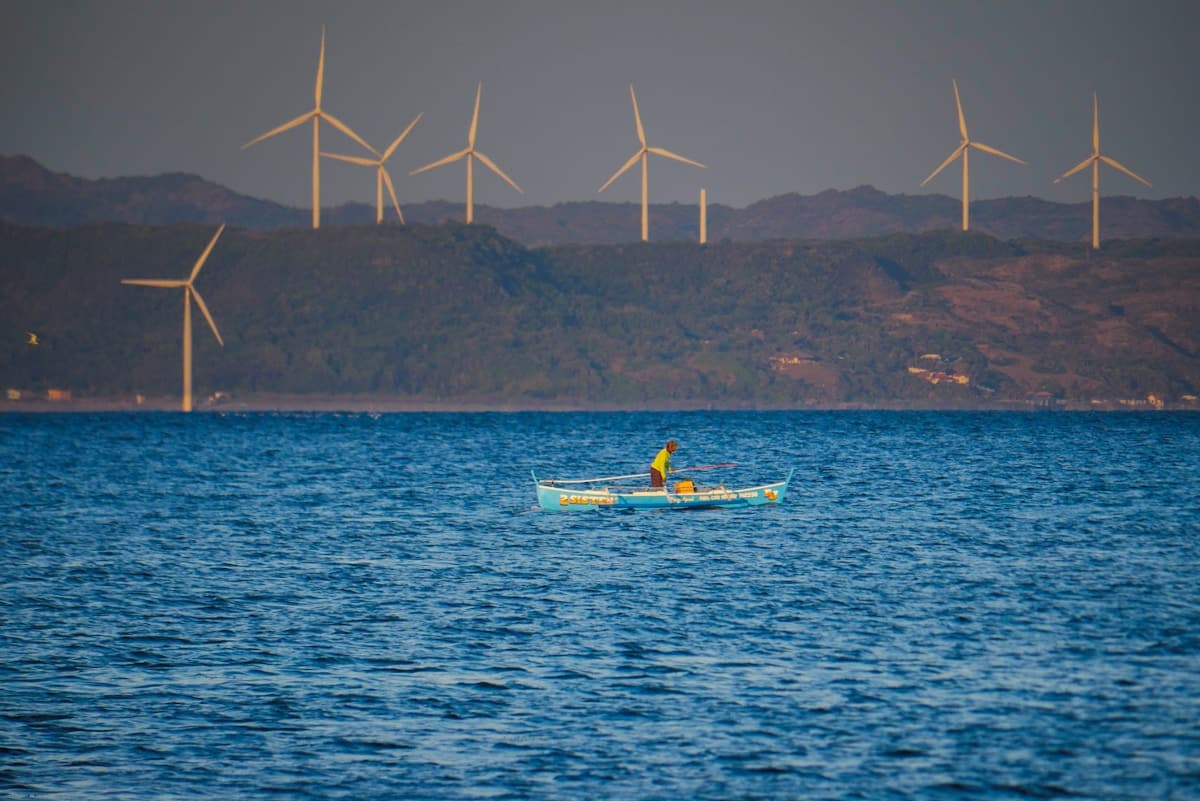
- •Fisherfolk fear job loss and reduced catches without strong community safeguards
Pulse Analysis
The Philippines has emerged as one of Southeast Asia’s most promising offshore‑wind markets, driven by a technical potential of roughly 178 GW and a policy push that includes the first offshore‑only Green Energy Auction (GEA‑5). The auction targets 3,300 MW of fixed‑bottom projects slated for delivery between 2028 and 2030, while the broader pipeline already lists 68 GW across 90 service contracts. Investors are attracted by the country’s abundant wind resources, but cost remains a hurdle: offshore tariffs are projected at $0.18/kWh (≈P11/kWh), roughly three times higher than on‑shore wind, prompting calls for concessional financing and risk‑mitigation mechanisms.
Chinese renewable firms are beginning to test the waters, with a $13‑14 billion pledge for Philippine clean‑energy projects and an estimated 20‑30% earmarked for offshore wind. Ming Yang Smart Energy’s feasibility study for a 2 GW floating project exemplifies this interest, yet geopolitical frictions in the South China Sea and past BRI controversies create investor uncertainty. The perception that Chinese capital may prioritize strategic influence over local benefits adds another layer of risk, making clear, enforceable community and environmental safeguards essential for project bankability.
In response, Philippine regulators are overhauling marine‑spatial planning and the environmental impact assessment process to better align wind sites with fishing grounds, shipping lanes, and conservation zones. New GIS‑based tools aim to identify low‑conflict locations, while proposals for a sector‑wide concessional loan facility seek to lower capital costs. Ultimately, the success of offshore wind will be measured not just in megawatts installed but in tangible improvements for coastal communities—stable jobs, skill development, and protection of livelihoods—ensuring that the transition to clean energy is both inclusive and sustainable.
From paper to power: how much of the Philippines' offshore wind pipeline is bankable with China in the mix?
Comments
Want to join the conversation?
Loading comments...