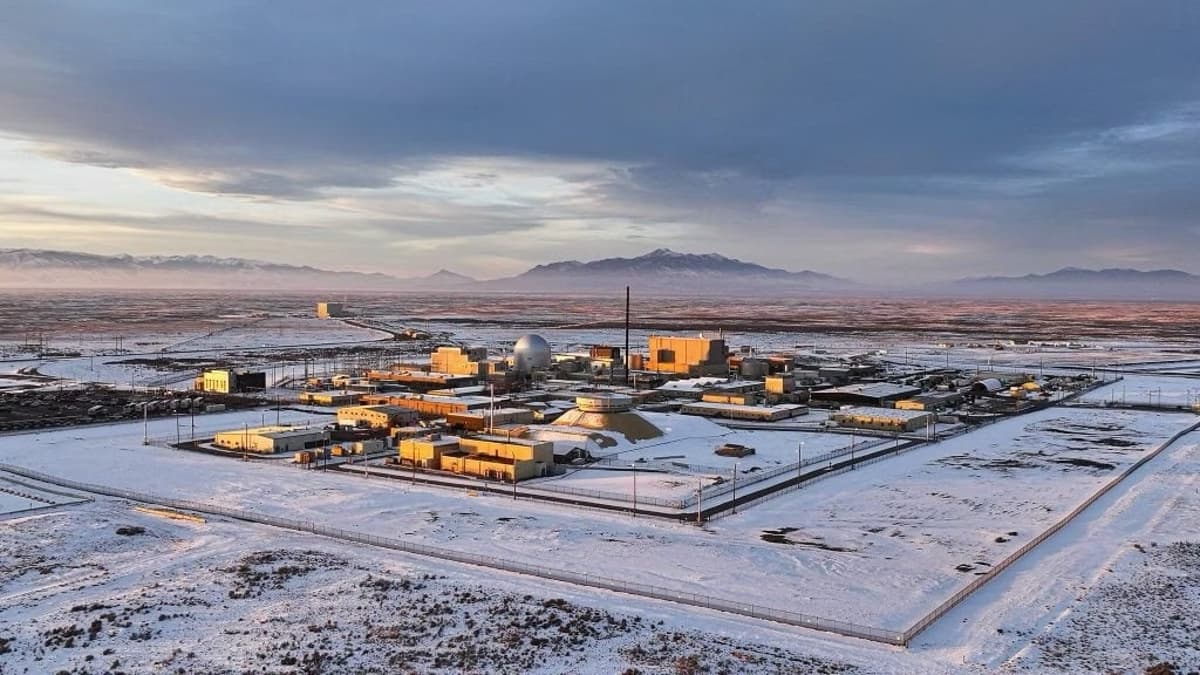
From Pilot to Launch: DOE Names First Four Nuclear Energy Launch Pad Developers
Companies Mentioned

Why It Matters
The program accelerates commercial‑ready advanced reactors and domestic fuel supply, crucial for U.S. energy security and decarbonization goals. It signals strong federal backing for private‑sector innovation in a historically regulated industry.
Key Takeaways
- •Deployable Energy to demo 1‑MW microreactor by July 4 2026
- •General Matter awarded $900 M to build U.S. HALEU enrichment plant
- •NuCube targets >1,000 °C process heat with TRISO‑fuel microreactor
- •Radiant Nuclear begins year‑long DOME testing of Kaleidos HTGR
- •Launch Pad offers 2,000 acres at INL and flexible nationwide sites
Pulse Analysis
The Department of Energy’s Nuclear Energy Launch Pad represents a strategic shift from isolated pilot projects to a holistic deployment ecosystem. By consolidating technical, regulatory and site‑selection support under one umbrella, the initiative reduces time‑to‑market for advanced reactors and associated fuel-cycle technologies. Its dual‑track model—dedicated acreage at Idaho National Laboratory and a flexible nationwide pathway—offers developers the choice of a proven testbed or a location aligned with commercial interests, while still leveraging DOE’s expertise and the National Reactor Innovation Center’s resources.
The four inaugural participants illustrate the breadth of innovation the Launch Pad aims to nurture. Deployable Energy’s 1‑MW Unity Nuclear Battery targets remote and defense markets with containerized, helium‑cooled microreactors, while Radiant Nuclear’s Kaleidos HTGR focuses on high‑temperature gas‑cooled designs for off‑grid power. NuCube Energy’s emphasis on >1,000 °C process heat opens doors for industrial decarbonization, and General Matter’s $900 million HALEU enrichment contract addresses the looming fuel‑supply bottleneck for next‑generation reactors. Together, they cover the full value chain—from fuel production to reactor demonstration—underscoring the program’s comprehensive scope.
Beyond individual projects, the Launch Pad could reshape the U.S. nuclear landscape by fostering a domestic supply chain and reducing reliance on foreign fuel sources. The program’s non‑funding model places financial responsibility on developers, encouraging market discipline while still granting access to DOE’s regulatory pathways. As the United States seeks to meet climate targets and bolster energy resilience, accelerating advanced reactor deployment through mechanisms like the Launch Pad may become a cornerstone of national energy policy, driving both economic growth and technological leadership.
From Pilot to Launch: DOE Names First Four Nuclear Energy Launch Pad Developers
Comments
Want to join the conversation?
Loading comments...