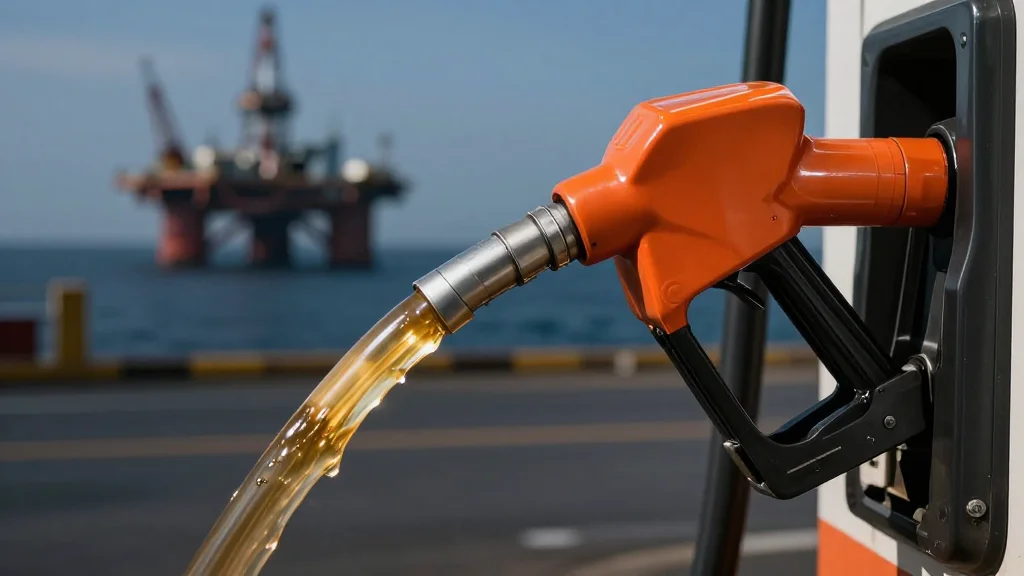
Gasoline Costs 50% More Than It Did Before the Iran War
Companies Mentioned

Why It Matters
The price surge erodes consumer disposable income and raises operating costs for logistics‑heavy businesses, while signaling prolonged volatility in global energy markets.
Key Takeaways
- •U.S. regular gasoline averaged $4.48/gal, up 50% since Iran war
- •Crude oil hit $112/barrel as Hormuz closure limited supply
- •Taxes, refining, and distribution each represent about 15‑17% of price
- •AAA reports 31‑cent weekly rise; similar spikes followed Ukraine invasion
- •Hormuz risk premium keeps prices high even after cease‑fire hopes
Pulse Analysis
The Iran‑driven conflict has turned the Strait of Hormuz into a chokepoint that reshapes the global oil landscape. With roughly one‑fifth of world crude transiting the narrow passage, its effective shutdown has pushed benchmark WTI prices to $112 a barrel, the highest level in two months. This supply shock translates directly to the retail pump, where AAA recorded an average regular‑grade price of $4.48 per gallon—a 31‑cent weekly jump that marks a 50% rise since the war’s onset. The price trajectory mirrors historical spikes, such as the 60‑cent weekly surge after Russia’s invasion of Ukraine, underscoring how geopolitical turbulence reverberates through energy markets.
Understanding the composition of gasoline pricing clarifies why the pump feels the pinch. The Energy Information Administration attributes about 51% of the retail price to crude oil, while federal and state taxes, refining margins, and distribution costs each contribute roughly 15‑17%. In high‑tax states like California, these components push prices well above the national average. The recent 31‑cent weekly increase reported by AAA reflects both the crude surge and the fixed cost structure that limits rapid price adjustments. Consumers therefore face a price environment where short‑term fluctuations are amplified by entrenched tax and infrastructure expenses.
Looking ahead, the persistence of Hormuz constraints suggests that gasoline prices will remain elevated even if a cease‑fire materializes. Industry experts warn of a lingering risk premium; insurers and shippers are unlikely to revert to pre‑war risk assessments for months, keeping freight costs high. Policymakers may consider strategic petroleum reserves releases or diplomatic initiatives to secure alternative shipping routes, but such measures offer only temporary relief. For businesses and motorists, the prudent response involves budgeting for higher fuel expenses, exploring fuel‑efficiency measures, and monitoring geopolitical developments that could further shift the supply‑demand balance.
Gasoline Costs 50% More Than It Did Before the Iran War
Comments
Want to join the conversation?
Loading comments...