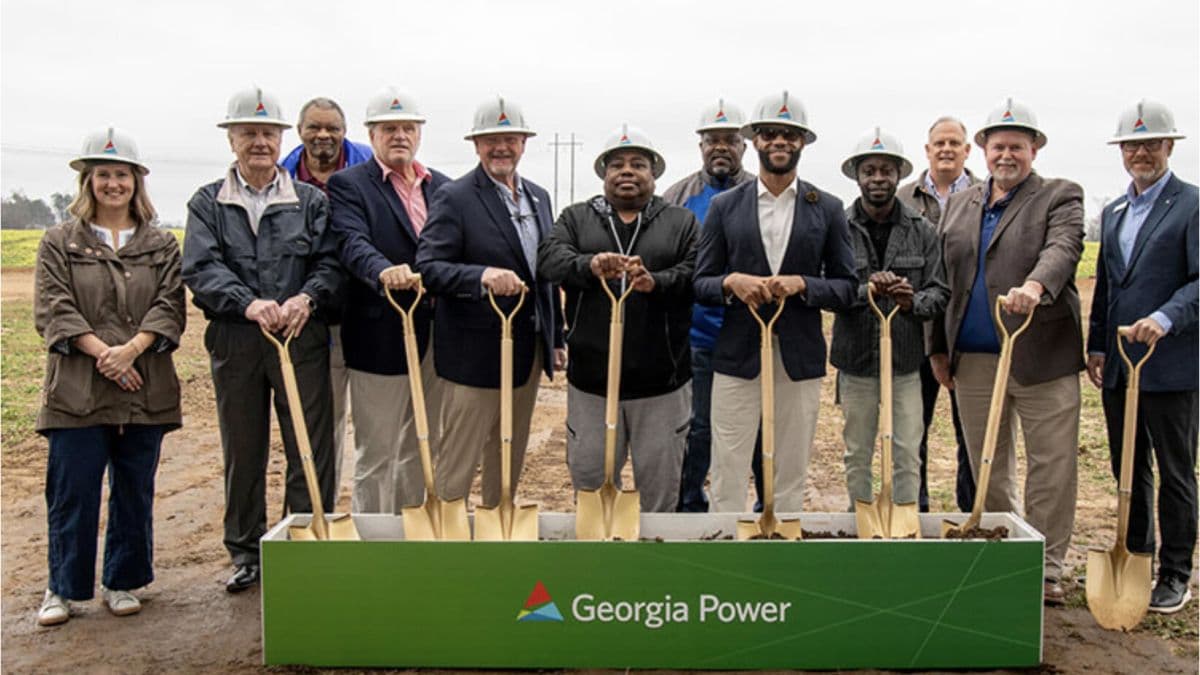
Georgia Power Begins Construction of Battery Storage System
Why It Matters
The BESS adds dispatchable capacity that smooths renewable variability, helping Georgia meet growing power demand while enhancing grid resilience. Its construction signals utilities’ accelerating shift toward large‑scale storage as a core grid asset.
Key Takeaways
- •260 MW BESS will provide four‑hour dispatchable power
- •Co‑located with Wadley solar, enhancing renewable integration
- •Construction by Burns & McDonnell, slated for 2027 completion
- •Project supports Georgia’s 2025 IRP power‑need targets
- •Creates local jobs and economic benefits for Jefferson County
Pulse Analysis
Battery storage is rapidly moving from niche projects to a cornerstone of utility strategy, and Georgia Power’s new 260 MW system exemplifies that shift. By pairing the BESS with an existing solar facility, the utility creates a hybrid platform that can capture excess solar generation and release it during peak demand, effectively flattening the load curve. This approach aligns with the broader industry trend of leveraging storage to mitigate the intermittency of renewables, a critical factor as states tighten emissions targets and expand clean‑energy portfolios.
The four‑hour discharge capability of the Wadley BESS is tailored to address specific grid stress periods, such as cold‑weather mornings when heating loads surge. Integrated into the 2025 Integrated Resource Plan, the storage asset provides a cost‑effective alternative to building new peaker plants, delivering flexibility without the emissions associated with fossil‑fuel generation. Moreover, its proximity to transmission infrastructure reduces interconnection costs and enhances the reliability of the surrounding distribution network, a key consideration for utilities facing aging assets and increasing demand.
Beyond technical benefits, the project delivers tangible economic upside for Jefferson County. Construction contracts awarded to Burns & McDonnell generate skilled jobs, while the long‑term operation of the facility promises ongoing employment and tax revenue. The visible partnership between the utility, local government, and community groups underscores a collaborative model that other regions may emulate as they pursue resilient, low‑carbon grids. As storage costs continue to decline, projects like Wadley set a precedent for scaling up battery capacity across the Southeast and beyond.
Georgia Power Begins Construction of Battery Storage System
Comments
Want to join the conversation?
Loading comments...