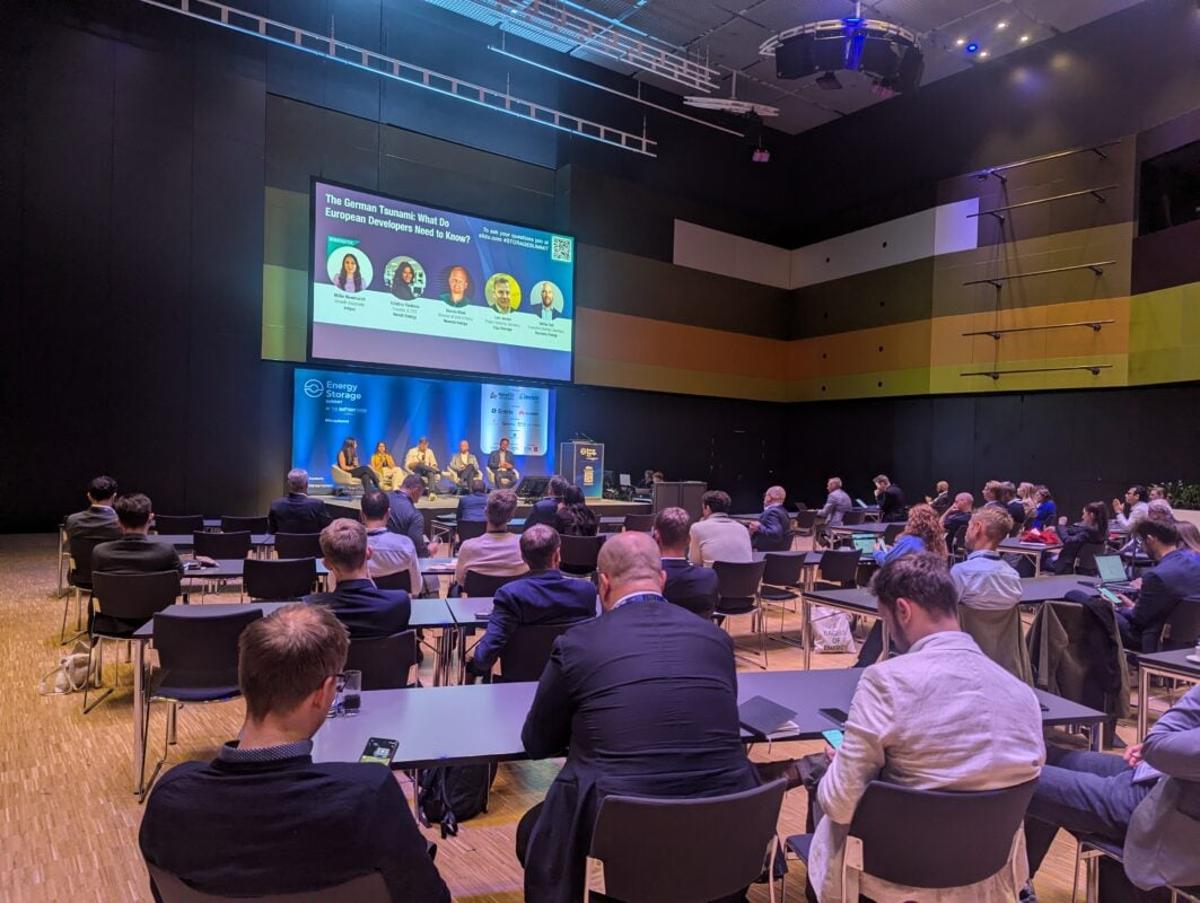
German BESS Market Has Moved Beyond Peak Hype
Companies Mentioned
Why It Matters
Without clear rules and a streamlined grid‑connection framework, investors risk stalled projects and reduced returns, threatening Germany’s ambition to become a European hub for large‑scale energy storage.
Key Takeaways
- •German BESS hype peaked, now facing regulatory reality
- •Over 800 TSOs/DSOs complicate revenue modeling for developers
- •Grid connection contracts lack standardized processes, causing delays
- •Speculative grid applications have flooded TSOs, increasing backlog
- •Policy uncertainty around BKZ fees hampers project certainty
Pulse Analysis
Germany’s BESS sector surged in 2025, with foreign capital pouring in and developers touting lucrative revenue curves. The "tsunami" metaphor captured the wave of optimism that surrounded the market, as investors from the UK and elsewhere rushed to secure project pipelines. This influx was buoyed by the European Union’s clean‑energy targets and Germany’s ambition to decarbonise its grid, positioning the country as a potential leader in large‑scale battery deployment.
However, the excitement has collided with a fragmented regulatory environment. With more than 800 transmission and distribution system operators (TSOs and DSOs), developers struggle to align revenue models with an operating system that lacks uniform standards. Grid‑connection contracts, such as the 380 kV BESS link discussed at the summit, remain without clear construction agreements, and the absence of standardized procedures delays commissioning. Moreover, ambiguous BKZ (grid usage) fees and historically lax application criteria have encouraged speculative filings, flooding TSOs with requests and inflating the backlog that already plagues the German grid.
The market’s future hinges on policy clarity and process harmonisation. Investors now demand transparent fee structures and a predictable grid‑connection timeline to justify capital deployment. If German authorities can streamline TSO/DSO coordination and codify connection standards, the sector could transition from hype to sustainable growth, reinforcing Europe’s energy transition. Conversely, prolonged uncertainty may divert capital to more predictable markets, slowing Germany’s BESS rollout and its broader decarbonisation goals.
German BESS market has moved beyond peak hype
Comments
Want to join the conversation?
Loading comments...