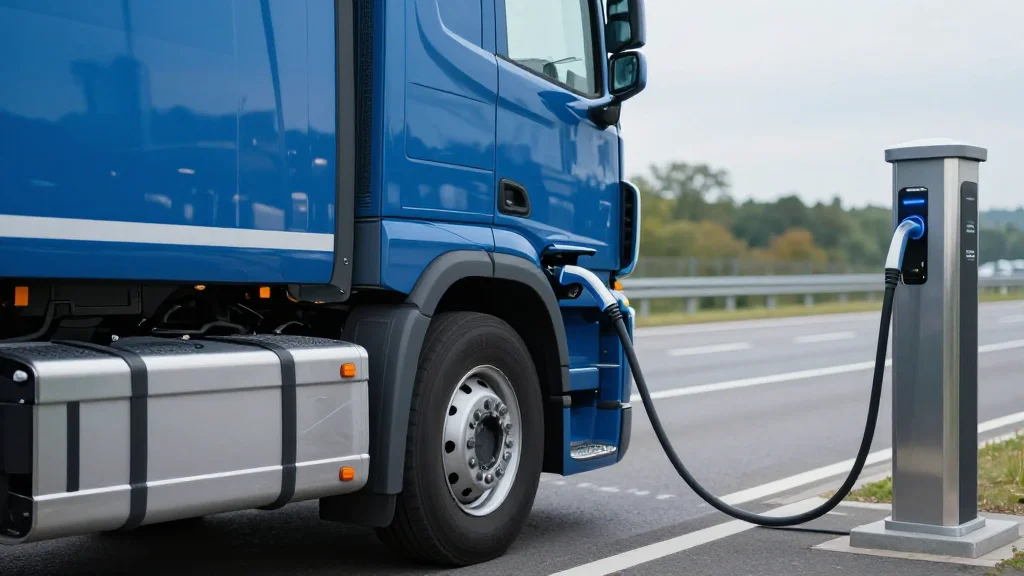
Germany Allocates €1 Bn ($1.08 Bn) to Build Commercial EV Truck Charging Network

Why It Matters
Electrifying heavy‑duty freight is a linchpin in Europe’s climate strategy, as trucks account for a sizable share of transport‑related CO₂ emissions. By investing €1 bn in charging infrastructure, Germany not only reduces reliance on diesel but also creates a scalable model for other economies grappling with similar emissions challenges. The program dovetails with the nation’s renewable‑energy targets, ensuring that the electricity powering trucks is increasingly clean, thereby amplifying the overall emissions reduction. Beyond environmental gains, the initiative promises economic dividends: lower operating costs for logistics firms, new jobs in charger installation and maintenance, and a competitive edge for German manufacturers of electric trucks and battery systems. The move also addresses public‑health concerns linked to diesel particulates, delivering tangible benefits to communities along busy freight corridors.
Key Takeaways
- •German transport ministry commits €1 bn ($1.08 bn) over four years to commercial electric‑truck chargers.
- •Funding targets installation of 1,000 high‑power charging stations by 2028.
- •Germany’s road‑freight market is valued at about $66 bn annually.
- •Renewable electricity share hit 52 % in 2025; goal of 80 % by 2030.
- •EU zero‑emission heavy‑duty vehicle mandate set for 2035.
Pulse Analysis
Germany’s €1 bn charger programme marks a decisive shift from piecemeal pilot projects to a coordinated national strategy. Historically, heavy‑duty electrification lagged behind passenger EVs due to higher upfront costs, longer range requirements, and a sparse charging ecosystem. By earmarking public capital, Berlin is effectively de‑risking the market for private investors, a tactic that mirrors successful renewable‑energy subsidy models from the past decade.
The timing aligns with a broader European push toward zero‑emission logistics, as the EU’s Fit for 55 package tightens emissions caps and sets a 2035 deadline for all new heavy‑duty vehicles to be zero‑emission. Germany’s early move could lock in first‑mover advantages for domestic manufacturers like Daimler and MAN, who are already scaling battery‑electric truck production. Moreover, the integration of chargers with renewable‑rich grids mitigates the “coal‑powered EV” criticism, ensuring that the carbon intensity of freight transport drops in lockstep with grid decarbonization.
However, the rollout faces challenges: grid capacity constraints in industrial regions, the need for standardized charging protocols, and the higher purchase price of electric trucks. The ministry’s decision to pair infrastructure subsidies with fleet‑level incentives is a pragmatic response, but sustained progress will depend on coordinated policy across energy, transport, and industry ministries. If Germany can meet its 2028 station target, it will set a replicable template for the EU, potentially accelerating continent‑wide freight electrification and delivering the emissions cuts required to meet the Paris Agreement goals.
Germany Allocates €1 bn ($1.08 bn) to Build Commercial EV Truck Charging Network
Comments
Want to join the conversation?
Loading comments...