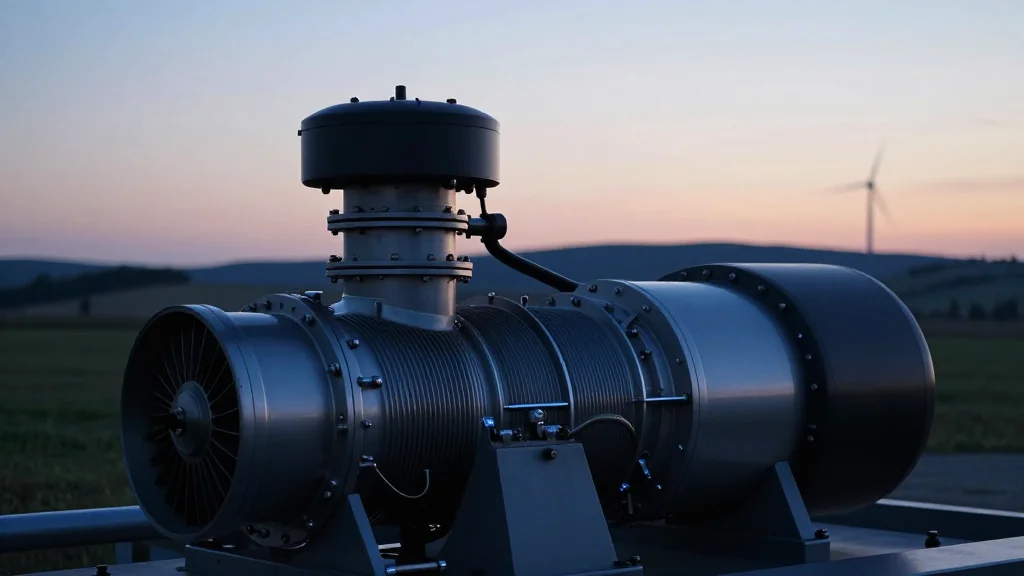
Germany Approves 11 GW of New Gas‑Fired Power Plants to Guard Against Renewable Shortfalls

Why It Matters
Germany accounts for roughly one‑quarter of Europe’s electricity consumption, so its capacity decisions reverberate across the continent’s energy security calculus. By committing to gas‑fired plants that can later run on hydrogen, the government is betting on a transitional technology that could smooth the path to a carbon‑neutral grid while mitigating the risk of blackouts during periods of low renewable output. The policy also raises questions about the pace of coal phase‑out, the role of state subsidies, and the competitiveness of emerging storage technologies. If the levy is set too high, it could burden consumers and spark political backlash, while a low levy might under‑fund the ambitious construction schedule. Moreover, the EU’s state‑aid review will test whether the scheme complies with competition rules, potentially influencing other member states contemplating similar backup capacity measures.
Key Takeaways
- •German cabinet approves tender for up to 11 GW of new gas‑fired capacity, to start summer 2026
- •Plants must be convertible to hydrogen operation after 2045
- •Renewable share targeted at 80% of electricity by 2030, up from 53% in Q1 2026
- •Electricity levy to fund construction will begin in 2031; amount not disclosed
- •EU state‑aid clearance required before the programme can be implemented
Pulse Analysis
The German decision reflects a pragmatic shift in the energy transition narrative: rather than relying solely on intermittent renewables, policymakers are re‑introducing dispatchable generation that can be decarbonised over time. Historically, Germany’s Energiewende has been lauded for its rapid renewable uptake, but the recent supply‑shortfall modeling underscores the limits of a wind‑and‑solar‑only strategy. By anchoring new capacity to gas—a fuel with existing infrastructure and relatively lower carbon intensity than coal—the government buys time to scale up hydrogen production and storage.
From a market perspective, the 11 GW tender creates a sizable, near‑term revenue stream for both domestic and international developers. Companies with expertise in combined‑cycle gas turbines and hydrogen retrofits are likely to vie for contracts, potentially accelerating the commercialization of hydrogen‑ready technology. However, the plan also risks crowding out investment in battery storage and demand‑response solutions, which could have offered a fully emissions‑free alternative. The upcoming EU state‑aid review will be a litmus test for how flexible competition rules can be when a member state seeks to blend fossil‑fuel assets with future‑proofing measures.
Looking ahead, the success of Germany’s hybrid approach will hinge on three variables: the speed of hydrogen supply chain development, the political appetite for a consumer levy, and the ability of the EU to reconcile state aid with climate objectives. If the levy is calibrated to fund construction without inflating consumer bills, and if hydrogen becomes economically viable by the mid‑2030s, the scheme could become a template for other nations wrestling with renewable intermittency. Conversely, a misstep on any of these fronts could reinforce the argument for a faster transition to fully renewable and storage‑based systems, reshaping the European energy roadmap.
Germany Approves 11 GW of New Gas‑Fired Power Plants to Guard Against Renewable Shortfalls
Comments
Want to join the conversation?
Loading comments...