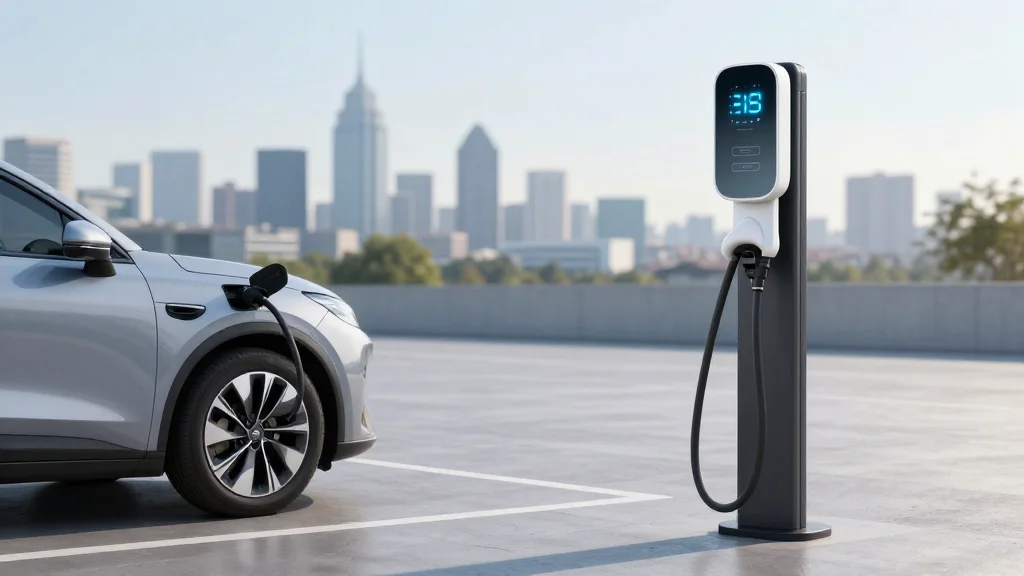
Germany Hits 200,000 Public EV Chargers, Aiming for 1 Million by 2030

Companies Mentioned
Why It Matters
Germany’s rapid expansion of public EV chargers signals that Europe’s transition to electric mobility is moving from policy ambition to tangible infrastructure. By delivering 8.5 GW of charging power, the network not only supports the growing EV fleet but also creates new demand for renewable generation, grid upgrades, and ancillary services, accelerating the continent’s decarbonisation timeline. The €1 billion investment in electric‑truck charging further extends the climate benefits to freight, a sector traditionally hard to electrify, and could catalyse a shift in logistics emissions. The milestone also has economic implications: the rollout is expected to generate thousands of jobs in construction, software, and operations, while fostering a domestic supply chain for high‑power chargers. As Germany aims for one million public points by 2030, the scale of investment and coordination required will likely influence EU funding mechanisms and set standards for cross‑border interoperability, shaping the future of European energy markets.
Key Takeaways
- •Germany now has over 200,000 public EV charging points, including 51,000 fast chargers.
- •Combined charging capacity reaches 8.5 GW, enough to power roughly 1.5 % of national electricity demand.
- •A four‑year plan adds 12,000 fast‑charging ports (400 kW) through an EnBW‑XCharge partnership.
- •The government allocated €1 billion (~$1.08 billion) for commercial electric‑truck charging infrastructure.
- •Germany’s long‑term goal is one million publicly accessible chargers by 2030, supporting EU climate targets.
Pulse Analysis
Germany’s charging surge is more than a headline number; it reflects a strategic alignment of policy, industry, and finance that could redefine Europe’s energy landscape. Historically, the continent has lagged behind the U.S. and China in fast‑charging density, a shortfall that has hampered EV adoption rates. By committing both public funds and private partnerships, Germany is addressing the classic chicken‑and‑egg problem: building infrastructure to spur demand while using emerging demand to justify further investment.
The EnBW‑XCharge collaboration illustrates a shift toward modular, high‑power solutions that can be scaled quickly. Diversifying the supplier base, as CEO Martin Roemheld highlighted, mitigates risks from geopolitical tensions and semiconductor shortages that have stalled other infrastructure projects. This approach also positions German firms to export fast‑charging technology, potentially capturing market share in the burgeoning global EV ecosystem.
Looking forward, the integration of this expanding charging load with Germany’s renewable‑heavy grid will be a critical test. If managed well, the charging network can act as a flexible demand resource, absorbing excess wind and solar generation and providing ancillary services. Conversely, a mismatch could strain the grid and erode public confidence. The €1 billion truck‑charging fund adds another layer of complexity, as heavy‑duty vehicles demand higher power and longer dwell times. Success will hinge on coordinated grid planning, smart‑charging algorithms, and continued policy support. In sum, Germany’s 200,000‑point milestone is a pivotal step, but the real test will be sustaining momentum to reach the million‑point horizon while ensuring the grid remains resilient and renewable‑centric.
Germany Hits 200,000 Public EV Chargers, Aiming for 1 Million by 2030
Comments
Want to join the conversation?
Loading comments...