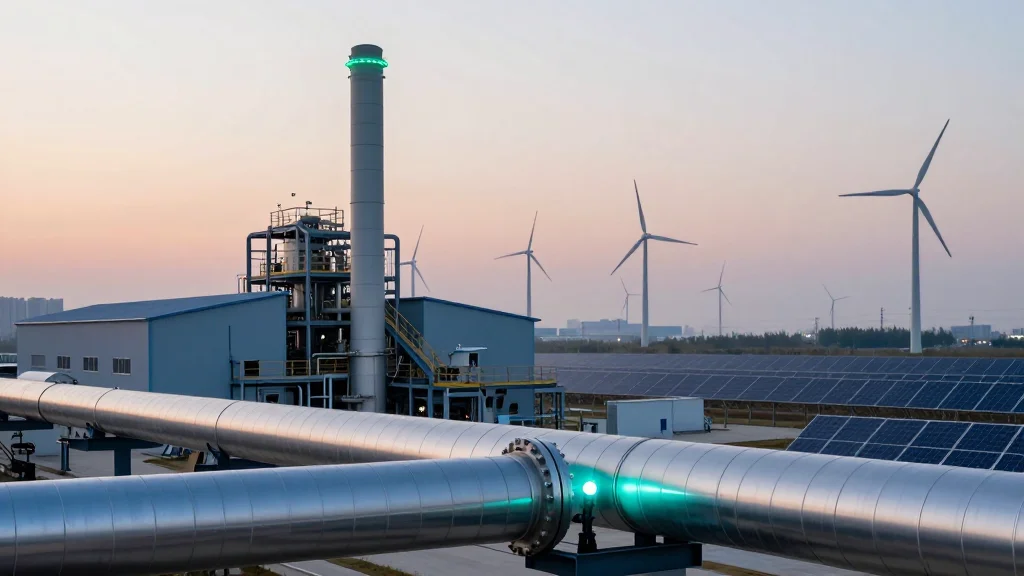
Germany Invests €5 Billion to Decarbonize Energy Intensive Industries
Why It Matters
The funding lowers financial barriers for heavy‑industry decarbonisation, accelerating Germany’s climate targets and creating a market for emerging clean‑tech solutions across Europe.
Key Takeaways
- •Germany allocates up to €5 bn ($5.45 bn) for 2026 CCfD round
- •Program now funds CCUS and industrial steam projects, expanding scope
- •Emission‑reduction targets eased to 50% in four years, 85% by end
- •Variable subsidies tied to actual cost gap, repay if low‑carbon cheaper
- •Technology‑neutral design aims to attract diverse low‑carbon solutions
Pulse Analysis
Germany’s CCfD program is a cornerstone of its 2030 climate strategy, providing a market‑based safety net that mitigates the price risk of low‑carbon production. Launched in 2023 with a €10 billion envelope, the scheme has already attracted dozens of pilots in steel, chemicals and cement. By allocating another €5 billion this year, the government signals a sustained commitment to industrial decarbonisation, reinforcing Europe’s broader push to align the EU Emissions Trading System with the Paris Agreement.
The 2026 round introduces two pivotal adjustments. First, emission‑reduction targets have been relaxed to 50% after four years and 85% by the final year, making the programme more attainable for firms still transitioning from legacy assets. Second, eligibility now covers carbon capture, utilization and storage (CCUS) and dedicated industrial‑steam projects, expanding the technology palette beyond renewable electricity. This technology‑neutral stance encourages innovators—from electrolyzer manufacturers to advanced heat‑pump providers—to compete on cost efficiency rather than fitting a narrow policy box.
For investors and policymakers, the revised CCfD framework offers clearer signals about the future cost structure of heavy industry. Variable subsidies that adjust to actual cost gaps reduce the need for upfront capital, while the repayment clause ensures that subsidies phase out as clean technologies achieve parity. As the EU ETS carbon price climbs, the program could become a catalyst for a wave of private‑sector financing, positioning Germany as a testing ground for scalable, export‑ready decarbonisation solutions.
Germany Invests €5 Billion to Decarbonize Energy Intensive Industries
Comments
Want to join the conversation?
Loading comments...