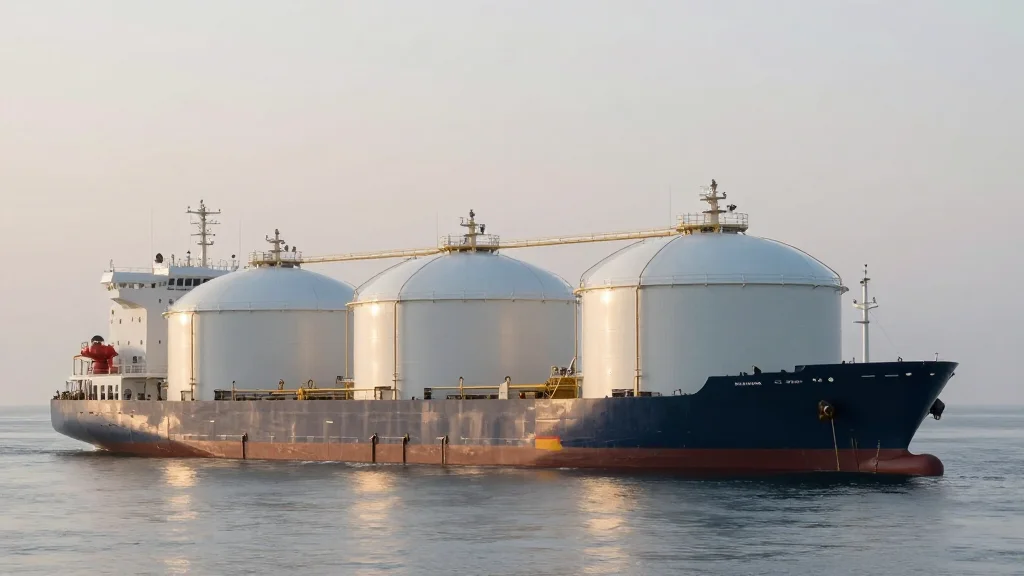
Germany Set to Boost LNG Import Capacity as Global Supplies Tighten
Why It Matters
The additional FSRU bolsters Germany’s ability to meet winter demand without Russian pipeline gas, while the broader EU storage shortfall highlights the continent’s heightened energy‑security risk and the strategic importance of LNG diversification.
Key Takeaways
- •Germany's fifth floating LNG terminal starts in September 2026.
- •Completes the 2022‑2026 German LNG import expansion.
- •EU gas inventories at 42.8% capacity, 84.7 TWh below last year.
- •Germany developing emergency gas reserves alongside new FSRU.
- •Storage 157.5 TWh below five‑year average, signaling tight supply.
Pulse Analysis
Europe’s gas market has been reshaped by the 2022‑2026 energy shock that followed Russia’s invasion of Ukraine. With pipeline deliveries curtailed, countries have turned to liquefied natural gas (LNG) as a flexible alternative, and floating storage‑regasification units (FSRUs) have become critical infrastructure for rapid import scaling. The EU’s overall gas storage, now at just 42.8% of working capacity, reflects a broader trend of depleted inventories and heightened volatility, prompting policymakers to prioritize both short‑term imports and long‑term diversification strategies.
Germany’s latest FSRU, slated for commissioning in September 2026, marks the nation’s fifth such vessel and completes a systematic expansion that began in 2022. While exact regasification capacity varies by unit, a typical FSRU adds roughly 5 billion cubic metres of gas per year, enough to offset a significant share of seasonal demand. Coupled with the development of emergency gas reserves, the new terminal enhances Germany’s resilience against supply disruptions and reduces reliance on any single source. The coordinated rollout also signals confidence in the LNG market’s ability to deliver competitive pricing and reliable volumes despite global supply tightness.
The broader implications extend beyond Germany’s borders. A tighter European storage landscape, combined with increased LNG import capacity, is likely to influence spot gas prices, spur further investment in offshore regasification technology, and accelerate negotiations for long‑term LNG contracts with diversified suppliers. Energy traders will watch the September launch closely, as it may set a benchmark for other EU nations contemplating similar FSRU deployments. In the long run, the shift toward modular, mobile LNG solutions could reshape Europe’s energy mix, supporting a more adaptable and secure gas system while the continent continues its transition toward renewable sources.
Germany Set to Boost LNG Import Capacity as Global Supplies Tighten
Comments
Want to join the conversation?
Loading comments...