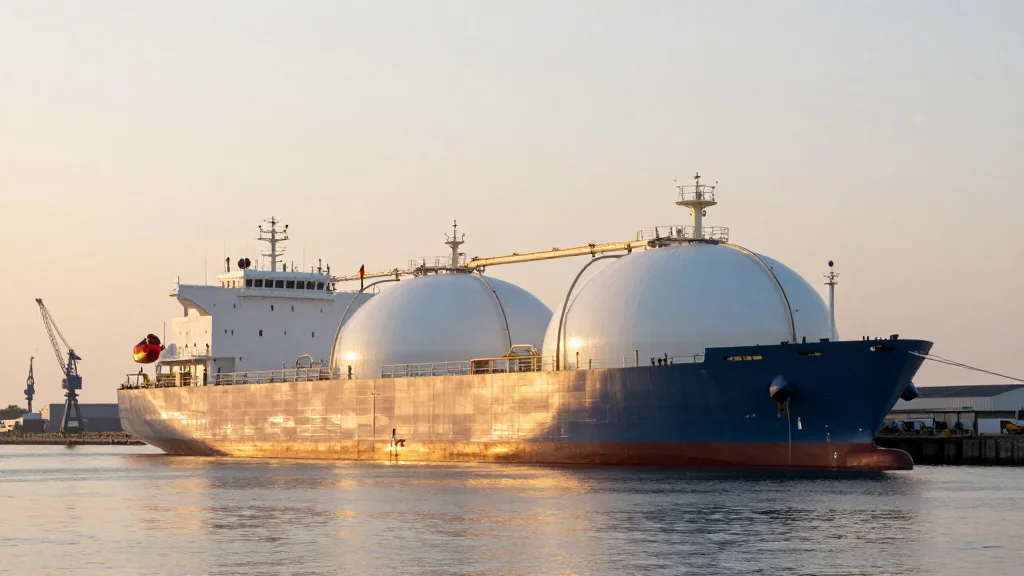
Germany to Launch Final LNG Import Terminal Approved After Russian Gas Price Shock
Why It Matters
The addition bolsters Germany’s energy security by diversifying supply sources and reduces reliance on Russian pipeline gas, while enhancing its leverage in the global LNG market.
Key Takeaways
- •DET's Stade FSRU to start operations in September 2026.
- •Fourth German LNG import terminal, expanding national gas diversification.
- •Delays stemmed from project disputes and unfinished on‑shore infrastructure.
- •Energos Force FSRU redeployed from Jordan to meet commissioning schedule.
- •Germany now operates five floating LNG terminals after Russian gas cut.
Pulse Analysis
The 2022 cessation of Russian pipeline gas sent European markets into turmoil, exposing Germany's heavy reliance on a single supplier. In response, Berlin accelerated a strategic shift toward liquefied natural gas (LNG) to safeguard winter supply and stabilize prices. Since late 2022, the country has approved four floating storage and regasification units (FSRUs) and added a fifth in Mukran, creating a flexible import network that can tap global LNG cargoes. This rapid build‑out reflects both energy‑security imperatives and the broader EU push for diversified fuel sources.
The Stade facility, operated by Deutsche Energy Terminal (DET), marks the final piece of Germany's floating LNG puzzle. After a two‑year postponement caused by contractual disputes, incomplete on‑shore works, and stringent safety reviews, DET announced a September 2026 commissioning. The FSRU Energos Force, currently stationed in Jordan, will be repositioned to the Stade jetty, where it will connect to a cryogenic unloading arm, metering systems, and pressure‑control infrastructure. DET’s takeover of on‑shore responsibilities from Hanseatic Energy Hub in late 2025 resolved the last technical bottleneck, paving the way for the first LNG delivery.
With five operational FSRUs, Germany now possesses a modular import capacity of roughly 10 billion cubic meters per year, enough to offset a significant share of the lost Russian volumes. The new terminal strengthens the country's bargaining power in global LNG markets and supports the EU’s goal of reducing dependence on any single supplier. Moreover, the flexible nature of floating terminals allows rapid scaling or relocation, a feature that could become a template for other European nations seeking resilient, low‑carbon transition pathways while maintaining reliable baseload power.
Germany to launch final LNG import terminal approved after Russian gas price shock
Comments
Want to join the conversation?
Loading comments...