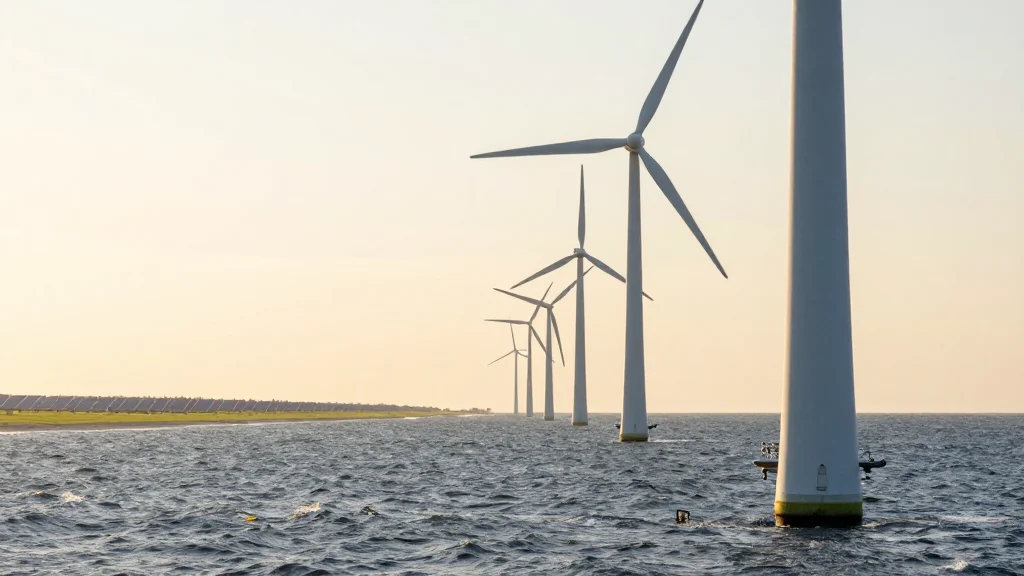
Germany’s Electricity Market in Q1 2026: More Renewables, Lower Wholesale Prices – Net Exporter Again for the First Time Since 2023
Why It Matters
The lower price and export surplus signal Germany’s growing competitiveness as a renewable‑driven electricity hub, pressuring neighboring markets and accelerating Europe’s decarbonisation.
Key Takeaways
- •Renewables supplied 52.8% of Germany’s Q1 2026 electricity generation.
- •Offshore wind hit a record 9.7 TWh, up 45% YoY.
- •Day‑ahead wholesale price fell 8.7% to €102.17 (~$112/MWh).
- •Germany exported 17.9 TWh, netting +2.6 TWh, first surplus since Q4 2023.
- •Gas‑fired generation dropped to 4.6 TWh in March amid price spikes.
Pulse Analysis
Germany’s electricity market posted a strong rebound in the first quarter of 2026, with total generation climbing 7% to 126 TWh – the highest Q1 output since 2023. Renewable sources supplied 66.5 TWh, pushing the overall renewable share to 52.8%, up from 49.4% a year earlier. Offshore wind led the surge, delivering a record 9.7 TWh, a 45% year‑on‑year increase, while on‑shore wind grew 22.8% to 33.1 TWh. Solar output remained steady at 11.5 TWh, and gas‑fired generation slipped to 22.5 TWh, reflecting the market’s shift toward cleaner power.
The price environment mirrored the generation mix. The average day‑ahead wholesale price dropped 8.7% to €102.17 per MWh, roughly $112/MWh, undercutting the neighboring‑country average of €105.43 ($116/MWh). Although overall volatility stayed high, extreme price spikes above €300/MWh ($330) fell from 60 intervals to 12, with the peak price hitting €429.36 ($472) on March 4. A brief resurgence in gas prices, triggered by the Iran conflict, pushed gas‑fired output down to 4.6 TWh in March, intensifying price swings during that month.
The net‑export position underscores Germany’s emerging role as a regional clean‑energy supplier. Exports rose 23.5% to 17.9 TWh while imports fell 17.5% to 15.3 TWh, delivering a 2.6 TWh surplus – the first positive trade balance since late 2023. Austria remained the top buyer, with Denmark and Norway showing the strongest growth rates. This export strength, coupled with lower wholesale prices, enhances Germany’s attractiveness to neighboring grids and could accelerate the EU’s broader decarbonisation agenda. Policymakers are likely to view the results as validation of the country’s renewable‑capacity expansion targets, while investors may see new opportunities in offshore wind and grid‑interconnection projects.
Germany’s Electricity Market in Q1 2026: More Renewables, Lower Wholesale Prices – Net Exporter Again for the First Time Since 2023
Comments
Want to join the conversation?
Loading comments...