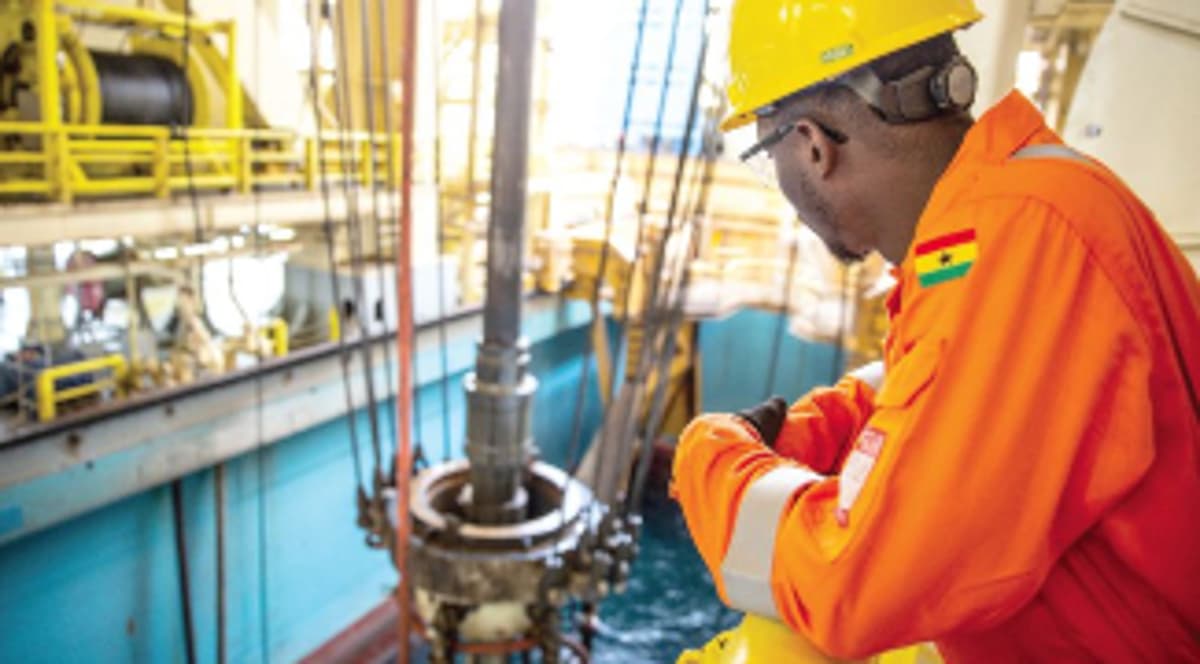
Ghana Targets $3.5-billion Upstream Investment to Boost Offshore Development
Why It Matters
The funding boost strengthens Ghana’s energy security, draws international investors, and accelerates its transition to a diversified, low‑carbon power mix, positioning the country as a regional energy hub.
Key Takeaways
- •Ghana seeks $3.5 billion upstream investment for offshore oil.
- •Jubilee/TEN and Offshore Cape Three Points partners lead the drive.
- •200 MW battery storage plan aims to stabilize Ghana’s grid.
- •Scaling‑Up Renewable Energy Program targets off‑grid electrification.
- •IAEA safety review cleared two sites for Ghana’s first nuclear plant.
Pulse Analysis
Ghana’s latest $3.5 billion upstream investment push reflects a strategic pivot to revitalize its offshore oil sector after years of declining output. By aligning with established operators like Jubilee/TEN and the Offshore Cape Three Points consortium, the government hopes to inject fresh capital, modernize exploration techniques, and extend the life of mature fields. The move also signals confidence in Ghana’s regulatory reforms, which have streamlined licensing and offered fiscal incentives to attract multinational investors seeking stable returns in West Africa’s energy landscape.
Beyond hydrocarbons, Ghana is aggressively integrating renewable technologies to future‑proof its grid. The procurement of 200 MW of battery energy‑storage systems will smooth intermittent solar and wind generation, reducing reliance on costly thermal plants during peak demand. Coupled with the Scaling‑Up Renewable Energy Program, which targets off‑grid communities, these actions aim to achieve near‑universal electrification while cutting carbon emissions. The storage rollout also positions Ghana to participate in regional power trade, leveraging its growing renewable capacity to export surplus energy to neighboring countries.
The country’s energy diversification agenda extends to nuclear power, a long‑term baseload solution. Following an International Atomic Energy Agency safety review that approved two potential sites, Ghana is moving toward detailed design and financing phases for its first nuclear plant. This step underscores a commitment to a balanced energy mix that can meet rising demand, support industrial growth, and enhance grid resilience. Together, the oil revitalization, renewable integration, and nuclear planning illustrate Ghana’s comprehensive approach to securing energy independence and attracting global capital in a rapidly evolving energy market.
Ghana targets $3.5-billion upstream investment to boost offshore development
Comments
Want to join the conversation?
Loading comments...