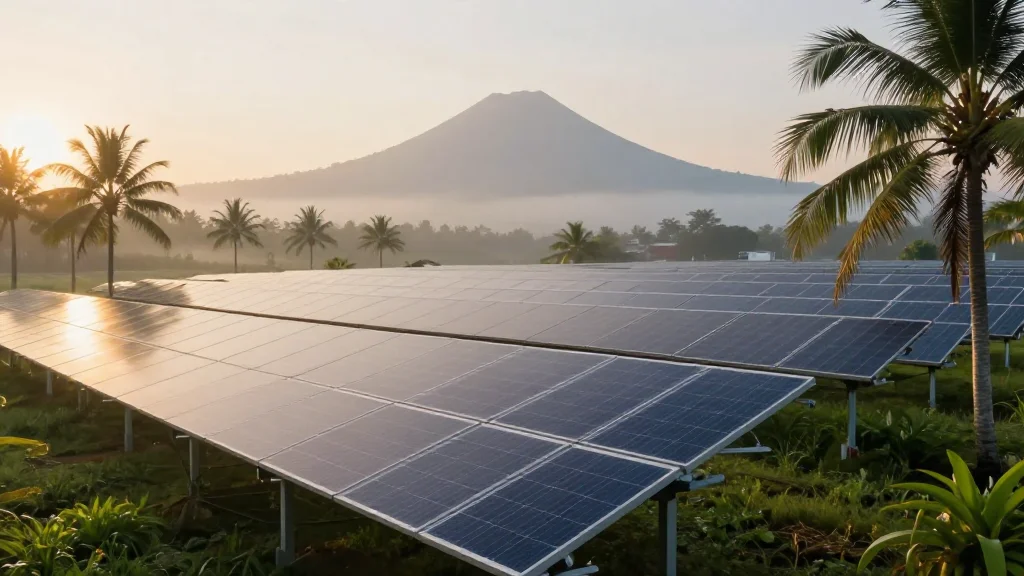
Global Energy Crisis Reinforces Indonesia’s 100 GW Solar Push, but Hurdles Persist
Why It Matters
Accelerating solar and battery storage would lower Indonesia’s reliance on imported diesel and coal, improve energy security, and unlock billions of dollars in private investment, reshaping the regional power market.
Key Takeaways
- •Indonesia targets 100 GW solar by 2026
- •Implementation slowed by regulatory, financing, land issues
- •Potential $2 bn diesel import savings, $1 bn subsidy cuts
- •PLN tariff uncertainty hampers private investment
Pulse Analysis
Indonesia’s energy strategy is being reshaped by geopolitical turbulence in the Middle East, prompting President Prabowo to push a 100‑gigawatt solar target that dwarfs the nation’s current 1.7 % solar share. The country’s broader renewable mix sits at roughly 16 %, still dominated by hydropower and geothermal, while coal supplies about a third of electricity. By positioning solar and battery storage as a hedge against volatile fossil‑fuel markets, Indonesia aims to secure a more resilient power system and align with global decarbonisation trends.
Despite the strong economic case, the solar‑plus‑BESS rollout stalls under a thicket of regulatory ambiguity, financing shortfalls, and land‑acquisition bottlenecks. PLN, the state utility, lacks a finalized tariff framework, preventing the signing of power purchase agreements and deterring private capital. The 2025‑2034 electricity supply plan currently projects only 17.1 GW of solar by 2034, far short of the announced 100 GW, highlighting the gap between policy ambition and operational reality. Streamlining approvals and establishing transparent, bankable tariffs are essential to unlock the estimated $78 bn investment needed over the next five years.
If these obstacles are cleared, the transition could generate substantial economic benefits: analysts project up to $2 bn in diesel import savings and more than $1 bn in reduced fuel subsidies, while also curbing coal dependence. Such savings would bolster Indonesia’s fiscal position and improve its investment climate, attracting foreign investors seeking stable, green‑energy projects. Moreover, a successful solar surge would reinforce the nation’s role as a key energy supplier in the region, balancing domestic demand with export commitments for LNG and coal, and positioning Indonesia as a pivotal player in the emerging Southeast Asian clean‑energy market.
Global energy crisis reinforces Indonesia’s 100 GW solar push, but hurdles persist
Comments
Want to join the conversation?
Loading comments...