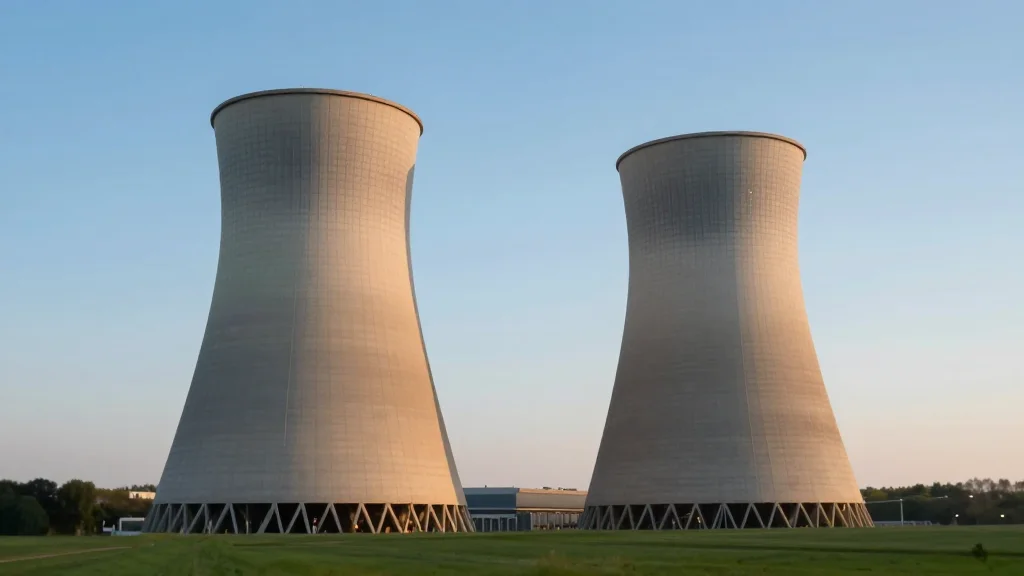
Global Nuclear Power Market Stagnates in 2025 - Remains at Trough
Why It Matters
The near‑zero growth signals that nuclear will not significantly offset declining fossil‑fuel capacity, limiting its role in meeting climate targets and exposing utilities to supply gaps. Investors and policymakers must reassess funding models and consider alternative low‑carbon options.
Key Takeaways
- •2025 added 2,956 MW, shut down 2,823 MW, net +133 MW
- •Only three reactors commissioned: Russia, India, China
- •Belgium and Taiwan lost major capacity through plant closures
- •High costs, 10‑15‑year builds, and financing risk stall market
Pulse Analysis
The International Atomic Energy Agency’s latest figures confirm that 2025 was another flat year for nuclear power. Only three reactors—Russia’s Kursk 2‑1, India’s Rajasthan‑7 and China’s Zhangzhou‑2—came online, delivering just under 3 GW of capacity. At the same time, seven older units were retired, erasing roughly the same amount of generation. The net gain of 133 MW leaves the global fleet essentially unchanged from the previous year, reinforcing the view that the sector is stuck in a prolonged trough rather than entering a growth phase.
Industry analysts point to a trio of structural obstacles that keep new nuclear projects on the drawing board. Capital expenditures remain exorbitant, often exceeding $10 billion per gigawatt, while construction timelines stretch 10 to 15 years, exposing developers to shifting regulatory and market conditions. Financing risk is concentrated in state‑backed entities, as private capital balks at the long‑term, illiquid nature of the investment. Moreover, the supplier base is narrow, dominated by a handful of government‑owned firms, limiting competition and driving up costs.
The stagnation has direct implications for the global energy transition. With nuclear unable to deliver the expected capacity additions, utilities must rely more heavily on renewables, storage, or fossil‑fuel back‑up to meet decarbonisation targets. Policymakers may need to redesign incentive structures, such as loan guarantees or price‑support mechanisms, to attract private financing and shorten project cycles. Until these hurdles are addressed, nuclear’s contribution to net‑zero goals will remain marginal, and the sector’s revival will likely hinge on breakthrough financing models or next‑generation reactor designs.
Global Nuclear Power Market Stagnates in 2025 - Remains at Trough
Comments
Want to join the conversation?
Loading comments...