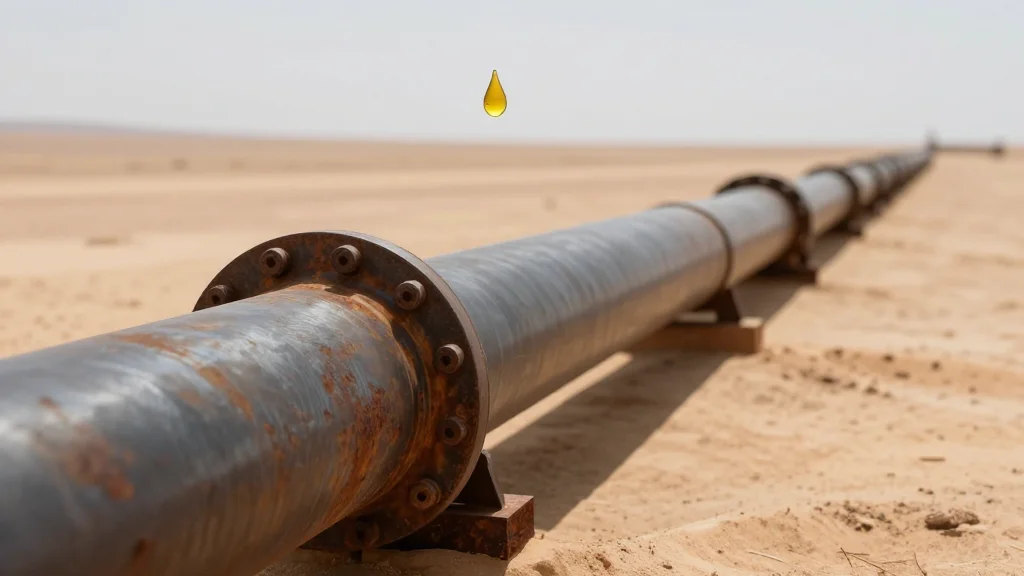
Global Oil Inventories Slip to 11‑Year Low, Tightening Market Cushion

Why It Matters
The plunge in global oil inventories compresses the margin of safety that has historically dampened price volatility, making the market more reactive to geopolitical shocks. For policymakers, the low cushion underscores the urgency of diversifying supply sources and bolstering strategic reserves. For investors, the divergence between volatile crude prices and the steady cash flows of midstream infrastructure creates a clear risk‑return trade‑off, highlighting dividend‑paying pipelines as a defensive hedge in an uncertain energy climate. Moreover, the inventory shortfall could accelerate shifts in global trade patterns. Nations seeking to reduce exposure to Middle East supply risks may increase imports from North America, potentially expanding the revenue base for U.S. and Canadian midstream operators. This realignment would have lasting implications for pipeline utilization, infrastructure investment, and the geopolitical balance of energy power.
Key Takeaways
- •Global oil inventories have fallen to an 11‑year low, eroding the market’s safety cushion.
- •Midstream firms Enterprise Products Partners and Enbridge offer yields of 5.5% and 4.8% respectively.
- •Both companies have increased dividends annually for decades, providing cash flow insulated from oil price swings.
- •Low inventories heighten price volatility and raise strategic concerns about energy security.
- •North American midstream assets may benefit if import‑dependent nations shift toward U.S. and Canadian crude.
Pulse Analysis
The current inventory trough is a textbook example of how geopolitical risk can dominate fundamental supply‑demand dynamics. Historically, when global stockpiles dip below a critical threshold, even modest supply disruptions trigger outsized price reactions. In this cycle, the Middle East conflict acts as a catalyst, keeping the market on edge while production adjustments lag behind. Investors who focus solely on crude price movements risk overlooking the structural resilience offered by fee‑based midstream businesses.
Enterprise Products Partners and Enbridge illustrate why the midstream niche has become a magnet for income‑seeking capital. Their business models decouple earnings from commodity price swings, allowing them to sustain dividend growth even as spot prices swing wildly. This defensive characteristic is especially valuable in a market where inventory levels are insufficient to absorb shocks. As nations potentially pivot toward North American crude for security reasons, the utilization rates of these pipelines could rise, reinforcing the dividend narrative.
Looking forward, the key variable will be the trajectory of the Middle East conflict. A rapid de‑escalation could allow inventories to rebuild, tempering price spikes and reducing the urgency for supply diversification. Conversely, a protracted standoff would keep inventories low, sustaining price volatility and possibly prompting further strategic shifts toward North American supply. Investors should monitor weekly inventory reports and geopolitical developments, positioning themselves in assets that combine income stability with exposure to any upside from a re‑routing of global oil flows.
Global Oil Inventories Slip to 11‑Year Low, Tightening Market Cushion
Comments
Want to join the conversation?
Loading comments...