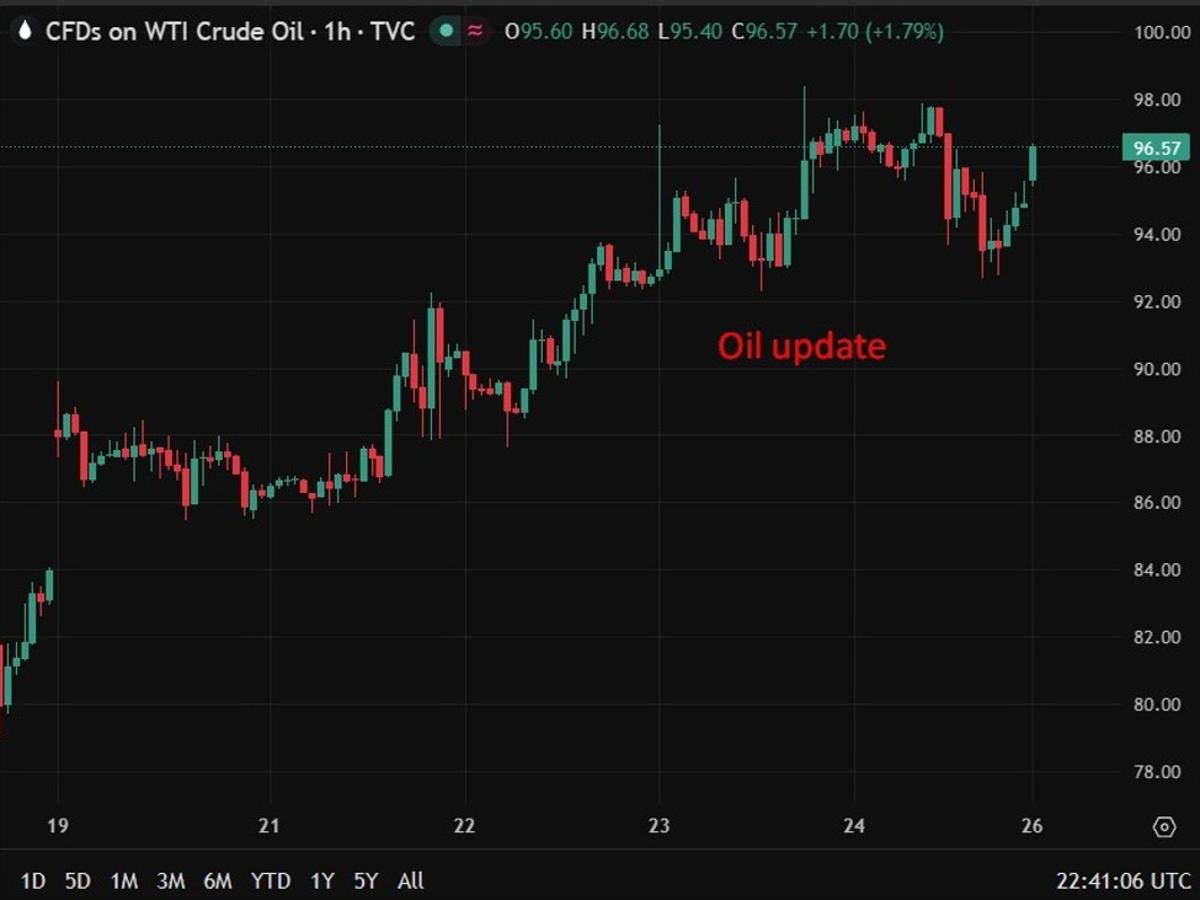
Goldman Sachs Raises Q4 2026 Oil Forecasts. Mid East Output Loss Drive Big Inventory Draw
Companies Mentioned
Why It Matters
The forecast upgrade underscores a rapid shift to a tight global oil market, raising price risk for producers, refiners and investors. It highlights how geopolitical supply disruptions can outweigh modest demand softening, reshaping market fundamentals through 2026.
Key Takeaways
- •Brent Q4 2026 forecast raised to $90 per barrel
- •WTI Q4 2026 forecast lifted to $83 per barrel
- •Middle East output loss estimated at 14.5 million bpd
- •Global inventories draw 11‑12 million bpd in April, record pace
- •Market swings from 1.8 mbpd surplus (2025) to 9.6 mbpd deficit (Q2 2026)
Pulse Analysis
Goldman Sachs’ latest oil price outlook reflects a broader re‑calibration of the global supply‑demand balance as geopolitical tensions in the Middle East curtail output. The bank’s estimate of a 14.5 million‑barrel‑per‑day shortfall—driven by production cuts and infrastructure disruptions—has forced inventories to shrink at an unprecedented 11‑12 million bpd in April. This rapid drawdown erodes the buffer that previously kept crude prices in check and pushes the market toward a pronounced deficit, even as demand is projected to fall modestly in 2026.
The upward revision to $90 for Brent and $83 for WTI in Q4 2026 signals that traders should price in a higher risk premium for supply uncertainty. While Goldman anticipates a 1.7 million‑bpd demand dip in Q2 2026, that contraction is insufficient to offset the scale of the supply shock, leaving a net deficit that could sustain price strength through the next two years. The bank’s earlier Q2 cuts, prompted by a US‑Iran ceasefire, illustrate how quickly geopolitical risk assessments can swing, but the current outlook assumes the ceasefire’s benefits are limited and that inventory draw remains the dominant driver.
For market participants, the key takeaway is to monitor the depth and duration of Middle East output losses, as further erosion could push Brent and WTI well beyond the $90 and $83 thresholds. Energy companies may need to reassess capital allocation toward higher‑margin projects, while refiners could face tighter feedstock supplies and higher input costs. Policymakers should also watch the evolving deficit, which may influence strategic petroleum reserve releases and broader energy security measures. Staying attuned to inventory trends and geopolitical developments will be essential for navigating the heightened volatility ahead.
Goldman Sachs raises Q4 2026 oil forecasts. Mid East output loss drive big inventory draw
Comments
Want to join the conversation?
Loading comments...