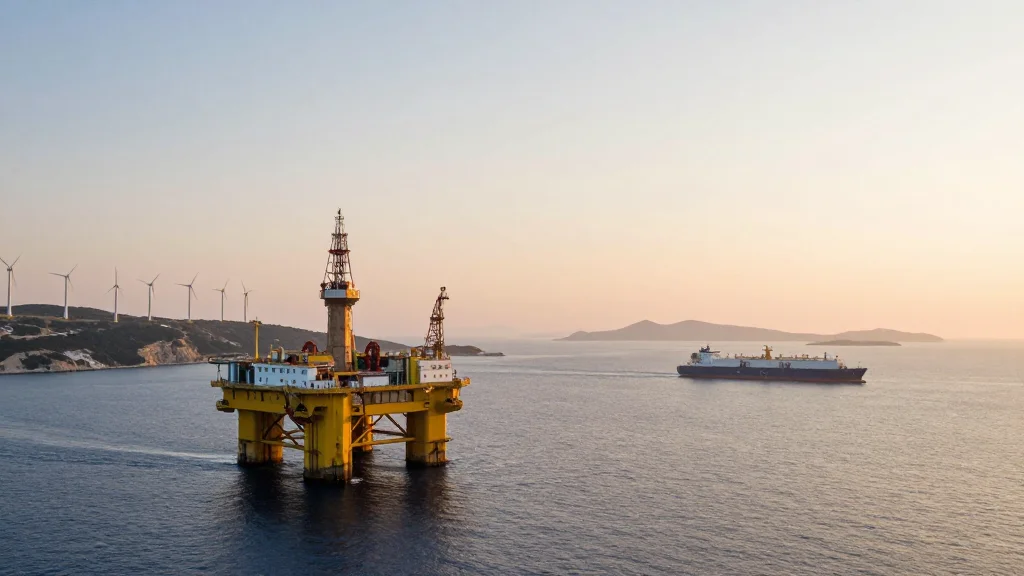
Greece’s Energy Realism: A Bridge for Transatlantic Energy Cooperation
Why It Matters
The blend of domestic hydrocarbons and renewables strengthens Greece’s energy security, cuts import dependence and supports Europe’s decarbonization while keeping costs competitive. This multi‑track strategy also deepens U.S.-Greek ties, creating investment opportunities across the Eastern Mediterranean.
Key Takeaways
- •Greece resumes offshore drilling in Ionian Sea, targeting Feb 2027 start.
- •Renewables now supply over 50% of Greece’s electricity, cutting lignite reliance.
- •The Vertical Corridor positions Greece as a LNG transit hub for Europe.
- •3+1 partnership with Cyprus, Israel, US boosts regional energy security.
Pulse Analysis
Europe’s energy landscape is being reshaped by geopolitical volatility and the urgent need for decarbonization. Greece’s "energy realism" acknowledges that a rapid, single‑track shift to renewables could jeopardize supply security and affordability. By re‑activating offshore hydrocarbon projects in the Ionian Sea, Athens leverages domestic resources to lower import exposure while funding the transition to cleaner sources. This pragmatic stance aligns with broader EU goals, offering a template for nations balancing short‑term security with long‑term climate commitments.
The country’s four‑pronged strategy is already delivering measurable results. Renewable generation now accounts for more than half of Greece’s electricity, a dramatic swing from its former lignite‑heavy mix, and the upcoming Block 2 drilling operation signals confidence from global majors such as ExxonMobil and Chevron. Simultaneously, the Vertical Corridor project is turning Greece into a pivotal LNG transit hub, linking U.S. liquefied gas supplies to European markets and diluting Russian pipeline dominance. Infrastructure upgrades—including interconnectors, pipelines and storage—are enhancing grid flexibility and creating a resilient, market‑driven energy system.
Beyond technical gains, Greece’s approach deepens transatlantic ties and regional stability. The 3+1 framework with Cyprus, Israel and the United States, reaffirmed at the recent P‑TEC conference, showcases how energy cooperation can serve as a diplomatic bridge in the Eastern Mediterranean. Investors are taking note, seeing opportunities in upstream exploration, renewable farms, and mid‑stream logistics. As Europe pursues its net‑zero target, Greece’s balanced model offers a scalable pathway that safeguards energy security, drives economic growth, and reinforces geopolitical alliances.
Greece’s energy realism: A bridge for transatlantic energy cooperation
Comments
Want to join the conversation?
Loading comments...