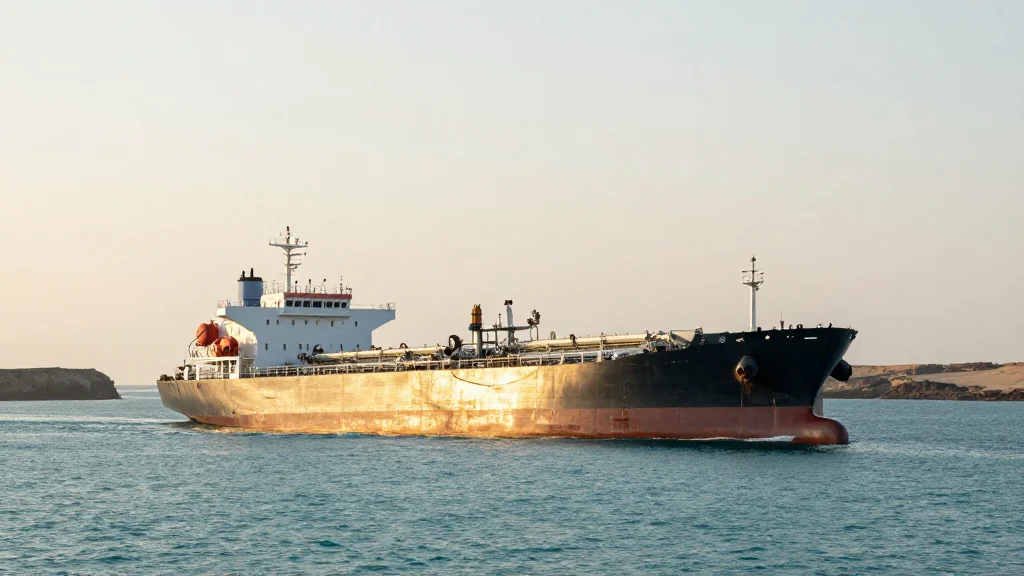
Greek, Indian Tankers U-Turn Before Hormuz Amid Reopening Doubt
Why It Matters
The U‑turns highlight heightened geopolitical risk that can disrupt Gulf oil flows, pressuring global crude prices and supply chains. Uncertainty around Hormuz access forces shippers to reroute, raising freight costs and impacting energy‑dependent markets.
Key Takeaways
- •Five Greek and Indian tankers turned back before Hormuz.
- •Vessels carry ~8.3 million barrels of non‑Iranian crude.
- •Iran's mixed signals create uncertainty for Gulf shipping routes.
- •Shipowners need Iranian navy permission despite foreign minister's statement.
- •Some tankers went dark, losing geolocation signals.
Pulse Analysis
The Strait of Hormuz has long been a chokepoint for global oil shipments, and recent mixed signals from Tehran have revived concerns about its reliability. While Iran’s foreign minister publicly declared the waterway open, the semi‑official Fars news agency warned that a U.S. naval blockade could keep it closed. This contradictory messaging forces shipowners to weigh the risk of a potential closure against the cost of rerouting around the Arabian Sea, a decision that can add days to delivery schedules and increase charter rates for tankers.
The immediate impact of the five Greek and Indian tankers turning back is a temporary reduction in the volume of crude that could have transited the strait, estimated at 8.3 million barrels. In a market already sensitive to supply disruptions, such a shortfall can tighten forward curves and lift spot prices, especially if the uncertainty persists. Moreover, the loss of real‑time geolocation data from vessels like Desh Garima underscores the operational opacity that operators face, complicating fleet management and insurance underwriting in a high‑risk region.
Looking ahead, the episode signals that the Hormuz corridor may remain volatile until clear diplomatic or military signals emerge. Energy traders and logistics firms are likely to hedge exposure by diversifying routes and increasing inventory buffers. For investors, the episode reinforces the premium placed on companies with robust risk‑management frameworks and diversified supply chains, as geopolitical flashpoints continue to influence oil market dynamics.
Greek, Indian tankers U-turn before Hormuz amid reopening doubt
Comments
Want to join the conversation?
Loading comments...