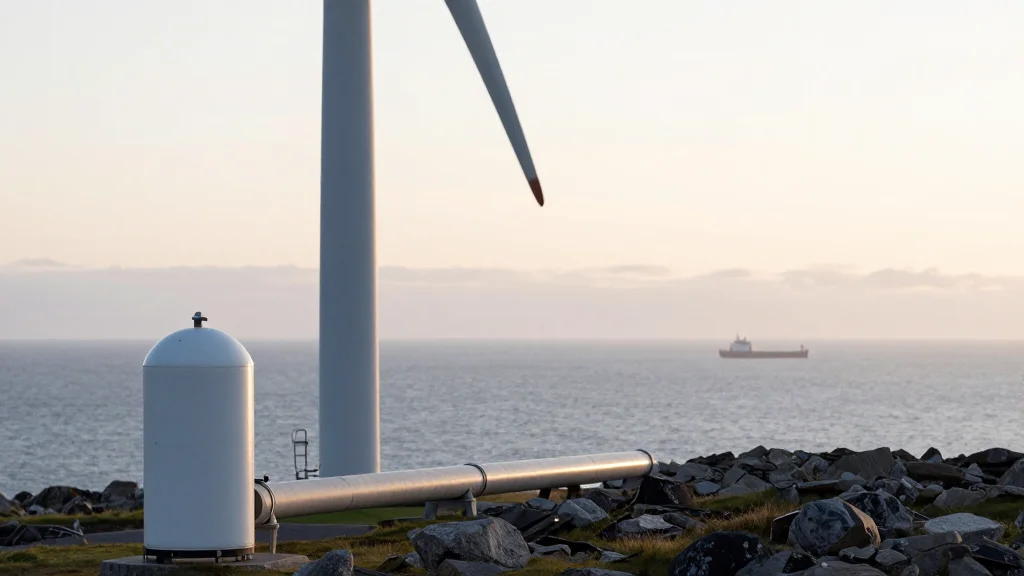
Green Hydrogen From Ireland for Germany – HYreland Study Sees Strong Export Potential for European Supply Chains
Why It Matters
Ireland’s emerging role could diversify Germany’s hydrogen supply chain, accelerating the EU’s net‑zero targets while creating new export revenues for the Irish economy.
Key Takeaways
- •Ireland's offshore wind can power large‑scale green hydrogen plants
- •Cork region offers infrastructure and industrial demand for hydrogen and SAF
- •Pipeline export to Germany costs $173‑$221 per MWh, cheapest option
- •Production costs similar to Morocco, but location boosts competitiveness
- •Integrated clusters could produce hydrogen, ammonia, methanol, and e‑kerosene
Pulse Analysis
The European Union has set a 2030 target of 10 million tonnes of green hydrogen, with Germany accounting for roughly a third of projected demand. To meet that ambition, the bloc is hunting for reliable, low‑carbon feedstocks that can be scaled quickly. Ireland, sitting on some of the continent’s most consistent offshore wind corridors, now appears poised to supply a sizable share of that market. The Fraunhofer‑ESB HYreland study quantifies how the island’s wind farms could feed electrolyzers capable of producing tens of gigawatts of renewable hydrogen, positioning the country as a strategic bridge between Atlantic wind resources and continental energy hubs.
Cost modelling shows pipeline delivery from Cork to northern Germany would cost between $173 and $221 per megawatt‑hour, undercutting maritime shipping and making Irish hydrogen competitive with producers in Morocco, South Africa and Brazil despite a modest production premium. The advantage stems not only from geography but also from Ireland’s mature oil‑refining and aviation infrastructure, which can host integrated clusters that co‑locate electrolyzers, storage, and conversion facilities for ammonia, methanol and sustainable aviation fuel. By bundling production with downstream users, these clusters can capture value from both electricity arbitrage and the sale of high‑margin synthetic fuels.
Policy makers in Dublin and Berlin are already signaling support through tax incentives and grid upgrades, encouraging private capital to fund the next wave of electrolyser plants. If the pipeline corridor materialises, it could become a backbone for a broader North‑Sea hydrogen network, linking future projects in the United Kingdom and the Netherlands. However, challenges remain, including securing financing for large‑scale infrastructure, harmonising standards across borders, and managing the intermittency of wind. Successful execution would not only diversify Germany’s import portfolio but also cement Ireland’s place in the emerging European green‑energy supply chain.
Green Hydrogen from Ireland for Germany – HYreland Study Sees Strong Export Potential for European Supply Chains
Comments
Want to join the conversation?
Loading comments...